REVIEW · UBUD
Bali Most Beautiful Temples Private Tour
Book on Viator →Operated by Bali Private Tour Id · Bookable on Viator
A temple day trip can feel hectic.
This one is built to keep you moving: you’ll see multiple major sacred sites from Ubud with air-conditioned rides and a guide who explains what you’re looking at instead of leaving you to guess. I especially like the hotel pickup and drop-off, because it removes the hardest part of temple days—figuring out where to meet and how to get there.
The other big win is the guide-led context. Guides such as Mr Wayan and Wi (from Be Balinese tours) are mentioned for clear, detailed explanations that help the places make sense fast. Admission is also included at each stop, which makes the $89.99 per person feel more fair. One thing to consider: it’s a packed route, and punctual pickup matters—double-check your pickup details so you’re not waiting around if anything goes off schedule.
In This Review
- Key highlights to know before you go
- Why this Ubud temple route feels efficient (and not rushed)
- Pickup, comfort, and how the private format helps
- Tirta Empul: holy spring water and a temple built around ritual
- Besakih Temple on Mount Agung’s slopes: the big, important one
- Mount Kawi (Gunung Kawi): the rocky temple site on the move
- Kehen Temple near Kintamani: the gate that steals the show
- Price and value: is $89.99 per person actually fair?
- Timing, weather, and what to wear for Bali temples
- Who this tour is best for (and who should choose something else)
- Should you book this Bali Most Beautiful Temples Private Tour?
- FAQ
- What temples are included in the Bali Most Beautiful Temples tour from Ubud?
- How long is the tour?
- Is hotel pickup and drop-off included?
- Are admission tickets included?
- Is this a private tour?
- What is the dress code?
- Is there a minimum number of people required?
- What happens if the weather is poor?
- Can I cancel for a full refund?
Key highlights to know before you go
- A tight 8 to 10 hour temple route with four major stops that keeps the day efficient
- Hotel pickup and drop-off from Ubud to avoid navigation stress
- Admission tickets included for each temple on the program
- A private guide for insider cultural context at every site
- Multiple UNESCO-relevant sights with Mount Kawi listed as a UNESCO site
- Smart casual dress code keeps the day simple, but still temple-appropriate
Why this Ubud temple route feels efficient (and not rushed)
Bali temples deserve attention, but many day tours accidentally turn into a blur of photos. This itinerary is designed around practical time blocks: you get a meaningful visit at each place, then you move on with less backtracking. That matters in Bali, where distances can add up and traffic can swing your schedule.
What I like most is the balance between structure and explanation. You’re not just dropped at entrances. A guide rides with you and gives the cultural and historical context so you understand the why behind the stone, not just the what. In a day like this, that’s the difference between seeing temples and actually getting something from seeing temples.
Also, this tour is private, meaning only your group participates. That’s a big deal for two reasons: you can ask questions without feeling like you’re competing for attention, and your guide can pace things around your comfort level.
You can also read our reviews of more private tours in Ubud



Pickup, comfort, and how the private format helps
From Ubud, your day starts with pickup and ends with drop-off, so you never have to hunt for a meeting point. You’ll also travel between temples in air-conditioned comfort, which is a real advantage when heat and humidity can turn walking into a slog.
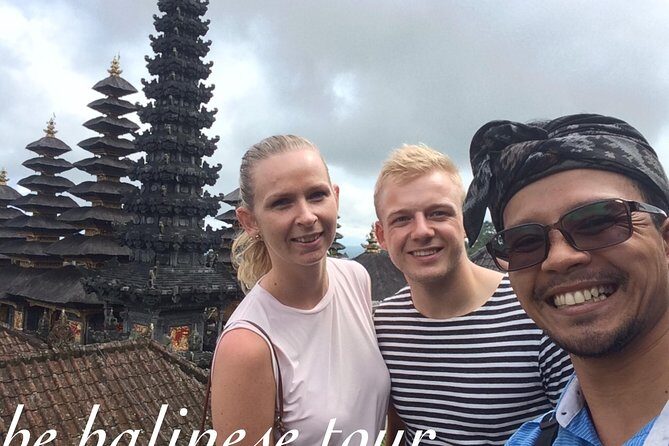
Private tours can be hit-or-miss if the guide barely speaks. Here, the guide is a core part of the value. When people mention Mr Wayan, they point to strong knowledge and smooth guidance. When they mention Wi, they highlight how much detail she explained so the temples felt clearer during the visit.
What to keep in mind: a route like this still has set timing. If your group wants longer inside every temple, the overall day might feel full. But if you want a well-run overview with good context and transport handled, this format is a strong match.
Tirta Empul: holy spring water and a temple built around ritual
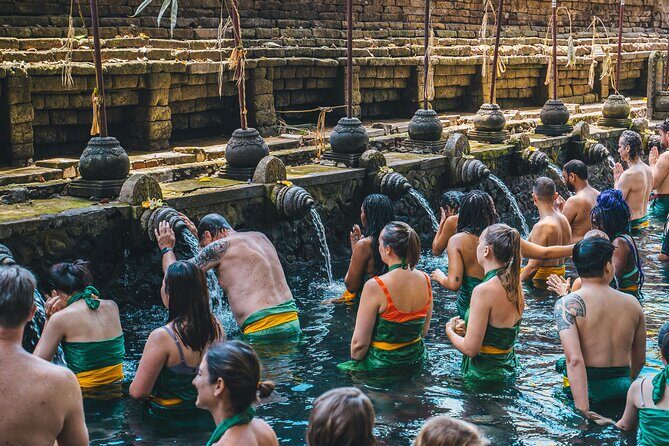
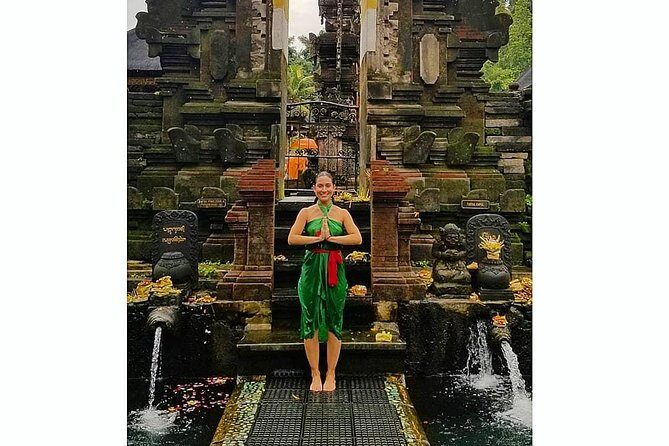
Your first stop is Tirta Empul Temple, near Tampaksiring. This is a Hindu Balinese water temple known for its holy spring water and its petirtaan, or bathing structure. That setting changes how you experience the place. Instead of a temple that’s mostly about worship from afar, Tirta Empul is tied to water as part of ritual practice.
Expect to spend about 30 minutes on site. That’s enough time to understand the layout, take in the bathing structure, and notice how the space is organized for ritual flow. If you’re the kind of person who likes to watch how sacred spaces work, this stop can click quickly.
A possible consideration: because the temple’s identity centers on water and ritual bathing, it can feel more active and rule-based than purely photo-stopping sites. You’ll want to be comfortable following guidance from your guide and respecting what people are doing inside the compound.
Besakih Temple on Mount Agung’s slopes: the big, important one
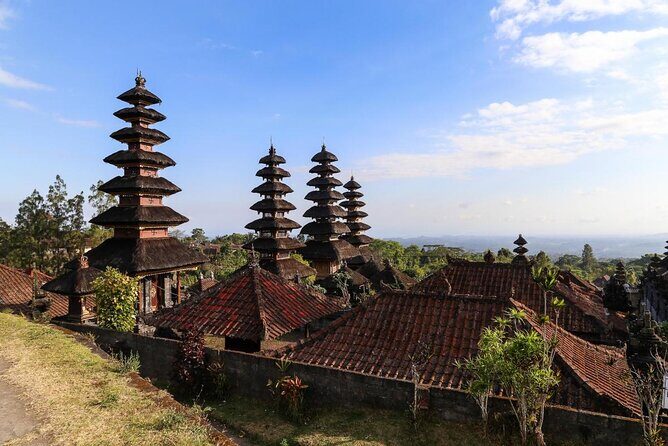
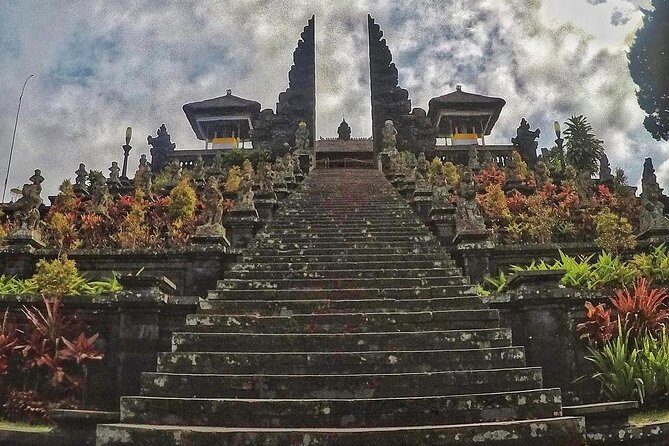
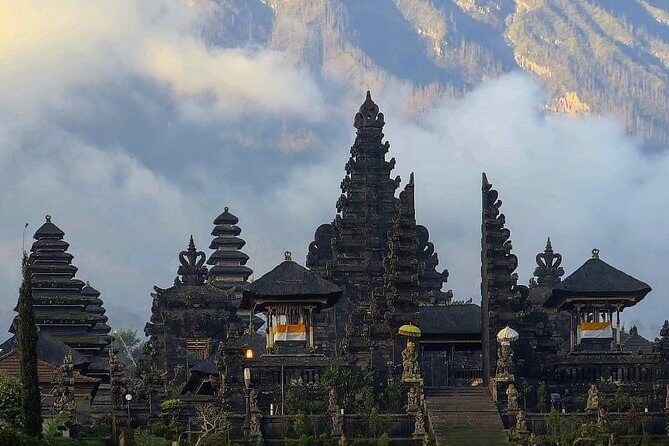
Next is Besakih Temple, in the village of Besakih on the slopes of Mount Agung in eastern Bali. This complex is considered the most important temple in Bali’s Hindu tradition—also described as the largest and holiest.
You’ll have about 45 minutes here. That extra time compared with Tirta Empul makes sense. A temple complex like Besakih isn’t one viewpoint—it’s a whole zone. Even on a half-hour-ish visit, you can still get a sense of why it’s treated as central. Your guide will help you connect what you see to the site’s standing and meaning.
What’s great about this stop: it anchors the whole day. After Tirta Empul’s ritual water focus, Besakih gives you a sense of scale and significance. If you only had one temple day, this would be the one that helps you understand the religious weight of Bali’s Hindu culture.
A consideration: because Besakih is big and important, it can be more visually spread out than smaller temples. Sticking with the guide and staying mindful of time keeps you from drifting too far and losing the rest of the day.
Mount Kawi (Gunung Kawi): the rocky temple site on the move
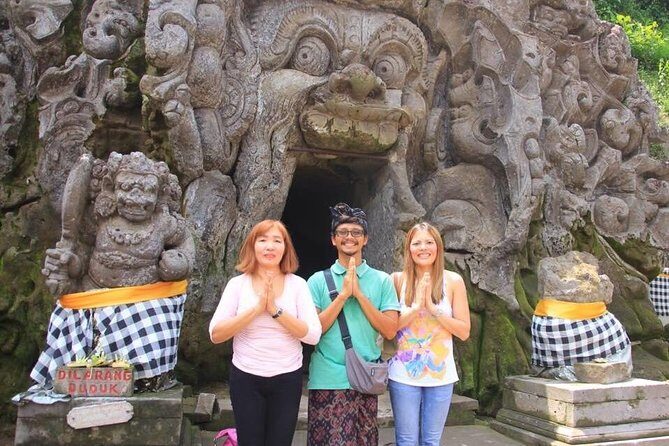
Stop three is Mount Kawi, also known as Gunung Kawi, described as a Rocky Temple and listed as a World UNESCO Site in Bali. That UNESCO note matters because it signals that this is not only a local worship area—it’s also recognized internationally for its historical and cultural value.
You’ll get about 45 minutes here. “Rocky temple” usually means you’ll be dealing with uneven terrain and stone elements that are part of the visual story. It’s the kind of place where your perspective changes as you move, because the temple’s form is tied to the rock itself.
Why it works in this route: you’ve now seen major religious importance (Besakih) and a water-ritual focus (Tirta Empul). Mount Kawi shifts the experience again, giving you a more distinctive, architectural feel and a chance to see how temple design can be shaped by landscape.
A practical caution: if your group has limited mobility, stone steps and ground texture can slow you down. The itinerary is still manageable for most people, but it’s worth going in with realistic expectations about walking surfaces.




Kehen Temple near Kintamani: the gate that steals the show
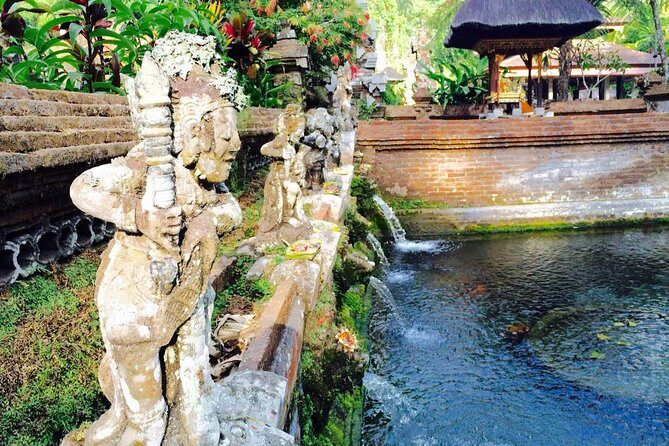
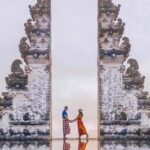
Finally, you’ll visit Kehen Temple, near the town of Kintamani. This stop is described as having an amazing gate, and it’s also referred to as a hidden temple near Kintamani.
You’ll spend around 45 minutes. That’s plenty of time to linger over details like gate design and the overall compound feel. When a tour includes one “less expected” temple, it often becomes the most memorable stop—not because it’s bigger, but because it feels fresher.
What I like about ending here: Kehen gives variety. You’ve seen large, important sites and UNESCO-listed stone forms. Now you get something different in mood and style—an ending temple that can feel calmer and more focused.
A consideration: because it’s positioned as a quieter, hidden-style site, it may not feel like the most dramatic “everybody take the same photo” kind of stop. If you want a checklist of iconic postcard moments only, this could be less satisfying. If you like exploring a temple with a more local vibe, it’s a strong choice.
Price and value: is $89.99 per person actually fair?
At $89.99 per person, this isn’t a budget bus tour deal, but it also isn’t priced like a private driver with no guidance. Here’s why the value can hold up:
- Pickup and drop-off are included, which saves you from arranging transport on your own.
- Air-conditioned transfers keep the day comfortable between stops.
- Admission tickets are included at each temple. That removes a common source of surprise costs.
- You’re traveling with a guide, and the guide experience seems to be the thing people remember most, especially when names like Mr Wayan and Wi come up for strong explanations.
One more detail: the tour is often booked about 72 days in advance, which suggests it’s a popular way to do temples efficiently from Ubud. For you, that means less last-minute hunting and a better chance of getting the timing you want.
So should you treat it as good value? Yes—if you want a guided, well-run route that handles transport and temple entry. If your priority is maximum time at one site and you don’t care about guide context, you might find cheaper ways to travel. But for an 8 to 10 hour day covering multiple major temples, this price often feels reasonable.
Timing, weather, and what to wear for Bali temples
This tour runs about 8 to 10 hours, so plan your day with a little buffer before and after. A full temple day is not the moment to squeeze in extra plans across town. I’d also build in a realistic expectation for heat, sun, and walking, even with transport between stops.
Weather matters. The experience requires good weather, and if it’s canceled due to poor conditions, you’ll be offered a different date or a full refund. That’s a key point because temple compounds can be harder to enjoy in rain and slick conditions.
For clothing, the dress code is listed as smart casual. For me, that’s a helpful standard because it’s less vague than forcing you into specific items. Still, you’ll want to dress in a way that keeps you comfortable for a long day that includes sacred sites and some outdoor movement.
Who this tour is best for (and who should choose something else)
This tour is a great fit if you’re:
- new to Bali and want zero navigation stress from Ubud
- the kind of person who values explanations more than random wandering
- traveling as a pair or small group and want the private format without the headache
It may be less ideal if you:
- want to spend hours at one temple instead of getting a structured overview
- expect a slow, flexible day with no set time blocks
- are extremely sensitive to delays, since one past experience included a late driver linked to pickup confusion
If you do book, a small practical move helps a lot: confirm your pickup address carefully so the first hour goes smoothly.
Should you book this Bali Most Beautiful Temples Private Tour?
I’d book this if your goal is a high-quality Ubud temple day trip with transport handled, temple entry covered, and a guide who gives context that makes the sites feel meaningful fast. The biggest strengths are the route efficiency, included admissions, and the guide-driven storytelling—people repeatedly highlight guides like Mr Wayan and Wi for doing the job well.
Skip it if you’re chasing a totally unstructured experience or if you hate the idea of a full schedule. This is a 8 to 10 hour itinerary with set stop lengths, so it rewards groups who like a plan.
FAQ
What temples are included in the Bali Most Beautiful Temples tour from Ubud?
You’ll visit Tirta Empul Temple, Besakih Temple, Mount Kawi (Gunung Kawi), and Kehen Temple.
How long is the tour?
The duration is listed as about 8 to 10 hours.
Is hotel pickup and drop-off included?
Yes, hotel pickup and drop-off are included.
Are admission tickets included?
Yes, admission tickets are included for each stop.
Is this a private tour?
Yes. It’s a private tour, so only your group will participate.
What is the dress code?
The dress code is smart casual.
Is there a minimum number of people required?
Yes. A minimum of 2 people per booking is required.
What happens if the weather is poor?
The experience requires good weather. If it’s canceled due to poor weather, you’ll be offered a different date or a full refund.
Can I cancel for a full refund?
Free cancellation is available up to 24 hours in advance for a full refund. If you cancel less than 24 hours before the start time, the amount paid is not refunded.