REVIEW · NUSA PENIDA
Mangrove Reforestation and Exploration around the Nusa Islands
Book on Viator →Operated by Ecotourism Nusa Penida · Bookable on Viator
Planting mangroves turns a normal day into work with meaning. On this Nusa Islands trip, you get a real conservation task, then you switch gears to island exploring. I especially like the hands-on planting part and the chance to prepare seedlings so the project keeps moving.
The other big win for me is the small group size and the way the team keeps the mangrove education clear. One watch-out: this isn’t a great pick if you have mobility challenges, since the day includes time in natural areas and ends with canoe or boat time.
In This Review
- Key highlights I’d circle on your plan
- Mangrove Reforestation on the Nusa Islands: the basic idea
- Stop 1: Mangrove Point on Nusa Lembongan and your first taste of real ecology work
- The nursery: where you actually help the project keep going
- Planting 10 mangroves: what your work looks like on the ground
- Lunch on Nusa Ceningan: a real break with ocean views
- Exploring Nusa Lembongan and Nusa Ceningan: what you get beyond the work
- Canoe or boat through the thriving mangrove forest
- Price and value: is $76.60 a fair deal?
- Who should book this, and who might skip it
- Quick practical takeaways before you go
- Final verdict: should you book?
- FAQ
- Where does the tour start?
- How long is the experience?
- What’s included in the price?
- How many people are in the group?
- Is it suitable for people with mobility challenges?
- Does it end back at the meeting point?
- Can I cancel for a full refund?
Key highlights I’d circle on your plan
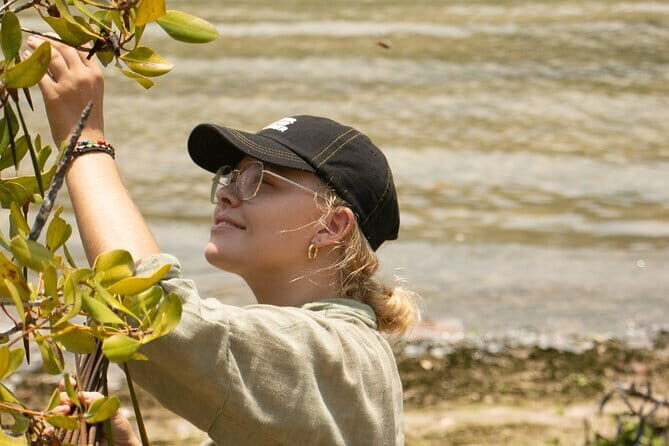
- You plant 10 young mangroves along the forest edge, with a clear sense of what your work is supporting
- Seedling nursery time so you’re not just planting once; you’re helping set up for future groups
- Mangrove education focused on how these ecosystems protect coastlines, store carbon, and support biodiversity
- Local lunch on Nusa Ceningan with ocean views and a real island break
- Lembongan and Ceningan exploration after lunch, with time to spot charm and scenic corners
- Boat or canoe through the mangroves for a different view of the forest you helped restore
Mangrove Reforestation on the Nusa Islands: the basic idea
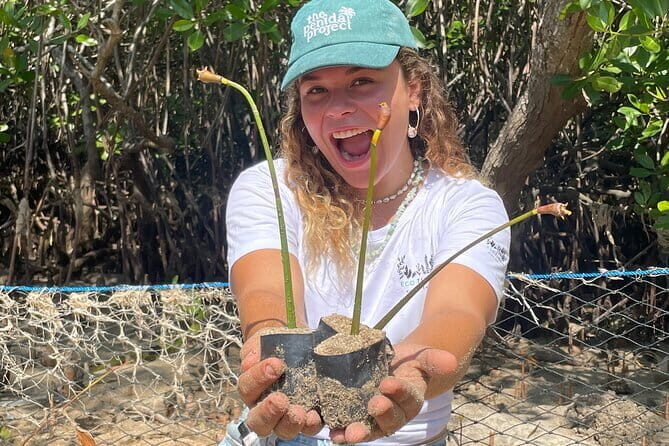
This is a 7-hour conservation-style day based in the Nusa area of Bali, starting at Ecotourism Nusa Penida (Buyuk, Jalan, Ped, Nusa Penida). The price is $76.60 per person, and the plan mixes practical volunteering with real sightseeing time on Nusa Lembongan and Nusa Ceningan.
What makes it interesting is the balance. You’re not only learning about mangroves as a concept. You’re touching the process: prepping seedlings, then planting young trees along the mangrove edge, then finishing with a boat or canoe look at the thriving area.
I also like that the experience is designed around a maximum of 10 travelers. That usually means you get more attention when it comes time to work, and you spend less of the day waiting around in a big group.
You can also read our reviews of more tours and experiences in Nusa Penida.
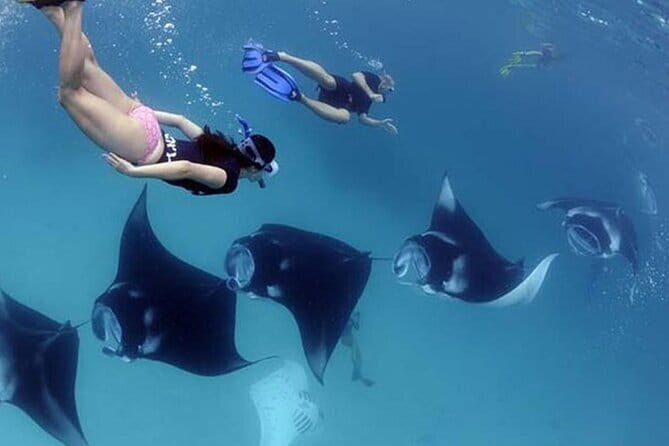
- ️Nusa Penida by Private Boat – Snorkeling 4 spots, Swim with Mantas + Land Tour
★ 5.0 · 6,424 reviews

Stop 1: Mangrove Point on Nusa Lembongan and your first taste of real ecology work
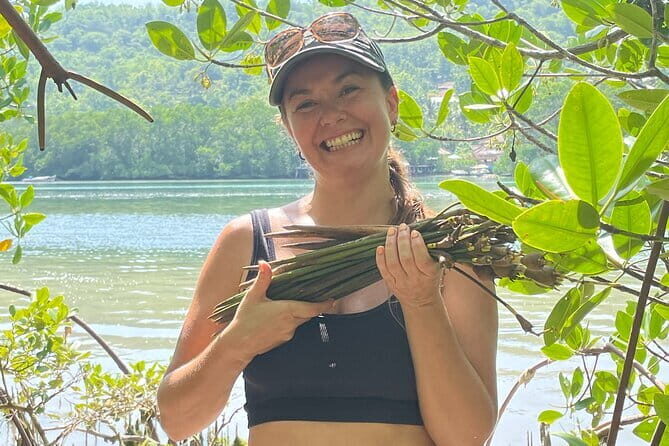
The day starts with a mangrove stop at Mangrove Point on Nusa Lembongan, where your volunteer role kicks in. Expect a short education component to set the context: why mangroves matter, why the ecosystem gets threatened, and what restoration is trying to fix.
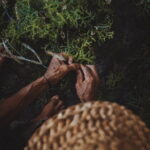
Then you move into the practical part. You’ll be collecting and preparing seedlings in the nursery area first, which matters because it turns mangrove planting from a symbolic act into real habitat work. Seed prep takes time, and your work here supports the next group too, not just your own session.
One practical consideration: mangrove restoration work can be physically active. So even though most people can participate, you should go in knowing your body will do some work, and the terrain won’t feel like a paved walking tour.
The nursery: where you actually help the project keep going
A lot of conservation activities stop after one planting. This one spreads effort across the timeline. While you’re there, you’re also preparing mangrove seedlings for the next group, so you’re part of a repeating cycle instead of a one-off photo moment.
In plain terms, this is the difference between seeing a tree in the ground and helping create a functioning process. Seedlings have to be handled properly to give them a better chance of survival. Your role in prep supports the survival goal, not just the planting photo.
This is also where the education tends to click. When you handle seedlings and learn why mangroves protect coastlines, store carbon, and support biodiversity, the lesson stops being abstract. It becomes a story you can connect to what you’re doing with your hands.
Planting 10 mangroves: what your work looks like on the ground
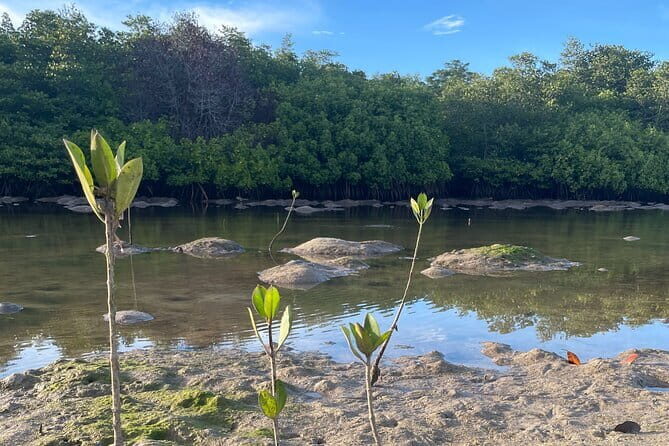
After the nursery prep, you plant ten young mangroves along the forest’s edge. The forest edge is an important detail because mangroves are coastal systems. You’re working where the ecosystem interacts with land and water, which is part of why these forests are so tied to shoreline protection.
You’ll also see the scale of the project shift from individual seedlings to a line of saplings that can gradually help rebuild habitat. Even if you don’t get a ruler-straight sense of impact in one day, it’s easier to understand how restoration works when you watch your planting as part of a larger restoration effort.
I like that the day avoids a heavy-handed vibe. Instead of pushing a lecture, it uses a simple sequence: learn enough to care, then do enough to matter, then see enough to connect the dots.
Lunch on Nusa Ceningan: a real break with ocean views
At some point during the middle of the day, you’ll get lunch on Nusa Ceningan. The lunch is included, along with snacks, and it comes with ocean views and an island break vibe.
In my opinion, this timing is smart. Mangrove work can get you focused and tired. Lunch is where you reset your pace and shift from “volunteer mode” back to “explorer mode.”
You also get a chance to enjoy the islands beyond the restoration site. If you’re booking this mainly because you want an eco day, the lunch stop is still valuable because it keeps the experience from feeling like a classroom with occasional outdoor labor.
- ️Nusa Penida by Private Boat – Snorkeling 4 spots, Swim with Mantas + Land Tour
★ 5.0 · 6,424 reviews

Exploring Nusa Lembongan and Nusa Ceningan: what you get beyond the work
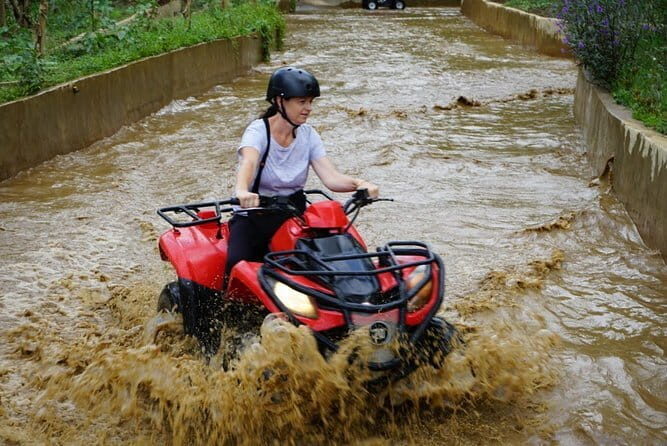
After lunch, the plan includes exploring Nusa Lembongan and Nusa Ceningan. The tone here is casual but guided by local knowledge. You’re looking for charm, quiet corners, and scenic spots that feel like postcard material without turning into a rushed checklist.
This is where I think the experience adds value for people who don’t want only “work tourism.” You’re getting a restoration contribution and still going home with plenty of island time. Even the way the day is structured supports that: you finish planting, recover with lunch, then explore.
If you’re the type who likes small-scale travel (short loops, local guidance, and a slower sense of place), you’ll probably enjoy this portion. If you want a hardcore itinerary with named attractions and long walks, you might find the island exploring feels more like a guided taste than an all-day land tour.
Canoe or boat through the thriving mangrove forest
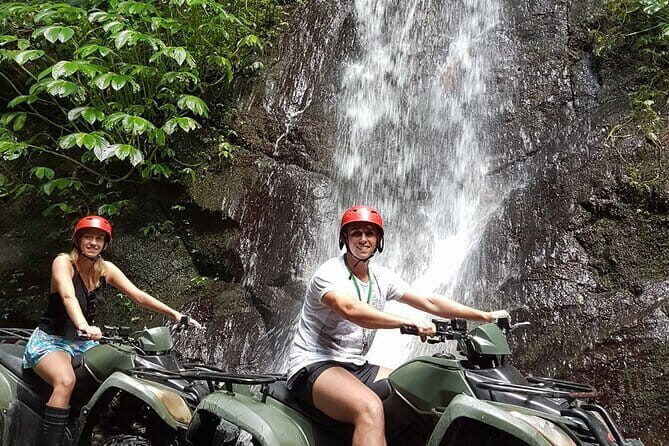
The last phase is the payoff for all the earlier effort. You’ll explore a thriving part of the mangrove forest by canoe or boat (both are included in the tour package).
This segment changes how you understand what you planted. On land, mangroves can look like dense, rooted greenery. From the water, you start seeing the shape of the ecosystem and how it sits in the coastal environment. It’s also a nice way to finish without exhausting your legs again right after planting.
I’d treat this as both a scenic moment and a learning moment. The early education explains what mangroves do for coastlines and biodiversity. The boat or canoe portion helps you visualize where those functions show up in the real world.
Price and value: is $76.60 a fair deal?
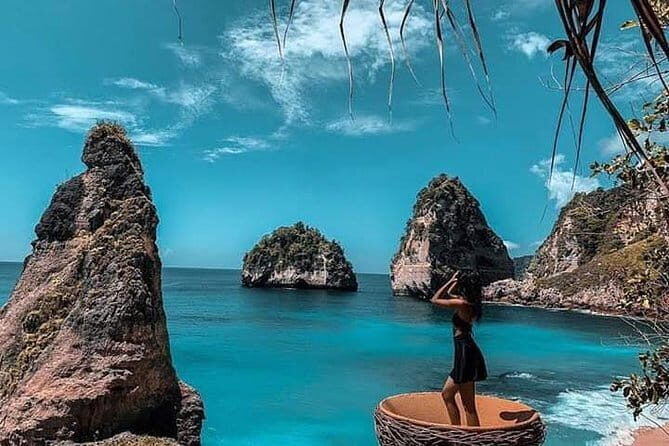
For $76.60 per person, you’re getting more than a standard sightseeing ticket. Included are private transportation, lunch, snacks, and canoe or boat, plus all fees and taxes.
Here’s how I’d judge value:
- If you want a mix of learning + physical contribution, the planting and seed prep are the big value driver.
- If you’d pay separately for boat or canoe time plus a guided food stop, that helps explain why the total price can feel reasonable.
- If you’re only looking for scenery with no interest in volunteering, you might feel the cost more sharply, since part of the day is real work and education.
Also, the max 10 travelers cap tends to matter. Smaller groups often mean the experience doesn’t feel crowded, especially around the practical work stations.
In short: I think it’s good value if you like hands-on experiences and want your day to do something besides take photos.
Who should book this, and who might skip it
This is a strong fit for:
- People who want a meaningful eco activity that still includes island time
- Anyone who likes structured volunteering with clear roles (seed prep, planting, and education)
- Families with kids who learn well through doing; the team’s explanations are described as easy to follow for younger ages
- Science-minded travelers too, since the education is serious enough that even a biologist would likely learn something new
You might skip it if:
- You have mobility challenges and prefer to avoid natural terrain and boat or canoe time
- You don’t want any physical activity during your day out
- You’re expecting a long, attraction-heavy tour with lots of fixed landmarks and long indoor time
One more note: the tour allows service animals, and it’s listed as near public transportation. That’s helpful if you’re not planning to stay locked into one transportation style all day.
Quick practical takeaways before you go
To get the best day, I’d plan like this:
- Expect a hands-on segment, not just viewing. Be ready to work with seedlings and plant young mangroves.
- Dress for an outdoor day in coastal nature areas.
- Bring simple essentials (sun protection, water), since this is a full half-day outdoors with canoe or boat time.
- If you’re sensitive to uneven ground, take the mobility warning seriously. This one is not recommended for mobility challenges.
Final verdict: should you book?
Yes, I’d book this if you want a day that blends real conservation work with genuine island exploration. The standout strengths are the hands-on planting, the extra step of seedling prep, and the way you end with a canoe or boat view that makes the ecosystem feel real instead of abstract.
I’d think twice only if mobility is an issue or if you strongly prefer sightseeing-only days. If you’re flexible and curious, this is the kind of experience that leaves you feeling like you contributed something, not just toured something.
FAQ
Where does the tour start?
The tour starts at Ecotourism Nusa Penida Buyuk, Jalan, Ped, Nusa Penida, Klungkung Regency, Bali 80771, Indonesia.
How long is the experience?
The duration is approximately 7 hours.
What’s included in the price?
The package includes private transportation, all fees and taxes, lunch, snacks, and canoe or boat.
How many people are in the group?
This activity has a maximum of 10 travelers.
Is it suitable for people with mobility challenges?
It is not recommended for people with mobility challenges.
Does it end back at the meeting point?
Yes. The activity ends back at the meeting point.
Can I cancel for a full refund?
You can cancel for free up to 24 hours in advance for a full refund. If you cancel less than 24 hours before the start time, the amount paid is not refunded. If the experience is canceled due to minimum traveler requirements, you’ll be offered a different date or a full refund.
You Might Also Enjoy

More Tour Reviews in Nusa Penida
- ️Nusa Penida by Private Boat – Snorkeling 4 spots, Swim with Mantas + Land Tour
★ 5.0 · 6,424 reviews