REVIEW · UBUD
Matasidhi Sacred Love Blessing
Book on Viator →Operated by Matasidhi · Bookable on Viator
Love blessings move fast in Ubud.
This private couple ceremony pairs a homa yajna fire ritual with bebayuh cleansing, then adds a karmic reading meant to map your relationship path. It also includes an animal release as a compassionate act, so the whole experience feels more like a shared spiritual journey than a quick photo stop.
I especially like the mix of ceremony and meaning. You’re not just watching a ritual. You get a Balinese shaman’s reading and advice to help you understand obstacles and luck as a couple.
One possible drawback: this is emotional, spiritual work. If you prefer light and purely scenic sightseeing, this may feel intense and very focused on inner themes for several hours.
In This Review
- Key things to know before you go
- Homa Yajna and Bebayuh: the real heart of the ceremony
- Your 2:00 pm start at Puri Ubud: timing, pace, and comfort
- The ceremony flow: fire healing, couple cleansing, and a renewal moment
- The karmic reading with a Balinese shaman: what you’re really paying for
- Animal release: compassion, good karma, and handling the emotions
- Price and value: is $172 per person worth it?
- Practical tips so you get the most from the experience
- Who this couple blessing suits best
- Should you book the Matasidhi Sacred Love Blessing?
- FAQ
- Where does the Sacred Love Blessing start?
- What time does the experience begin?
- How long does the experience take?
- How much does it cost?
- Is this a private activity?
- Is pickup available?
- Do I need a physical ticket?
- What ceremonies are included for couples?
- Is there a reading after the ceremonies?
- Is animal release included?
- Cancellation
- What’s the cancellation and refund policy?
Key things to know before you go
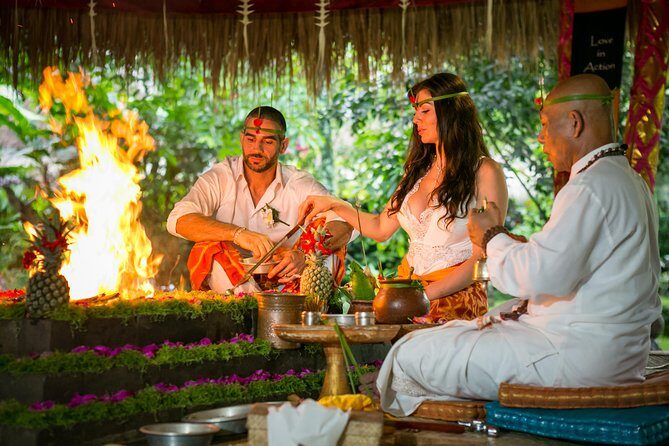
- Homa Yajna fire healing: designed to help you let go of unwanted patterns and welcome new intentions
- Bebayuh cleansing offering: a purification step meant to release negative energies and restore positivity
- Couple-focused promise renewal: the ceremony is framed for romantic relationships, not solo reflection
- Karmic relationship reading: a Balinese shaman reads your relationship path and offers guidance
- Animal release for good karma: done after the core rituals, tied to fortune and compassion
- Private setup in Ubud: pickup is offered and it’s only your group, booked on a 2:00 pm schedule
Homa Yajna and Bebayuh: the real heart of the ceremony
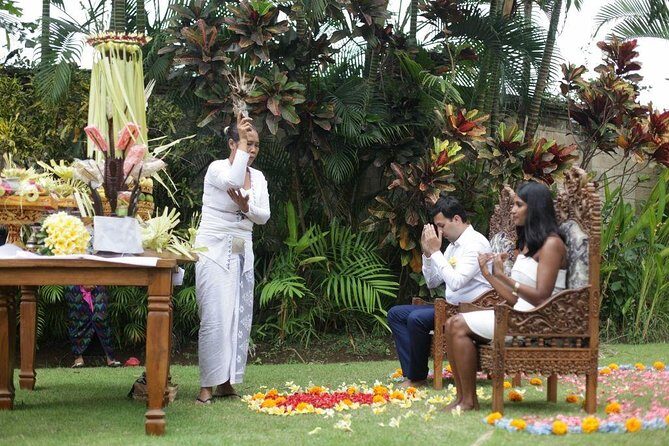
In Ubud, this experience is built around two linked ideas: fire healing and cleansing. The homa yajna portion is a Balinese sacred healing fire ceremony said to come from ancient Vedic texts. Practically speaking, it’s the centerpiece of the event. You’ll be guided through what’s happening and what it’s meant to do—letting go of unwanted aspects, then bringing in new intentions.
Then comes bebayuh, centered on purification. The word “bayuh” is explained as cleansing and purifying negative energies. That language matters because it sets the tone. This isn’t only about love as romance. It’s about love as spiritual alignment, clearing what blocks you, and resetting your mindset as a couple.
If you’ve ever wondered why some couples feel calmer and more “in sync” after certain ceremonies, this is the structure that aims for that. Fire and purification create a before-and-after feeling. You don’t just leave with a story. You leave with a sense of closure on the old and direction for the new.
Also, from the way the ceremony is described in feedback, it can feel emotionally loaded. People talk about it as a deep, emotional experience with spiritual explanation throughout. One review even notes the ceremony includes Balinese Hindu and Buddhist elements, so expect a spiritual atmosphere that draws from more than one tradition, not just a single aesthetic.
You can also read our reviews of more tours and experiences in Ubud.



Your 2:00 pm start at Puri Ubud: timing, pace, and comfort
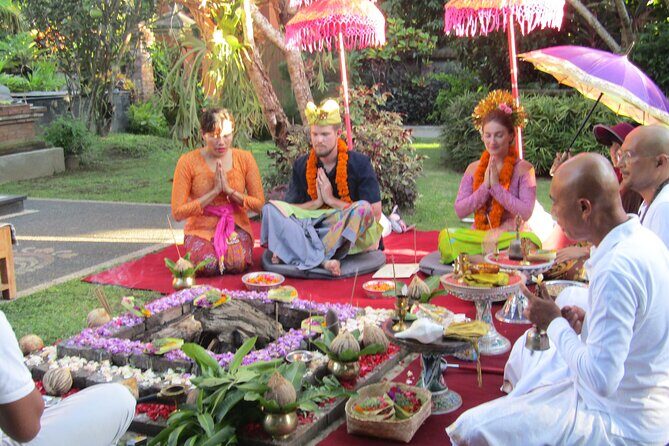
This starts at 2:00 pm at Puri Ubud in Gianyar Regency. It ends back at the same meeting point. The total time is listed as about 5 hours, which is long enough that you should plan for a full afternoon, not a quick detour.
Why the timing matters: a late start can be a good thing in Bali. You’re less rushed in the morning, and you avoid feeling like you need to “speedrun” Ubud. The downside is simple: you’ll want to eat earlier and not assume you’ll have a casual snack break between ritual segments.
The experience is private, only your group participates. That helps a lot. You’re not constantly waiting for other couples to shuffle into position or asking the same question five times. It also makes it easier to take things at your own pace when the ceremony gets emotional.
Pickup is offered, which can reduce friction. If you’re staying anywhere around Ubud, this can be the difference between a calm start and a stressful drive. You’ll also use a mobile ticket, so you’ll want your phone charged and ready—basic, but always worth it.
The ceremony flow: fire healing, couple cleansing, and a renewal moment
Here’s how the “story” of the blessing is designed to unfold.
First: you move into the homa yajna ceremony. Fire healing is meant to help you release unwanted aspects. In a couple context, that translates into a shared intention: what do you want to stop carrying, and what do you want to stop repeating? You’ll be in a setting where the ritual steps are explained, and the ceremony is presented as a sacred process rather than a staged performance.
Next: bebayuh offering. This is the cleanse-and-purify stage. Reviews mention the event was well organized, with clear explanation of what was happening. That’s important because it keeps you from feeling lost. The better you understand the purpose of each step, the more the experience can actually land on you.
Then: a renewal element for couples. The ceremony is described as a chance for couples to renew their promise in this sacred ritual. That promise-renewing piece is the emotional bridge. It turns “cleanse and heal” into something relational, not generic. It’s about strengthening your spiritual bond and understanding your relationship path with your partner.
If you’re trying to decide whether this is “right for you,” ask yourself one question: do you want your Bali time to be about spiritual focus, with ceremony as the main activity? If yes, the structure makes sense. If your goal is just something scenic and casual, the promise and purification steps can feel too serious.
The karmic reading with a Balinese shaman: what you’re really paying for
After homa yajna and bebayuh, you’ll have a karmic reading session with a Balinese shaman. The purpose is specific: to read your relationship path and give advice. It’s framed around understanding your obstacles and luck as a couple.
This is the part many people find most useful, even when they’re not sure they believe in karmic readings in the first place. Here’s why: relationships often hit the same repeating issues, even when you don’t talk about them. A reading—especially one guided by a local spiritual tradition—can act like a mirror. You may hear themes you recognize instantly: communication breakdowns, timing issues, unresolved emotional patterns, or recurring conflict.
The key is how it’s handled. The experience is set up to be guided and explained, and feedback notes it felt organized, with explanations about the rite. That means you’re less likely to feel like you sat in silence and left with vague statements.
A balanced note: karmic readings are interpretive. They can’t replace real relationship work. But they can help you talk about things you’ve avoided, and that can be valuable. If you go in with an open mind and a practical attitude, you’ll get more than a spooky story.
Animal release: compassion, good karma, and handling the emotions
After the core ceremony and the reading, there’s animal release. The description ties it to compassion for all sentient beings and the idea of bringing good karma and fortune.
This part can be surprisingly “loud” emotionally, even if it’s brief. It’s not a neutral ritual. It’s meant to create a feeling of care and intention in your body, not just your head. If you tend to be sensitive to animal-related moments, expect that reaction.
What helps is understanding the purpose. You’re not releasing animals as a spectacle. It’s framed as a compassionate act to support good karma. If that aligns with your values, you’ll likely feel grounded by it. If it clashes, you might want to mentally prepare before you arrive.
Also, because this happens after homa yajna/bebayuh and after the shaman reading, it tends to work like a final punctuation mark. You’ve already gone through let-go-and-cleanse. Now the event asks you to express compassion outward. That gives the experience a full arc: release, restore, then act.




Price and value: is $172 per person worth it?
The price is $172 per person. For a 5-hour private, ceremony-based couple experience in Ubud—including pickup offered, a mobile ticket, and multiple spiritual components—that price sits in the “serious experience” category.
Here’s what you’re paying for, and what makes it feel like value (not just a fee):
- Multiple ritual stages (homa yajna + bebayuh) instead of a single short performance
- A dedicated reading session with a Balinese shaman focused on your couple relationship path
- A private format so your time and attention aren’t competing with other groups
- Cultural and ceremonial immersion that’s structured and explained, not vague or hands-off
Where value can vary is in your personal fit. If you’re deeply into spiritual practices and you enjoy ceremony, you’ll probably see the cost as justified by the time, guidance, and emotional payoff people describe. If you’re hoping for a casual activity with minimal spiritual intensity, then $172 can feel steep for what might end up being “not your thing.”
One more practical point: this is booked around 42 days in advance on average. That’s often a clue that couples plan ahead for the right time window and want a reliable slot. If you’re traveling in peak season, booking sooner is smart just to avoid getting stuck with a later date.
Practical tips so you get the most from the experience
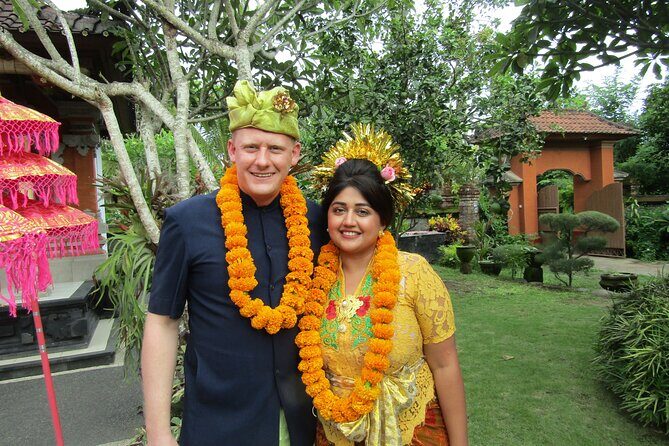
This is a sacred ceremony, so small behavior choices matter. You don’t need to be perfect—you just need to be respectful and calm.
- Dress for a ceremony atmosphere. You’ll likely be in a formal spiritual setting, and reviews mention details like traditional outfit and hair styling being part of the experience. If you’re offered anything, say yes if it feels comfortable for you.
- Expect explanations during the ritual steps. Feedback highlights that people received good explanations about what’s happening. Still, it helps to ask simple questions if you don’t understand a step.
- Bring a quiet mindset. This experience aims to help you let go and renew your intentions. If you show up thinking it’s only entertainment, you may miss the benefit.
- Plan your afternoon. Since it runs about 5 hours and ends where it starts, you’ll want an easy plan after the blessing.
- Go in as a couple, not as two separate people. The reading and promise-renewal parts work best when you treat it as shared time, even if you process emotionally in your own way.
And a tiny humor note: don’t schedule it right after a big fight or a stressful day with no decompression time. This is the kind of event that makes feelings louder, not quieter.
Who this couple blessing suits best
This one is for couples who want a spiritual tone in Bali, not just a romantic dinner vibe.
It’s a good match if:
- You’re looking for relationship intention-setting and reflection
- You want a guided ceremony that’s explained, not mysterious from start to finish
- You like local Balinese spiritual traditions and want to experience them respectfully
- You’d appreciate a reading that focuses on obstacles and luck as a couple
It might be less ideal if:
- You prefer light sightseeing with minimal emotional intensity
- You’d be uncomfortable with animal-release moments
- You only want photos and don’t want your time structured around ceremony
Should you book the Matasidhi Sacred Love Blessing?
If you and your partner are open to a serious, meaningful couple ritual, I’d say yes—this is built for that exact purpose. The blend of homa yajna, bebayuh, a shaman’s karmic reading, and then animal release gives you a full arc: release, cleanse, understand, and express compassion.
Book it if you want something that feels personal and guided in Ubud. Skip it if your idea of Bali romance is mostly sunshine, shopping, and calm strolls—this is intentionally more spiritual and emotionally focused.
FAQ
Where does the Sacred Love Blessing start?
It starts at Puri Ubud in Ubud, Gianyar Regency, Bali, Indonesia.
What time does the experience begin?
The start time is 2:00 pm.
How long does the experience take?
It lasts about 5 hours.
How much does it cost?
The price is $172.00 per person.
Is this a private activity?
Yes. It’s private, and only your group will participate.
Is pickup available?
Pickup is offered.
Do I need a physical ticket?
No. It uses a mobile ticket.
What ceremonies are included for couples?
The couple blessing includes a homa yajna fire ceremony and a bebayuh offering for cleansing and purification.
Is there a reading after the ceremonies?
Yes. After homa yajna or bebayuh, there is a karmic reading session by a Balinese shaman to read your relationship path and give advice.
Is animal release included?
Yes. Animal release is done as a compassionate act to all sentient beings, meant to bring good karma and fortune.
Cancellation
What’s the cancellation and refund policy?
Free cancellation is available. You can cancel up to 24 hours in advance for a full refund. If you cancel less than 24 hours before the start time, the amount paid will not be refunded.