REVIEW · NUSA PENIDA
Reef Rehabilitation Course and Snorkeling
Book on Viator →Operated by Ecotourism Nusa Penida · Bookable on Viator
Hands-on reef work changes your whole perspective. This 6-hour Reef Rehabilitation Course and snorkeling experience in Nusa Penida mixes practical coral restoration with real marine education, led by the local team at Ecotourism Nusa Penida. You don’t just watch conservation in action—you help carry it forward.
Two things I love right away: you plant 70 corals per person (about 4 m² of reef), and the course walks you through the “why,” not just the “what,” so the work makes sense. A possible consideration: you’ll need to swim comfortably and handle some careful underwater tasks, including knot-tying and attaching fragments safely.
I met the guides Nyoman, Festi, and the rest of the team, and their reef knowledge felt grounded—like they’ve been doing this long enough to explain it without hype. If you want a conservation trip that feels practical and local, this one fits.
In This Review
- Key Highlights at a Glance
- Reef Restoration Basics: What This Course Really Gives You
- Meeting Nusa Penida’s Team and Getting Set Up for Water Time
- Coral Science Before Snorkeling: Why the Presentation Matters
- Snorkeling the Reef Nursery: Seeing Where Corals Start
- Harvesting Coral Fragments and Preparing Your Rope Work
- Underwater Knot-Tying: The Skill That Turns You Into a Participant
- Planting 70 Corals (About 4 m²) and What That Looks Like
- Coral Cafe Lunch and the Meaning Behind the School Gift
- Saturday Add-On: Teaching English and Beach Cleanups With Children
- Price, Time, and Group Size: Is $62.61 Worth It?
- Who This Coral Rehabilitation Course Is Best For
- Should You Book This Reef Rehabilitation and Snorkeling Course?
- FAQ
- What is included in the Reef Rehabilitation Course and snorkeling?
- How long is the experience in Nusa Penida?
- How many people are in the group?
- Will I need to know how to swim?
- What do I actually do during the course?
- Where does the tour start and end?
- What is the cancellation policy?
Key Highlights at a Glance
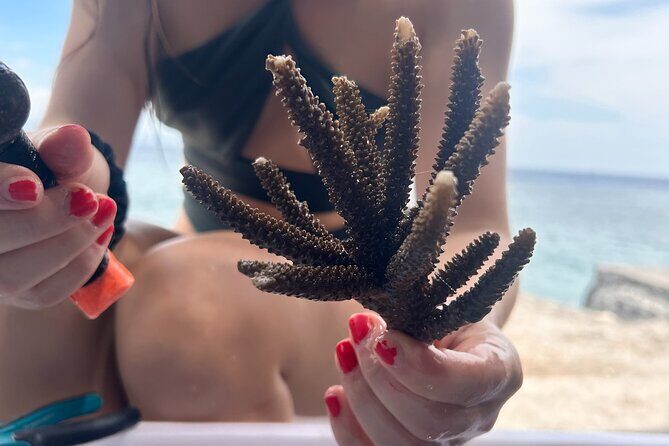
- Plant 70 corals by hand, restoring about 4 square meters per person
- Learn coral biology and ocean conditions before you get in the water
- Snorkel guided in multiple sessions tied directly to the restoration process
- Practice underwater knot-tying and prepare ropes with coral fragments
- Lunch at Coral Cafe plus a gift connected to the local school and kids
- Saturday option includes teaching English and doing conservation activities like beach cleanups
Reef Restoration Basics: What This Course Really Gives You
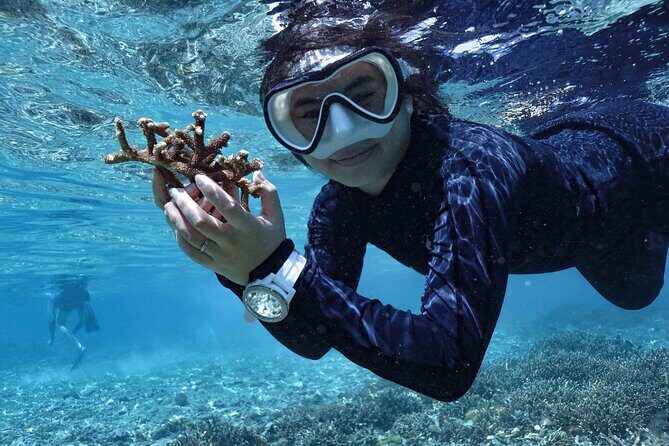
This is reef restoration you can point to later. Instead of vague “support a cause” energy, the day is structured around one clear outcome: you help place living coral fragments onto a prepared site so they can grow within the reef restoration system.
The course also treats coral like an ecosystem, not just a cool underwater animal. You’ll get a coral conservation presentation that covers coral biology and why ocean conditions matter for survival and growth. That context matters because coral restoration isn’t only about planting—it’s about matching the right fragment to the right conditions.
And because this is led by local reef workers, you’ll be taught with the tone of people who know the currents and coastlines. You’re not just learning how to do one task; you’re learning how the ocean in Nusa Penida behaves and how to work with it.
You can also read our reviews of more snorkeling tours in Nusa Penida
- ️Nusa Penida by Private Boat – Snorkeling 4 spots, Swim with Mantas + Land Tour
★ 5.0 · 6,424 reviews

Meeting Nusa Penida’s Team and Getting Set Up for Water Time
The experience starts and ends back at Ecotourism Nusa Penida (Buyuk, Jalan, Ped, Nusa Penida, Klungkung Regency, Bali 80771). From there, you’re guided through what happens next and how to be comfortable in the water.
Group size is small, with a maximum of 10 travelers, which helps a lot on a day that includes both instruction and snorkeling. Smaller groups mean you’re less likely to feel rushed when you’re learning rope prep or trying to tie knots underwater.
You’ll also use snorkeling equipment provided as part of the tour. That’s a time-saver, and it reduces one more thing you have to plan yourself. Your main prep is personal: wear what you can swim in comfortably, keep an eye on safety instructions, and be ready for tasks that require calm hands.
Coral Science Before Snorkeling: Why the Presentation Matters
Many snorkeling trips start in the water and explain things afterward. This one flips the order: you learn the basics first, then you do the work.
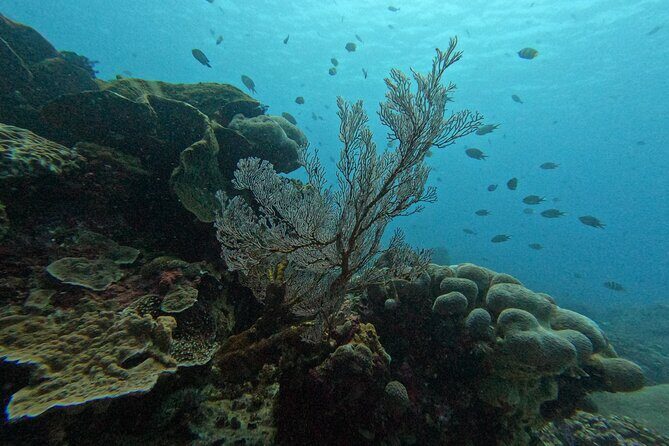
The coral presentation covers coral biology and the ecosystem value of reefs—why corals matter to the wider ocean, not just the reef itself. You’ll also hear about ocean conditions and how damaged ecosystems are brought back to life. That last part is practical. Restoration is slow, and it’s technical, so the course sets expectations early on what “success” looks like.
Then you see how the corals are cultivated in their coral nurseries. That nursery step is key because it turns coral planting from a single act into a process. You’re not collecting random “cool rocks.” You’re learning how fragments are handled, prepared, and moved through a restoration workflow.
Snorkeling the Reef Nursery: Seeing Where Corals Start
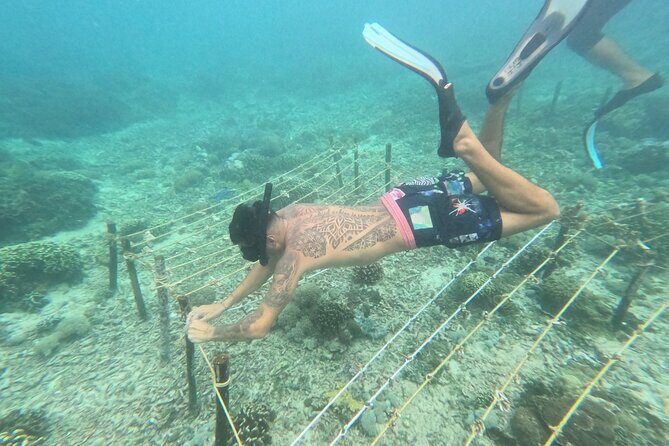
After the classroom-style groundwork, you head to the reef nursery area. This is where the day shifts from theory to hands-on work.
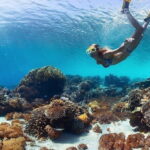
You’ll snorkel with guidance focused on the restoration steps. Instead of treating snorkeling as a detached sightseeing moment, the experience uses your time in the water to connect what you learned to what you’re about to do next. Seeing the nursery helps you understand how fragments grow before being attached to a reef site.
The tour description also highlights that there are three guided snorkeling experiences during the day. That setup is a big clue about pacing: you’re not stuck in one long session. You get breaks and transitions, and each snorkeling block has a purpose tied to education and planting.
Harvesting Coral Fragments and Preparing Your Rope Work
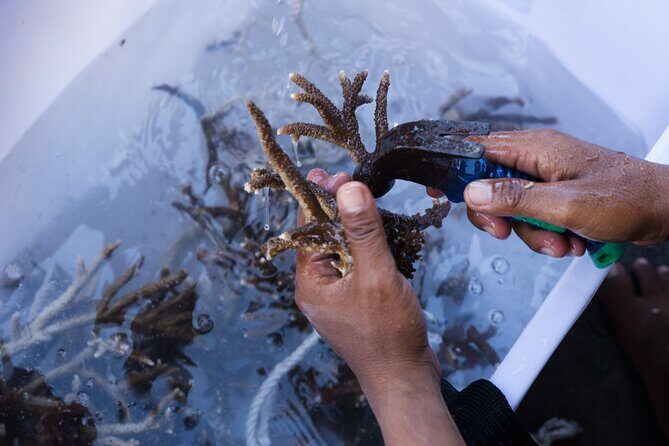
Once you’re in the right area and the team has shown you what to look for, you move into the fragment stage. The experience includes harvesting coral fragments for planting—meaning the fragments you handle are part of the restoration workflow, not something you’re picking casually.
Then comes the rope preparation. You’ll collect the coral fragments and prepare ropes for the planting process. This part is where the day becomes very “you’re doing the work” instead of “you’re watching the work.”
If you’re the kind of person who likes clear steps and tangible results, this will feel satisfying. It also helps explain why the presentation earlier wasn’t just a lecture. The biology and conditions you learned are exactly what your hands-on task depends on.
- ️Nusa Penida by Private Boat – Snorkeling 4 spots, Swim with Mantas + Land Tour
★ 5.0 · 6,424 reviews
Underwater Knot-Tying: The Skill That Turns You Into a Participant
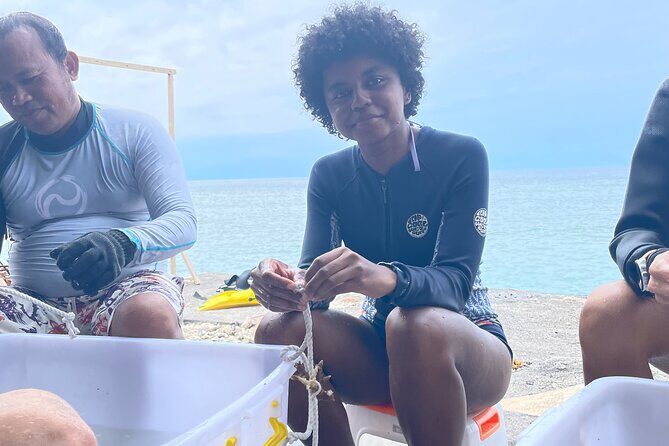
One of the most memorable parts is the knot-tying instruction underwater. Yes, you read that right: the tour includes a lesson on tight knots underwater and then the practice of preparing the ropes with collected coral fragments.
In plain terms, this turns coral planting into a skill session. You’re learning how to secure the fragments so they can stay in place as conditions change. That’s not only for safety and effectiveness—it’s also for the science. If fragments loosen or aren’t attached properly, survival chances drop, and the whole restoration chain gets harder.
A practical tip from how this type of task is usually taught: keep your movements slow, follow the guide’s hand placement, and treat knots like they’re made in steps, not all at once. You’ll likely get coaching, but your job is to stay calm and focused.
This is also where the small group size really helps. You can get more individualized attention while you’re learning a task that requires coordination and patience.
Planting 70 Corals (About 4 m²) and What That Looks Like
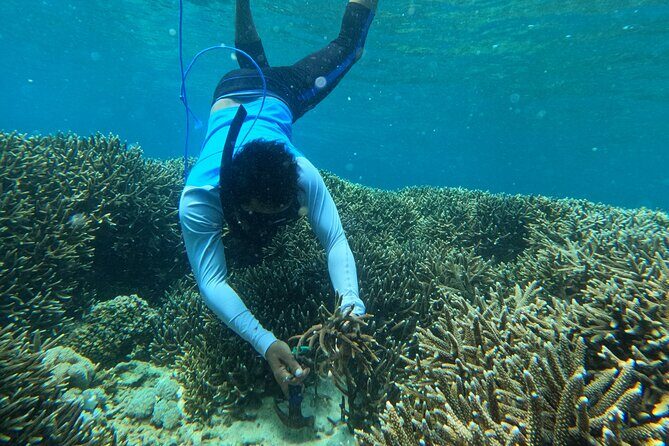
Here’s the headline number that makes this tour feel like real value: you plant 70 corals per person, restoring about 4 square meters of reef.
In the water, planting means attaching coral fragments to the seabed using the rope setup you prepared. You’re not just placing things on the ocean floor randomly. The guides help you follow the restoration method so the fragments are positioned as part of the coral garden system.
From an enjoyment standpoint, this is the section that tends to stick with people. In a good way. You come away knowing exactly what you did, where you did it, and how it connects to the larger project.
And that connects directly to the course’s positioning: typical NGO coral restoration efforts can cost far more when you compare them to “adopt a coral” models. Here, you get the real thing—a course with materials and instruction built in, not just a symbolic contribution.
Coral Cafe Lunch and the Meaning Behind the School Gift
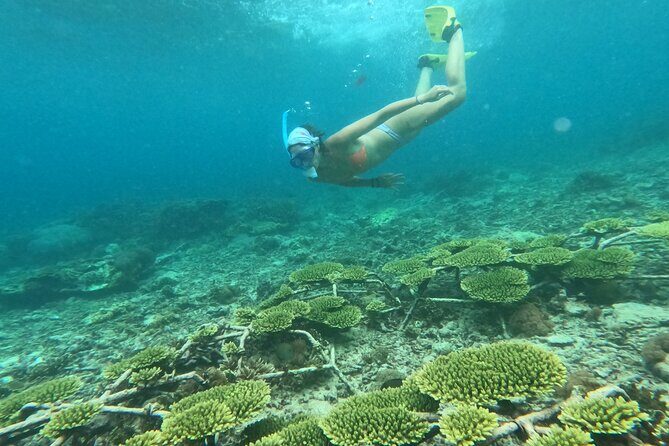
After the water time (and before the final stretch of the day), you’ll have lunch at Coral Cafe. This matters more than it sounds. A lot of reef days run on fumes—just snacks, then back in the water. Having lunch included helps you stay steady and gives you a real break to reset your body and mind.
The tour also includes a gift to local kids and the school. That’s part of the “living legacy” framing and the local community connection. It’s not presented as a separate add-on. It’s tied to how the project works year-round and how the team views conservation as community involvement, not only marine work.
If you care about value beyond the reef itself, this component helps the day feel grounded. You’re seeing how the project supports local life.
Saturday Add-On: Teaching English and Beach Cleanups With Children
If you’re booking on a Saturday, you get an extra layer. The tour includes a visit to a local school where you teach English, plus conservation activities like beach cleanups with the children.
This changes the rhythm of the day. It shifts some attention from underwater tasks to land-based community work, and it gives the conservation message a human face. It’s also a reminder that coral health and coastal health are linked—trash and runoff affect the nearshore environment where reefs rely on clean, stable conditions.
If you like doing more than one type of impact on your trip, this Saturday version will feel extra meaningful.
Price, Time, and Group Size: Is $62.61 Worth It?
At $62.61 per person for about 6 hours, this is one of those rare conservation experiences that feels priced like a local activity, not like a luxury “experience product.”
The value comes from three places:
- You get materials for coral restoration, not just instruction.
- You receive snorkeling equipment, so you’re not paying separately for gear.
- You do a measurable action: planting 70 corals per person.
A quick reality check: you’re not paying for endless scenic stops or fancy extras. You’re paying for a guided restoration day that includes education, equipment, coral materials, and an impact you can understand.
Booking is often done about 38 days in advance on average, which suggests demand. If you have a short window in Bali, it’s smart to plan ahead so you don’t end up searching for last-minute availability.
Also, the tour is capped at 10 travelers. That small cap often improves your safety and learning experience, especially when the day includes detailed tasks like underwater knot-tying.
Who This Coral Rehabilitation Course Is Best For
I’d point this experience at a few types of travelers.
You’ll likely enjoy it if:
- You can swim comfortably and want an active role, not just snorkeling.
- You like clear instructions and “do it with your hands” learning.
- You care about reef restoration beyond a photo moment.
- You want a smaller-group day in Nusa Penida with community involvement.
You might think twice if:
- You don’t feel confident swimming in open water.
- Underwater tasks (like knot-tying and attaching fragments) sound stressful rather than fun.
Moderate physical fitness is listed as the expectation, so keep that in mind. The day isn’t described as a hardcore expedition, but it does ask for steady participation.
Should You Book This Reef Rehabilitation and Snorkeling Course?
If you want a Bali snorkeling day that actually connects to conservation work, I’d book this. The combo of reef education, practical restoration steps, and planting 70 corals per person makes it feel like a true participation experience.
Choose it especially if you value local guidance and you want to leave knowing your hands helped place coral fragments, not just that you spent time near them.
Just go in with realistic expectations: you’ll be working at sea level with gear, you’ll tie knots and handle ropes carefully underwater, and you should be comfortable swimming. If that part sounds doable, this is a standout way to spend your time in Nusa Penida.
FAQ
What is included in the Reef Rehabilitation Course and snorkeling?
Lunch is included, along with snorkeling equipment, material for coral restoration, and a gift to local kids and the school.
How long is the experience in Nusa Penida?
The tour lasts about 6 hours.
How many people are in the group?
The experience has a maximum of 10 travelers.
Will I need to know how to swim?
You should be able to swim comfortably, and the tour lists a moderate physical fitness level.
What do I actually do during the course?
You’ll attend a coral conservation presentation, see coral nurseries, harvest coral fragments for planting, tie knots underwater, prepare ropes with fragments, and plant 70 corals per person (about 4 m²).
Where does the tour start and end?
It starts at Ecotourism Nusa Penida in Nusa Penida and ends back at the same meeting point.
What is the cancellation policy?
Free cancellation is available up to 24 hours before the experience starts for a full refund.
You Might Also Enjoy



More Snorkeling Tours in Nusa Penida
- ️Nusa Penida by Private Boat – Snorkeling 4 spots, Swim with Mantas + Land Tour
★ 5.0 · 6,424 reviews
More Tour Reviews in Nusa Penida
- ️Nusa Penida by Private Boat – Snorkeling 4 spots, Swim with Mantas + Land Tour
★ 5.0 · 6,424 reviews