REVIEW · UBUD
Rural Charm of Bali Tour
Book on Viator →Operated by Tour East Indonesia · Bookable on Viator
Bali’s countryside has a way of slowing you down. This tour takes you into Gulingan Village for rural activities and a Balinese cooking demonstration with lunch that’s served in a thatched pavilion by the rice fields. I especially like the focus on everyday life in the island’s interior, and the way the cooking lesson ties into real ingredients. One consideration: the experience is mostly a demonstration (not a full cooking-for-hours class), and there can be some early pickup and light walking through rural paths and rice fields.
After you’re picked up, the day feels like it has a gentle rhythm: farm walks first, then the market and cooking, then lunch, then back to your hotel. The payoff is that you get more than a show—you get a sense of how Balinese spices, plants, and daily routines fit together. If you’re picky about mornings, plan for pickup up to an hour before 9am.
In This Review
- Key things to know before you go
- Why Gulingan Village Feels Like Real Bali (Not a Scripted Stop)
- The 4–6 Hour Timing That Fits a Real Vacation Day
- Pickup Areas, Meeting Point, and How Group Size Shows Up
- The Countryside Walk: Kites, Rice Terraces, and Spice Plants
- Bring the right shoes
- Market Stop and the Real Spice Lesson
- What You’ll Cook: Tum Wrapping, Yellow Rice, and Veggies
- Lunch in a Thatched Pavilion by the Rice Fields
- Spiritual-Journey Cultural Time: What It Adds (and What to Watch)
- Value for $71.80: When This Is a Smart Use of Your Time
- Trade-Offs to Plan For: Early Pickup and Upsell Energy
- Pickup timing
- Extra stops and pressure to add more tours
- Who Should Book This Rural Charm of Bali Tour?
- Should You Book Rural Charm of Bali in Gulingan Village?
- FAQ
- How long is the Rural Charm of Bali Tour?
- Do I get hotel pickup and drop-off?
- What food is included?
- What should I wear or bring?
- Is this tour hands-on or mostly watching?
- What is the cancellation policy?
Key things to know before you go
- Gulingan Village is the main event: rice terraces, village life, and countryside activities away from beach crowds
- Cooking lesson tied to ingredients: you get a market intro and you’ll grind and mix spice blends
- Lunch in a rice-field setting: Tum wrapping, yellow rice, and fresh vegetables in a thatched pavilion
- Countryside stops can include kite flying, gamelan-style playing, pond fishing, and spice plantation walks
- Comfort matters: bring good walking shoes for rural paths and rice-field trekking
- English-speaking licensed guide helps connect the dots and keeps the day moving smoothly
Why Gulingan Village Feels Like Real Bali (Not a Scripted Stop)
Ubud is a gateway, but it’s easy for Bali days to turn into temples, gift shops, and the same photo angles. This is different. You’re headed into the island’s lush interior toward terraced rice paddies and misty mountain views—plus a village setting where you can see how people live beyond the resort map.
What I like most is the tour’s balance: you don’t just watch cooking. You start in the countryside, you walk among the plants behind the flavors, and then you connect those plants to the food. It’s a simple idea, but it lands well when you’re trying to understand a place through what people actually grow and eat.
You can also read our reviews of more tours and experiences in Ubud.



The 4–6 Hour Timing That Fits a Real Vacation Day
The total time is listed as about 4 to 6 hours, and the tour starts at 9:00am. Pickup happens between 30 minutes and 1 hour before 9am, depending on where you’re staying. That means you’ll want to treat this as a morning-to-early-afternoon plan, not something to squeeze in at the end of your day.
Also, the itinerary includes time for an experience in a cultural village area (you may see around 2 hours referenced for that portion). In practice, it tends to feel like one continuous flow: village walk → cooking-market intro → cooking steps → lunch → return transport.
Pickup Areas, Meeting Point, and How Group Size Shows Up
This is designed for convenience. Pickup and drop-off are offered from major hotels in Kuta, Seminyak, Sanur, Jimbaran, and the Nusa Dua area. If you’re elsewhere, you might need to use the tour’s meeting point area: Bali Budaya Cultural Village, Jalan Raya Ir. Utami, Br. Batusepih – Kemenuh, Kemenuh, Sukawati, Gianyar Regency, Bali.
Group size has a maximum cap (up to 99 travelers), but what matters to you is how your day feels. When the group is smaller, you typically get more chances to participate in the spice prep steps and ask questions. When it’s larger, the cooking portion can stay more “watch-and-do-some-steps” rather than “everyone cooks everything.”
One more small practical note: the tour provides an English-speaking licensed guide, and that guide’s style can make a big difference. In some cases, guides (including one named Gus) were praised for being informative and fun without hovering.
The Countryside Walk: Kites, Rice Terraces, and Spice Plants
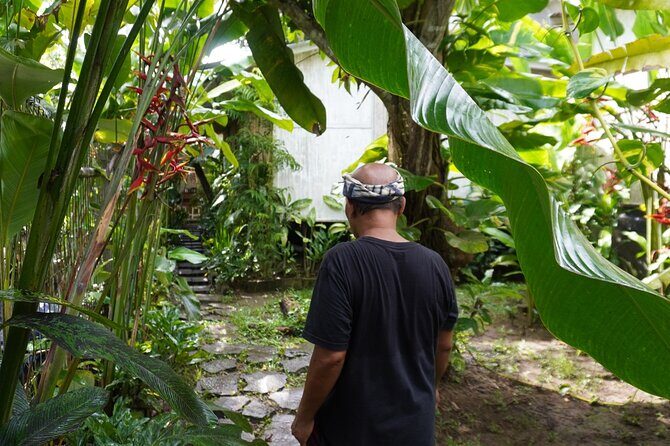
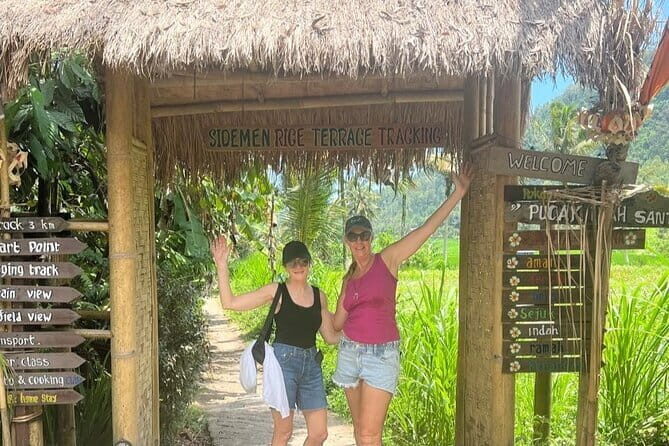
The countryside portion is where the tour earns its name. You’ll travel into Gulingan Village and spend time moving through rural surroundings that feel quieter than the beach circuit.
Depending on timing and what your guide is prioritizing that day, you might get a mix of activities such as:
- flying a classic Balinese kite
- trying gamelan-style playing on bamboo instruments
- pond fishing
- strolling through plantation areas like coffee, vanilla, and cloves
If you like photo-worthy places but also like hands-on moments, this part hits a sweet spot. It’s interactive without turning into a hardcore adventure day. Still, don’t underestimate the ground. The tour notes there’s some walking through rural villages and rice fields, so your shoes matter more than you might think.
Bring the right shoes
I’d call this out clearly: pick closed, supportive walking shoes over sandals. The paths can be uneven, and you’ll be on your feet longer than a quick sightseeing stop.




Market Stop and the Real Spice Lesson
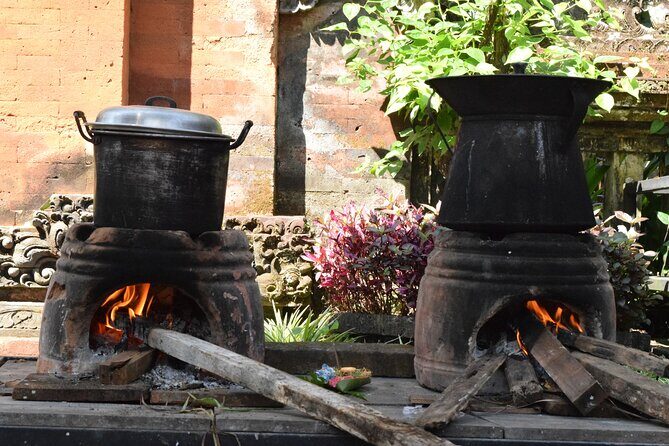
Before the cooking portion fully starts, you’ll visit a local traditional market where you can see fresh ingredients and the spices that shape Balinese flavors. This part is useful because it helps you understand what you’re about to cook and why the spice blends matter.
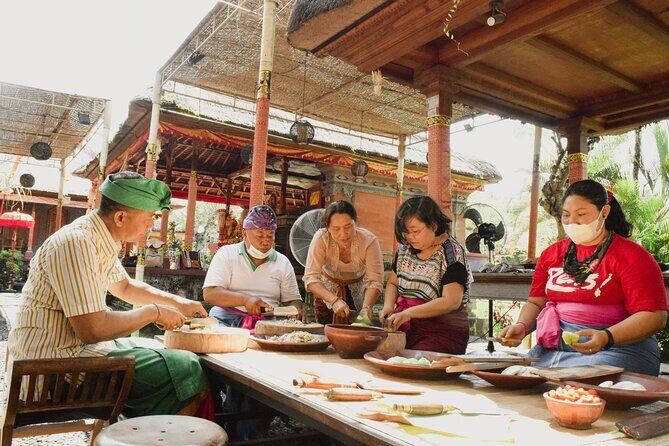
Then the cooking demonstration focuses on a hands-on element: you’ll get the chance to grind and mix herbs and spices. That’s the part you’ll remember when you start thinking, Wait, why does this taste so specific?
The key point: this is called a cooking demonstration, not a full workshop. You may do more steps than you expect, but your role is typically “help with key prep tasks,” while the main cooking is done by the village chefs.
What You’ll Cook: Tum Wrapping, Yellow Rice, and Veggies
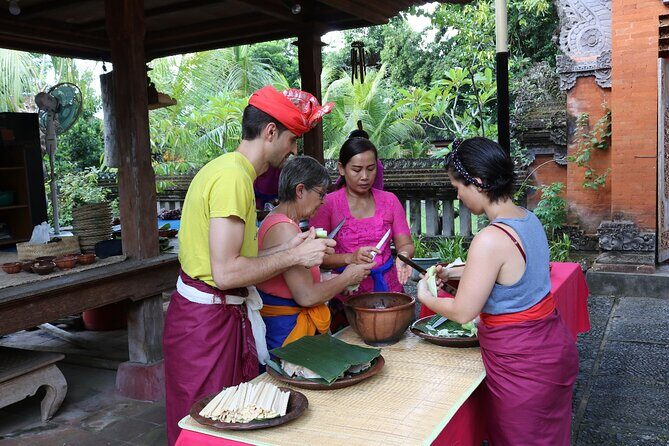
The menu is clearly laid out in the tour description. You’ll watch and learn how to prepare dishes such as:
- Tum wrapping
- Yellow rice
- Fresh vegetables
That structure is great for first-timers. You’re not being asked to master a dozen things—you’re being shown a few important dishes that represent how Balinese cooking uses local spices and fresh ingredients.
From the experience style, I’d expect the chef-led portion to take the lead, while you participate in spice grinding and mixing. Some people love this format because it’s not stressful—you get involved, but the cooking doesn’t depend on you flipping, timing, and fixing. If you want a very hands-on class where you manage every step alone, you might find this more “guided prep + chef demonstration” than “you do it all.”
Lunch in a Thatched Pavilion by the Rice Fields
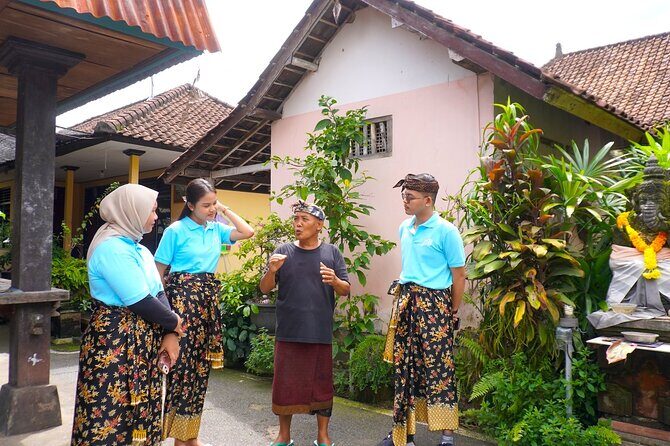
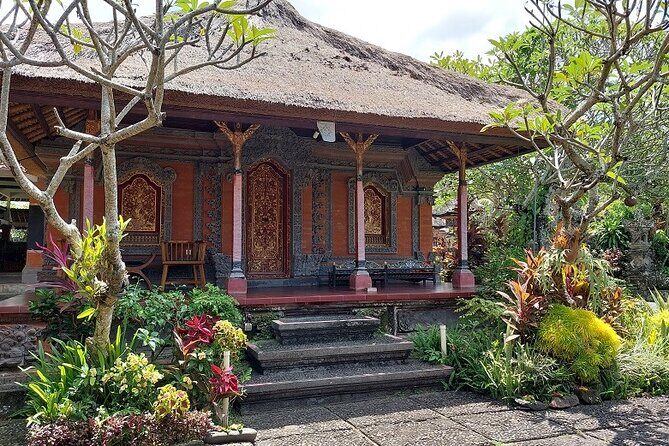
After the cooking lesson, you’ll eat lunch in a customary thatched pavilion set among rice fields. This is one of the best moments of the day, because lunch isn’t just food—it’s part of the rural setting you walked into.
The practical benefit is that you’re not scrambling for lunch afterward. You also avoid the common trap where a cultural stop turns into a forced meal somewhere touristy. Here, the meal is tied to what you just learned.
And yes, people tend to get excited about the taste. One of the strongest signals from recent feedback is that the food can be the highlight—often described as among the best meals in Bali—especially because it’s cooked traditionally and served in that calm village setting.
Spiritual-Journey Cultural Time: What It Adds (and What to Watch)
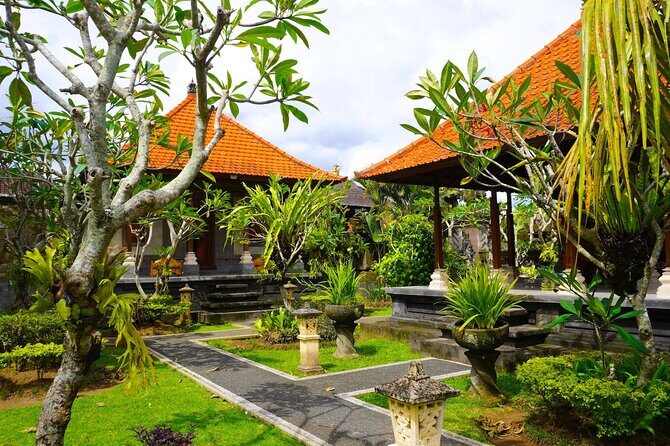
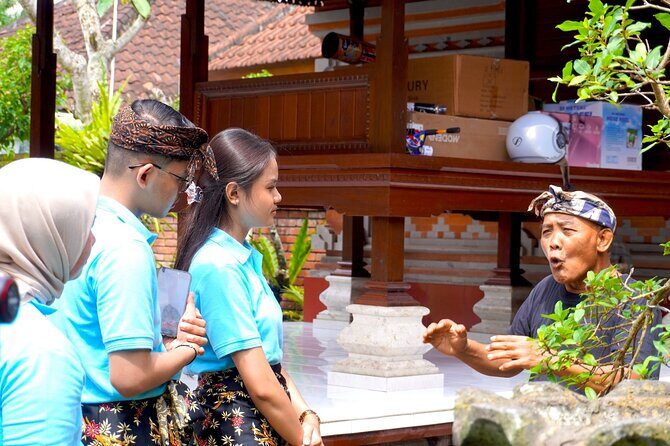
The itinerary includes a stop connected with Bali Budaya Cultural Village and Spiritual Journey in the Batu Sepih area, with an admission ticket included. The focus there is on learning authentic Balinese recipe skills—again tied to grinding, mixing, and preparing herbs and spices.
This segment adds cultural context, but it also means the day can include more structure than a pure village-walk-and-cooking plan. If you’re the type who likes free time to wander, you might feel the timeline is controlled.
Also, a small caution from real-world patterns: some guides have added extra side visits on certain days, like a batik factory or an art gallery, and even coffee-related stops. That can be a bonus if you like that kind of cultural browsing. If you’d rather keep the day tightly focused on Gulingan and cooking, just be clear upfront about what you want to prioritize.
Value for $71.80: When This Is a Smart Use of Your Time
At $71.80 per person, the value depends on what you want most from your Ubud stay.
This price stacks several useful items:
- hotel pickup and drop-off (in multiple major areas)
- an English-speaking licensed guide
- a market-and-cooking demonstration format
- lunch
- an admission ticket included for the cultural village portion
If you price that out as individual activities, the total starts to make sense. You’re paying not only for the cooking demo, but for transport, guiding, and a meal. For many people, that’s the sweet spot: you don’t have to plan a mini itinerary or drive yourself into the interior.
Where the value can feel weaker is if you’re expecting a long, fully hands-on cooking class where you do everything. Based on the demo style and how it’s described, this tour is built around learning and participation in key prep steps, then eating what’s prepared.
Trade-Offs to Plan For: Early Pickup and Upsell Energy
This tour is generally friendly and informative, but there are two friction points worth naming.
Pickup timing
Pickup can be as early as 1 hour before 9am. Some people love an early start because it keeps the rest of the day free. Others find it unnecessary. If mornings aren’t your thing, set expectations and plan your morning accordingly.
Extra stops and pressure to add more tours
One common complaint pattern is not about the village itself, but about a guide or driver using the ride time to push additional bookings. In other cases, the same role was described as relaxed and not pushy. Translation: the experience can be warm and respectful, or it can turn salesy for a bit.
My advice: if you’re not interested in add-ons, say so calmly and early. You don’t owe anyone a yes just because they mentioned a stop.
Who Should Book This Rural Charm of Bali Tour?
This is a great fit if you want:
- a Ubud-area experience that gets you out of tourist lanes
- a day that combines countryside walking with a cooking demonstration
- lunch that feels like part of the cultural learning, not an afterthought
It’s also a good choice if you like taking small risks: walking rural paths, trying activities like kite flying or fishing (if available), and learning spices from people who work with them every day.
It’s less ideal if you:
- want a heavy, nonstop hands-on cooking class
- dislike any walking through uneven rural areas
- strongly prefer zero sales pressure from drivers or guides
Should You Book Rural Charm of Bali in Gulingan Village?
If you like authentic food learning and you want a calmer view of Bali’s interior, I’d say yes—this tour is built for exactly that. The combination of village setting + spice learning + lunch gives you a complete arc, not just a short activity.
Book it especially if you’re staying in the pickup areas and you want the convenience of transport plus an English-speaking guide. If you’re sensitive to early starts or you want to avoid any add-on pressure, go in with a plan: wear the right shoes, be clear about what you want to focus on, and you’ll likely come away with both good stories and a genuinely tasty meal.
FAQ
How long is the Rural Charm of Bali Tour?
It runs about 4 to 6 hours total. You’ll start at 9:00am, with pickup scheduled 30 minutes to 1 hour before then.
Do I get hotel pickup and drop-off?
Yes. Pickup and drop-off are offered from major hotels in Kuta, Seminyak, Sanur, Jimbaran, and the Nusa Dua area.
What food is included?
Lunch is included, and the cooking demonstration covers dishes such as Tum wrapping, yellow rice, and fresh vegetables.
What should I wear or bring?
There is some walking through rural villages and rice fields, so bring good walking shoes.
Is this tour hands-on or mostly watching?
It’s mainly a cooking demonstration, but there is some hands-on participation, including grinding and mixing spices during the cooking lesson.
What is the cancellation policy?
You can cancel for a full refund if you cancel at least 24 hours before the experience’s start time. Cancellation within 24 hours of the start time is not refundable.