REVIEW · NUSA PENIDA
Try Freediving on Nusa Penida
Book on Viator →Operated by Freedive Nusa · Bookable on Viator
Want more reef time without stress?
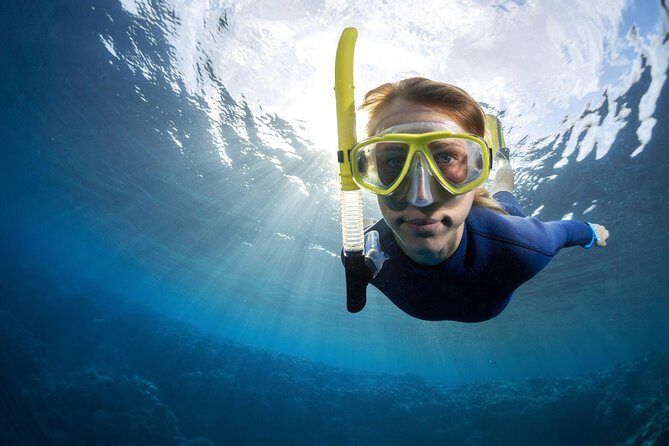
This is a half-day breath-hold technique course on Nusa Penida that’s built for people who want to move farther through the water, not chase extreme depth. I like the tiny group limit (up to four) because you get real attention during skill practice, and the training starts with theory before you hit the water. You’ll also get underwater photo-style moments so the experience isn’t just in your head.
One thing to consider: this is not a simple swim-and-go activity. You’ll spend about the first 1.5 hours in a classroom, and you’ll need moderate physical fitness and comfort working with breath control.
In This Review
- Key things that make this course worth your time
- Why Nusa Penida is a good place to learn breath control
- What happens in those 3 hours (and why it matters)
- Classroom: 1.5 hours of technique and calm thinking
- On the reef: practice in front of the school
- The instructor factor: when calm teaching changes everything
- Safety and the responsible rhythm of breath-hold work
- Underwater photography: a nice bonus, if you manage your expectations
- Meeting point and timing: plan around the start window
- Equipment and what you should bring
- Who this course is best for (and who might feel underwhelmed)
- Price value: what $150 buys you in real terms
- A few practical tips to get the most from your first session
- Should you book Try Freedive Nusa’s breath-hold course?
- FAQ
- How long is the Try free diving course on Nusa Penida?
- What is the course schedule like?
- Is transportation included?
- What’s included in the price?
- What are the age and fitness requirements?
- Can I cancel for a full refund?
Key things that make this course worth your time
- Max 4 people means less waiting and more hands-on coaching
- Classroom to reef, fast: you learn the idea, then you practice right away
- Home reef practice happens in front of the school, so you’re not scrambling between locations
- Instructor-led safety mindset helps you feel calm in a new skill set
- Underwater photography helps you keep the memories (and not just the selfies)
- Beginner-friendly structure focuses on breath-hold technique, not deep lines or complicated descents
Why Nusa Penida is a good place to learn breath control
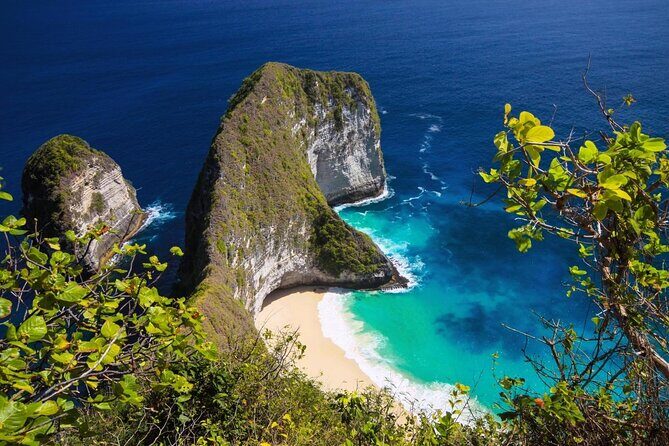
Nusa Penida is one of those places where the ocean looks dramatic even when you’re not trying to be dramatic back. The water and reef life are the whole point of this course, and the setup makes sense: train your breathing and body position first, then use that control on the reef.
This “Try” style course is also a practical choice if your snorkeling feels stuck at the surface. The goal here is to extend your comfort underwater so you can explore more of what’s around you, with a safety-focused instructor beside you.
And since it’s offered as a short introduction, it’s a nice stepping stone. If you later decide you want more advanced training or bigger expeditions, you’ll already understand the basic rhythm of breath-hold practice.
You can also read our reviews of more tours and experiences in Nusa Penida.
- ️Nusa Penida by Private Boat – Snorkeling 4 spots, Swim with Mantas + Land Tour
★ 5.0 · 6,424 reviews

What happens in those 3 hours (and why it matters)
Think of the schedule in two clean phases.
Classroom: 1.5 hours of technique and calm thinking
You start indoors for about one and a half hours learning the basic theory and practical side of breath-hold technique. This isn’t just lecture-y. You’re preparing your body and mind so the water part doesn’t feel like a surprise exam.
You’ll also learn how safety works in real terms, not just as a slogan. That matters because breath-hold skills aren’t only physical. They’re also about staying relaxed, understanding what to watch for, and knowing how to adjust your pace.
On the reef: practice in front of the school
After the classroom, you head into the water and practice your new skills on the reef right in front of the school. That’s a smart design choice: less time transporting, more time applying what you just learned.
The training is aimed at confidence and freedom while swimming and snorkeling. You’re not being pushed toward very deep descents on a line. Instead, you’re building comfort so you can move naturally and explore farther along the reef.
The instructor factor: when calm teaching changes everything
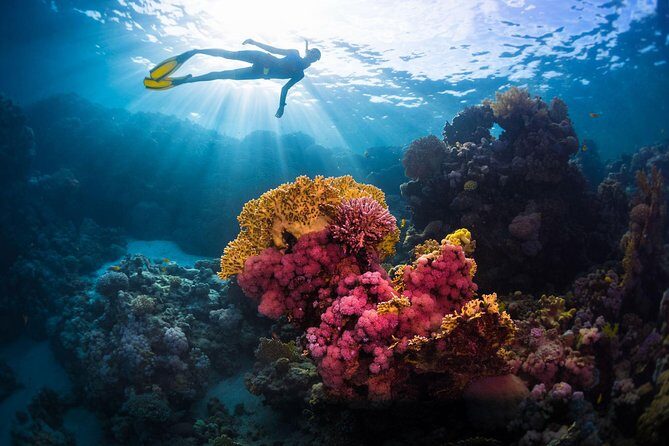
A big part of why this experience earns such strong marks is how the instruction feels. You’re not learning from a bouncing video screen or a rushed “good luck” briefing. You’re working with an instructor, and the group size keeps the attention personal.
I took note of a few instructor names people have praised, like Roberto for explaining what the sport is really about, Chiarra for being calm and experienced with beginners (including a father-daughter pair learning together), and Heiko for helping people feel safe and comfortable right away. Separate feedback also highlights Kirill and Emily as instructors who deliver strong training.
You can’t control who teaches you, but you can use the group size to your advantage. If you’re nervous, ask for extra reassurance during your first practice. In a 4-person max setting, that kind of attention is much more realistic than in a crowded group.
- ️Nusa Penida by Private Boat – Snorkeling 4 spots, Swim with Mantas + Land Tour
★ 5.0 · 6,424 reviews
Safety and the responsible rhythm of breath-hold work
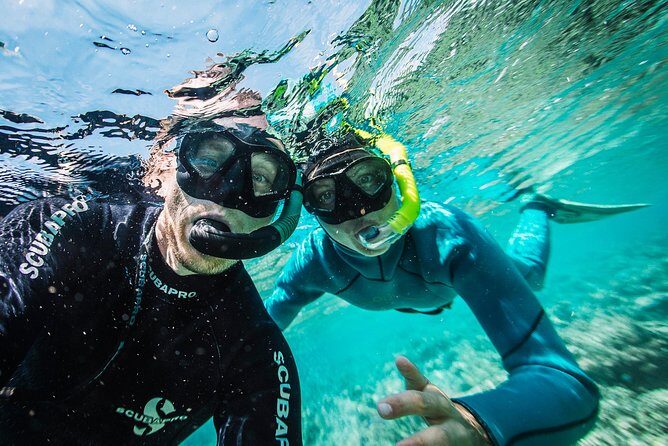
Breath-hold technique has a reputation that ranges from magical to risky, depending on who’s teaching it. The best version is the one that builds habits slowly, with safety rules you can actually remember.
The course is designed around that. You learn basic theory first, then you practice in a controlled way on the home reef. That sequence helps you connect instruction to sensation, instead of guessing while you’re already underwater.
It also helps that this activity is positioned as an introduction for people who want more reef range. That keeps expectations grounded. You’re not expected to act like an advanced freediver from hour one.
Underwater photography: a nice bonus, if you manage your expectations
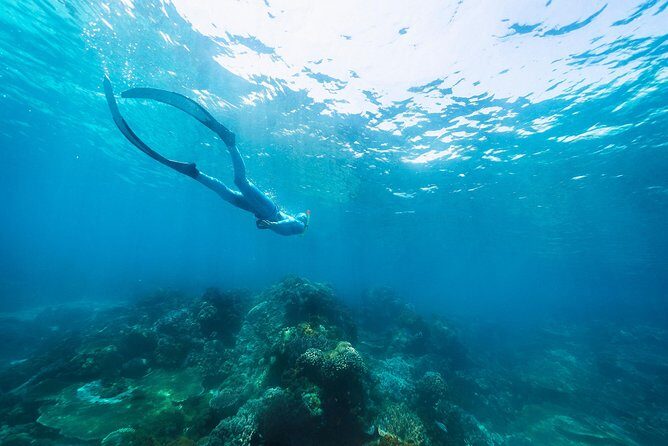
One highlight is underwater photography to help you preserve the magic for the future. For a lot of people, that’s the difference between a course you remember vaguely and one you can share and revisit.
That said, the exact details aren’t spelled out here, so don’t assume you’re getting a full professional photo package. What you can count on is that the experience is designed with photography in mind, and it’s part of how they help you capture what you practiced.
My practical advice: focus on technique first. If you try to “perform” for the camera, you’ll slow down your learning. Let the photos happen while you do the basics well.
Meeting point and timing: plan around the start window
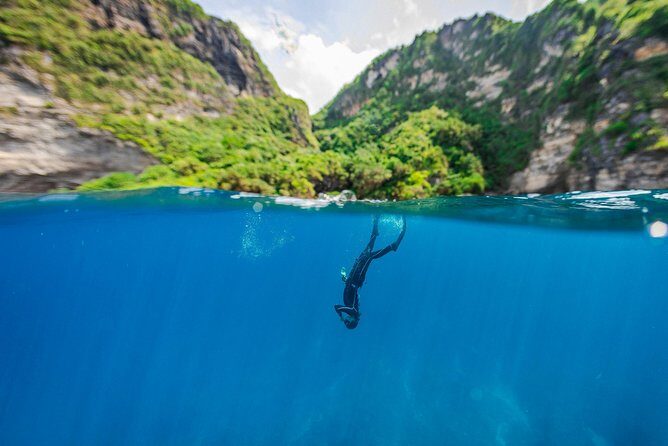
This course runs from 8:30 AM to 12:00 PM, with activity dates open across multiple years. The experience lasts about 3 hours, so it fits a morning slot perfectly if you want to keep the rest of the day open.
You meet at Freedive Nusa – Freediving School, Jl. Ped – Buyuk No, Desa, Ped, Kec. Nusa Penida, Nusa Penida, Bali 80771, Indonesia. The activity ends back at the meeting point.
One logistics note that can affect your day: hotel pickup and drop-off aren’t included. You’ll need to handle transportation yourself to get there on time. If you’re staying outside Ped, build in extra buffer for travel.
Equipment and what you should bring
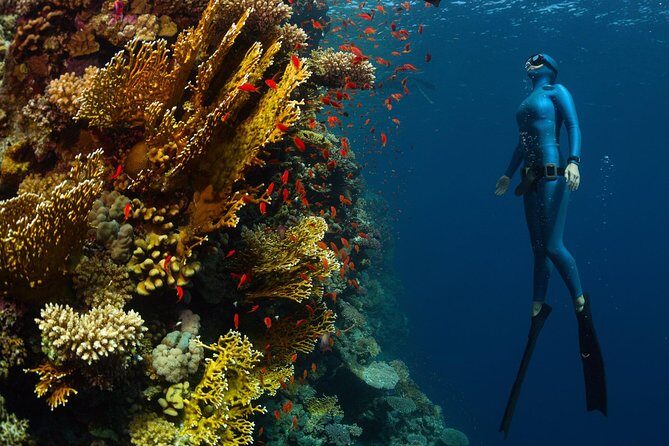
Good news: freediving equipment is included, plus drinking water and digital learning materials. That covers a lot of what usually adds cost and hassle to water-based lessons.
What’s not listed is what personal items you should bring, so plan to come ready for a short morning in the sea without assuming extras. At minimum, it’s smart to bring basics for comfort and hydration, and to wear something you can easily swim in.
Also, the course asks for moderate physical fitness. That doesn’t mean you need to be an athlete, but it does mean you should feel comfortable moving, handling basic water tasks, and following instructor cues without pushing through discomfort.
Who this course is best for (and who might feel underwhelmed)
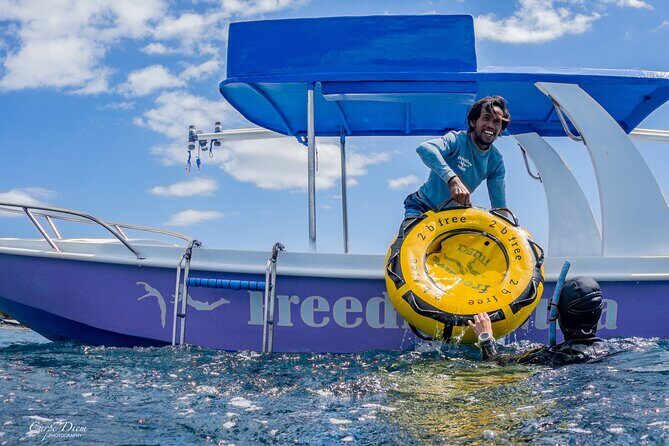
This is a strong match if:
- You’re already snorkeling and want more underwater comfort and range
- You want a beginner setup with structured theory first
- You like learning with tight instructor attention rather than a big group vibe
- You’d enjoy breath-hold as a calm, focused sport rather than a high-adrenaline challenge
- You want a confidence boost for swimming and reef exploration
It may be less ideal if:
- You want an activity that feels like a casual swim with no classroom time
- You’re hoping for deep, advanced descents on a line (this course is not presented that way)
- You rely on pickup/drop-off for every activity and don’t want to manage transport to Ped
Price value: what $150 buys you in real terms
At $150 per person for about 3 hours, it’s not the cheapest activity in Bali. But it’s also not overpriced for what you’re getting.
Here’s the value math that matters:
- Small group (max four): you’re paying for instructor time, not just gear access
- 1.5 hours of instruction indoors + on-reef practice: you’re learning a skill set, not only watching
- Equipment + learning materials: you’re not shopping for rentals
- Underwater photography as part of the experience: a tangible memory payoff
If you compare it to a basic snorkeling tour, this costs more because it trains a skill. If you compare it to private instruction elsewhere, this is still positioned as a tightly guided course with a cap on group size.
In plain terms: it’s best when you actually want to improve and feel safer and calmer underwater after the morning ends.
A few practical tips to get the most from your first session
You’ll learn more fast if you show up mentally ready for breath control.
- Listen closely in the classroom and don’t rush past the safety pieces. The water part will make more sense.
- Move at the instructor’s pace, even if you feel eager. Breath-hold work rewards calm timing.
- Ask for clarity early if you’re uncertain about how a drill should feel in your body.
- Treat the first attempts as practice, not performance. The whole point is building confidence.
Also, if you’re traveling as a family: the course has a minimum age of 4, and children must be accompanied by an adult. That doesn’t automatically mean it’s perfect for every 4-year-old, but it does suggest they’ve planned for mixed ages when an adult support person is present.
Should you book Try Freedive Nusa’s breath-hold course?
I’d book it if you want a structured, beginner-friendly way to explore more reef while staying safety-minded. The combo of tiny group size, classroom-to-water flow, and practice on the home reef is a setup that helps you improve without turning the morning into chaos.
Skip it only if you strongly prefer all-water experiences with zero instruction time, or if transport worries would make your morning stressful. Since pickup and drop-off aren’t included, you’ll want a plan to get to the school on time.
If you’re curious about breath-hold technique as a skill (not just a one-time thrill), this is a solid entry point—and it’s short enough that you can still enjoy the rest of Nusa Penida after.
FAQ
How long is the Try free diving course on Nusa Penida?
It runs for about 3 hours.
What is the course schedule like?
You spend about 1.5 hours in a classroom learning breath-hold theory and practical basics, then you go into the water to practice on the reef in front of the school.
Is transportation included?
No. Hotel pickup and drop-off, plus transportation to and from attractions, aren’t included.
What’s included in the price?
Included are drinking water, freediving equipment, and digital learning materials.
What are the age and fitness requirements?
You should have moderate physical fitness. The minimum age is 4 years old, and children must be accompanied by an adult.
Can I cancel for a full refund?
Yes. Free cancellation is available up to 24 hours in advance for a full refund.
You Might Also Enjoy

More Tour Reviews in Nusa Penida
- ️Nusa Penida by Private Boat – Snorkeling 4 spots, Swim with Mantas + Land Tour
★ 5.0 · 6,424 reviews