REVIEW · UBUD
Ubud Private Tour : Best Of Ubud – Guided Tour
Book on Viator →Operated by Safe Bali Driver (Ketut Suwenda) - Day Tours · Bookable on Viator
Ubud packs big sights into one easy schedule. This private day tour is a smart way to see temple culture, rice country, and jungle views without spending your whole trip figuring out routes. Hotel pickup plus a real local guide style means you’ll move fast, pause where it matters, and get context at every stop.
My two favorite parts are the attention to cultural etiquette and the photo-friendly pacing. You’ll get a sarong for temple entries, plus a guide who’s good at taking mobile photos so you’re not stuck asking strangers to do it. One drawback: temple access comes with temple entry rules, including a note that women who are menstruating are not allowed to enter.
In This Review
- Key points before you go
- Price and value: why $31 can work here
- How the day flows (and how not to waste it)
- Temple prep in Ubud: sarongs, respect, and one strict rule
- Stop 1: Bali Traditional House Gung Aji (30 minutes)
- Stop 2: Sacred Monkey Forest Sanctuary (1 hour)
- Stop 3: Tegalalang Rice Terrace and the subak system (45 minutes)
- Stop 4: d’Alas Swing (45 minutes)
- Stop 5: D’Alas Warung Restaurant lunch stop (1 hour)
- Stop 6: Gunung Kawi Sebatu Temple (45 minutes)
- Stop 7: Ulu Petanu Waterfall near Kedisan (1 hour)
- The guide factor: why Ketut Suwenda’s style matters
- Who this private Ubud day tour fits best
- Should you book Ubud Private Tour: Best Of Ubud?
- FAQ
- How long is the Ubud Private Tour Best Of Ubud?
- Is hotel pickup and drop-off included?
- Are admission tickets included?
- Do I need to bring a sarong for temples?
- Are there any restrictions for temple visits?
- Is gratuities included in the price?
Key points before you go

- Door-to-door convenience: hotel or port pickup and drop-off in an air-conditioned vehicle.
- Admissions are included at the main sights listed on the route.
- You get Balinese temple etiquette tools: a traditional sarong to wear where required.
- Ubud’s real irrigation story: Tegalalang rice terraces and the subak cooperative system.
- Jungle swing with an actual viewpoint at d’Alas Swing, plus a break for lunch at D’Alas Warung.
- Possible extras if timing allows: the guide has been known to add things like Tirta Empul for some schedules.
Price and value: why $31 can work here
At $31 per person (for an 8 to 10 hour private tour), this is built for value, not just sightseeing. The big reason it can feel fair is that the day bundles in a lot of the usual “small costs” that add up in Bali: included site admissions on the stops listed, private air-conditioned transport, and hotel or port pickup and drop-off.
The tour also isn’t trying to be a 30-stop speed run. It hits seven main stops with enough time to see what each place is actually about. That matters because Ubud traffic and queue times can chew up a day quickly. With a driver-guide coordinating the order, you spend more of your hours looking at things you came for and less time stuck in transit.
Private tours are usually priced higher than group tours, so the value here depends on how you like to travel. If you’d rather move with your own pace and ask questions in real time, this price point can make sense. If you’re comfortable with buses and shared drivers, you might find cheaper options elsewhere, but you’ll trade away time for flexibility.
You can also read our reviews of more guided tours in Ubud

How the day flows (and how not to waste it)
This tour is set up as one continuous circuit around Ubud. You’ll start with a cultural introduction, shift into nature and views, then finish with temples and a waterfall.
The trick is to treat it like a photo-and-stops day, not a “power through everything while starving” day. There’s a lunch stop at D’Alas Warung Restaurant with jungle views, and you’ll want that midday reset because you’re stacking multiple outdoor locations.
Also, the tour runs for 8 to 10 hours, so plan your expectations. If you’re the type who wants 45 minutes everywhere, this still works. If you tend to get tired fast in heat, bring water (they provide bottle water) and plan for a slower pace during photo moments.
Weather matters. The experience is noted as requiring good weather, and if it’s canceled due to poor conditions, you’ll be offered another date or a full refund. In practice, that means you should avoid locking in a tight return flight right after your tour.
Temple prep in Ubud: sarongs, respect, and one strict rule
Ubud temples are not “just buildings.” They’re active religious sites, and your experience improves a lot when you show you understand that.
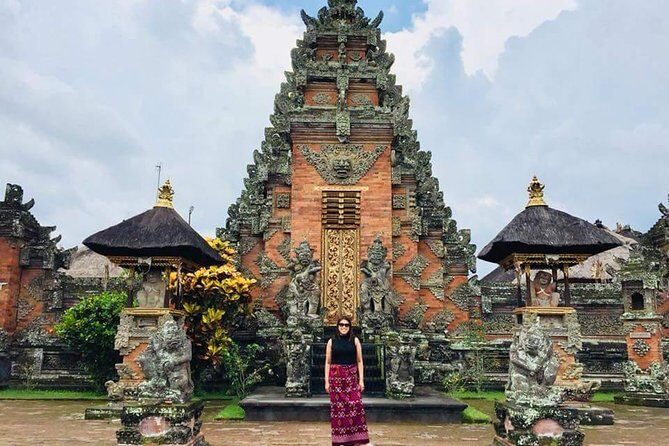
You’ll be provided a traditional Balinese sarong to wear for temple entry. That’s a helpful convenience because dress rules can feel confusing when you’re already on the move.
One strict rule you should know upfront: women who are menstruating are not allowed to enter the temple. If that applies to your group, plan to adjust your expectations around what you can go into versus what you can only view from outside.
For the rest, you’ll get guidance on how to act respectfully at each stop. This is one of the most praised parts of the day: the guide doesn’t just point at things; he explains how to behave so you don’t accidentally make it awkward.
Stop 1: Bali Traditional House Gung Aji (30 minutes)
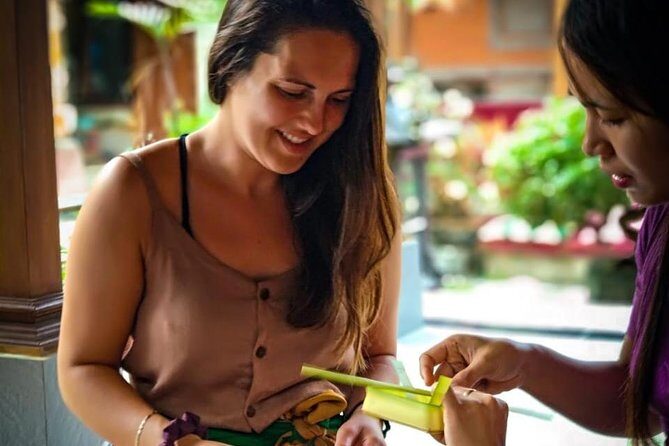
Your day starts at Bali Traditional House Gung Aji, and it’s a good move. Before rice terraces or waterfalls, you get the basics of how Balinese homes reflect Hindu values.
In about 30 minutes, you’re not trying to become an architecture student. You’re learning what Balinese tradition looks like in daily life. That context changes how you view the rest of the day. When you later visit temple compounds, you’ll recognize why certain elements matter and how people think about space, family, and spirituality.
The pacing here is also practical: a short intro stop early in the day helps you get over the “jet lag of customs.” If you like knowing why something matters before you look at it, this start is a strong fit.
What to consider: this is still a brief stop. If you love slow museum-style storytelling, you might want extra time somewhere later. But for most people, this is the right kind of kickoff.
Stop 2: Sacred Monkey Forest Sanctuary (1 hour)
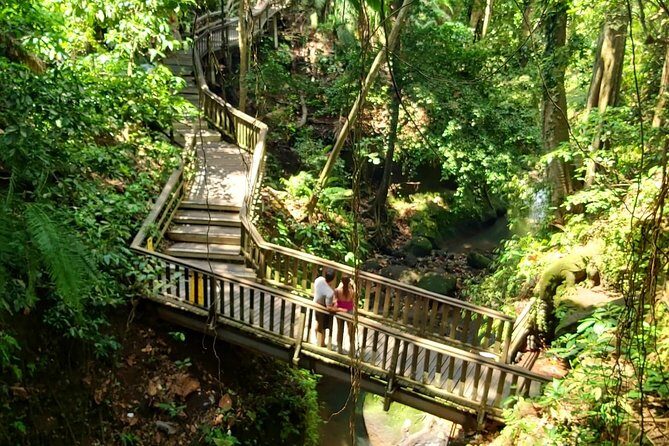
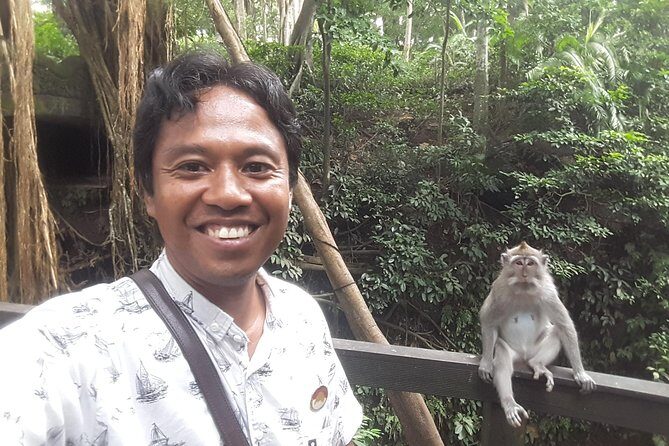
Next is the Sacred Monkey Forest Sanctuary, and this isn’t only about cute monkeys. The forest is owned by the village Padang Tegal in Ubud, and locals connect it to spiritual life, education, conservation, and the local economy.
That matters because it helps you see the place as a living community site, not a zoo-style attraction. You’ll also likely notice how much the area is treated with respect and routine management.
In terms of visit style, plan to stay alert. Monkeys are monkeys, and you’ll want to keep your belongings secure and follow any on-site guidance from your guide. You’ll get the most out of this stop if you treat it as a walk-through experience: look up, watch behavior, and enjoy the atmosphere around the forest.
One practical drawback: 1 hour can pass quickly in a place this active. If you want slow photo time, tell your guide early so he can help manage the pacing.
You can also read our reviews of more private tours in Ubud




Stop 3: Tegalalang Rice Terrace and the subak system (45 minutes)
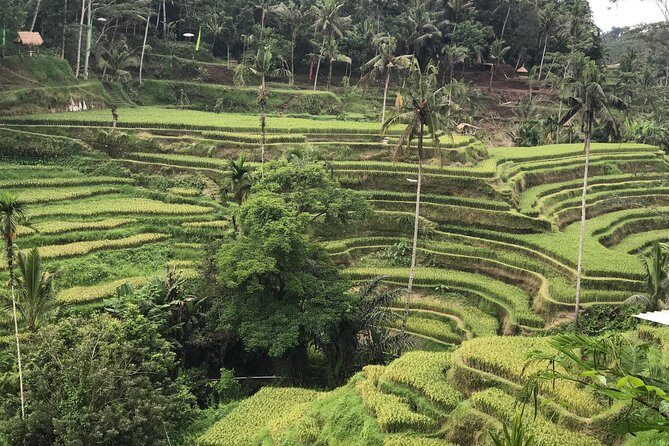
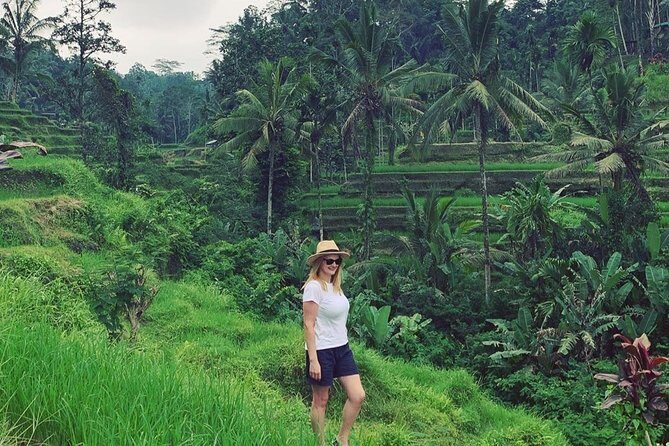
Tegalalang is famous for a reason, but what elevates this stop is the explanation of the subak irrigation system. Subak is a traditional Balinese cooperative system for managing water in rice farming. When you understand that, the terraces become more than a pretty set of steps. You see how farming is organized as a community practice.
You’ll get about 45 minutes here, which is enough time to take in the view, walk around a bit, and appreciate why the pattern looks the way it does. This is also a great stop for photos, especially with a guide who knows where angles work best.
What to watch: rice terraces can mean uneven ground and lots of stairs. Comfortable shoes help. And if crowds are heavy, you might want to rely on your guide’s timing to find calmer moments.
Stop 4: d’Alas Swing (45 minutes)
The d’Alas Swing is the fun break in the middle of the route. It’s described as the best place for a jungle swing experience, and the point is simple: you’re trading temple steps and forest walks for a view from above.
You’ll get around 45 minutes, which should include time for setup, taking photos, and getting your turn. This is one of the stops where a guide’s photo skills really pay off. You’re not just buying a ride; you’re getting images that look like Ubud from a magazine, without you needing to act like a professional photographer.
Consideration: swings are popular, so there can be a bit of a waiting feel depending on conditions. If you hate waiting, tell your guide your preferred approach to pacing so he can plan your time.
Stop 5: D’Alas Warung Restaurant lunch stop (1 hour)
After the swing, you’ll stop for lunch at D’Alas Warung Restaurant, with jungle views. A lunch break here is smart because it gives you time to refuel before the back half of the day.
What’s practical: you’ll have about 1 hour. That means you can eat without rushing and still get to the next sites feeling human.
Meal costs aren’t clearly stated in the tour details, so treat this as a lunch stop where you pay for what you order. If you want a budget-friendly day, decide early whether you’ll go simple or try something specific.
If you’re sensitive to heat, use the indoor or shaded seating if available. And keep it light. You’ve still got temples and a waterfall on the plan.
Stop 6: Gunung Kawi Sebatu Temple (45 minutes)
Then comes Gunung Kawi Sebatu Temple, a historical Hindu temple complex dedicated to Dewa Wisnu. What makes it feel different is the combination of worship space and water features: it’s known for pools with clear water and being surrounded by green nature.
This stop is about atmosphere and calm. Even when you’re in a tourist area, the temple setting tends to slow things down. Because you’ll be arriving after lunch and a swing stop, it’s a nice change of pace.
You’ll spend about 45 minutes, enough time to see the key areas without it feeling like homework. Again, the sarong and respectful behavior matter here, and your guide should help you with how to approach what you see.
The one thing to remember: temple entry is subject to the same rules as the rest of the day’s temple sites. If you’re in the group where the menstruation rule applies, you may need to adjust how you participate.
Stop 7: Ulu Petanu Waterfall near Kedisan (1 hour)
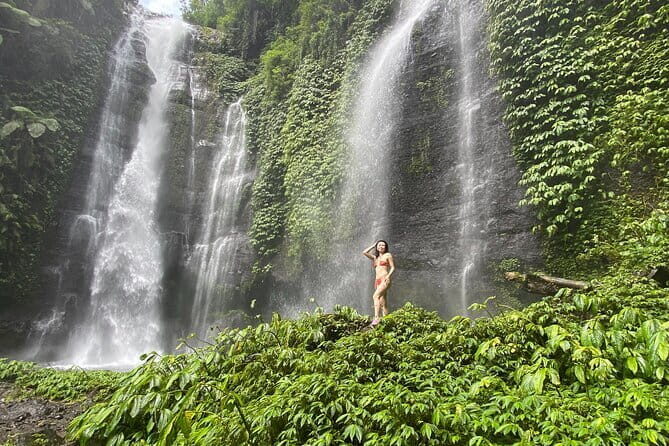
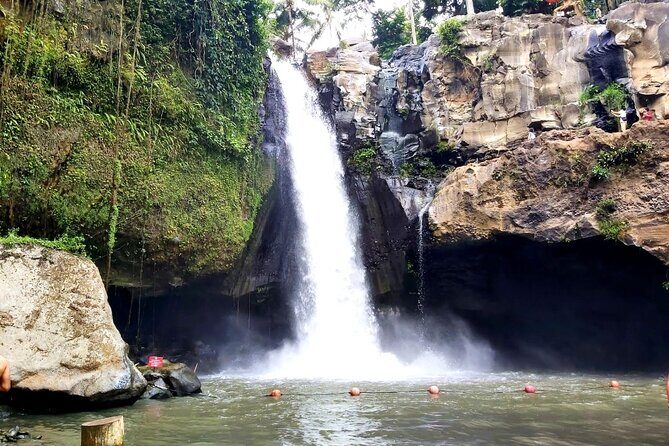
You finish with Ulu Petanu Waterfall, described as a hidden waterfall in Kedisan village near Tegalalang. The word hidden here matters because it suggests you won’t feel like you’re only sharing space with a single massive viewing platform. That can improve the feel of the visit.
You’ll have about an hour, which is good. Waterfalls tend to be visual and atmospheric, but the best part is being able to actually stand and look, take photos, and feel the change in temperature and sound.
What to consider: waterfalls can mean slippery paths and damp footing. Wear shoes you trust. Also, because this tour is weather-dependent, the waterfall experience may feel different depending on rain and flow.
If you’re a person who loves “one last nature moment” before you return to your hotel, this is a strong closer.
The guide factor: why Ketut Suwenda’s style matters
This tour is run by Safe Bali Driver (Ketut Suwenda), and the guide quality shows up in the details. The repeated praise isn’t about just driving you from stop to stop. It’s about how the day feels guided.
You’ll get:
- Clear explanations tied to what you’re seeing
- Help with being respectful in temples
- Mobile photo help so you don’t lose time trying to get decent shots yourself
- A friendly pace that aims to keep the day fun, even when weather messes with plans
There’s also a pattern of flexibility. In at least one case, the guide helped incorporate Tirta Empul even though it wasn’t part of the original flow for that day. That tells you how the guide approaches value: if time and conditions allow, he’s willing to work with you so the day fits your priorities better.
A small humorous note from the feedback: cat-poo-chino was mentioned as an unexpected add-on. If you like trying local oddities (tasteful, not pushy), this kind of spontaneity can be a perk.
Who this private Ubud day tour fits best
This tour is best for you if:
- You’re in Ubud for a short time and want a structured “best of” day
- You prefer private transport so you’re not stuck waiting on other groups
- You care about cultural context, not only photos
- You want a balanced mix: temples, monkeys, rice terraces, a waterfall, and a jungle swing
It’s also a good pick for couples and small groups because the tour is private and you’re not competing for the guide’s attention.
If you’re traveling with kids, the swing and monkey forest will likely be big draws. Just keep expectations realistic about adult pacing at temple sites and about monkey behavior.
If you hate planned schedules, this might feel like “too much in one day.” But the route has been designed as a coherent circuit, so it usually works better than random hopping.
Should you book Ubud Private Tour: Best Of Ubud?
I’d book this tour if you want a practical, guided day that covers Ubud’s essentials without you doing the heavy planning. The value is strong for the money when you factor in hotel pickup, air-conditioned private transport, and included admissions at the main stops.
I’d think twice if you’re very sensitive to weather changes or if temple rules could restrict your group’s participation. Also, if you’re the type who needs hours at one site (not 30 to 45 minutes), you may want a slower, more focused tour instead.
For most people doing their first Ubud visit, this is the kind of day that helps you get your bearings fast and leave with a stack of context, not just snapshots.
FAQ
How long is the Ubud Private Tour Best Of Ubud?
The tour lasts about 8 to 10 hours.
Is hotel pickup and drop-off included?
Yes. Pickup and drop-off are included, and the tour also offers port pickup.
Are admission tickets included?
Admission tickets are included for the stops listed in the itinerary (such as the traditional house, monkey forest, rice terrace, and temple sites).
Do I need to bring a sarong for temples?
No. Traditional Balinese sarongs are provided for temple entry.
Are there any restrictions for temple visits?
Women who are menstruating are not allowed to enter the temple.
Is gratuities included in the price?
No. Gratuities are optional and not included.