REVIEW · UBUD
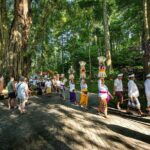
Unique Cleansing Ceremony with Locals
Book on Viator →Operated by Dewa Alit - Private Tours · Bookable on Viator
You can feel the day shifting with a Balinese ritual. This Ubud experience pairs a cleansing ceremony with locals and temple visits with classic nature stops, so you get both spirit and scenery in one long day.
What I really like is how practical it feels. The pickup-style convenience, air-conditioned ride, and the private-group pace make the day easier, and the guide named Dewa Alit is highlighted for being friendly and putting solo travelers at ease.
One thing to consider: it is a long day (about 8–9 hours), and at least one highlight involves stairs. If you do not love walking down and up (there are roughly 400 steps at Nungnung Waterfall) or you want a super low-effort itinerary, plan accordingly.
In This Review
- Key highlights you’ll plan around
- Why a Balinese cleansing ceremony belongs on your Ubud list
- Getting your morning right: start time, private pace, and ride comfort
- The heart of the day: how to approach the cleansing ceremony respectfully
- Stop 1: Nungnung Waterfall and the 400-step reality check
- Stop 2: Sangeh Monkey Forest and how to stay relaxed around macaques
- Stop 3: Taman Mumbul’s sacred water temple and clear bathing pools
- Stop 4: Taman Ayun Temple’s garden setting and pond-and-tree calm
- Where the ceremony meets the sightseeing: making sense of the whole day
- Price and value: is $40.50 per person fair for an 8–9 hour day?
- What to pack and who this tour suits best
- Should you book this Ubud cleansing ceremony day trip?
- FAQ
- How long is the tour?
- What time does the experience start in Ubud?
- Is pickup available?
- What’s included in the price?
- Are entrance fees included?
- If I cancel, do I get a refund?
Key highlights you’ll plan around
- Balinese cleansing ceremony with a real local setting and a focus on balance, harmony, and clarity
- Dewa Alit as your guide, noted for being knowledgeable, friendly, and making solo travelers feel safe
- Nungnung Waterfall with a rewarding descent (around 400 steps) and a swim-friendly vibe
- Sangeh Monkey Forest in a sanctuary setting where you’ll see grey long-tailed macaques up close
- Sacred water experience at Taman Mumbul, centered on a clear pond/lake, bathing pools, and a water temple
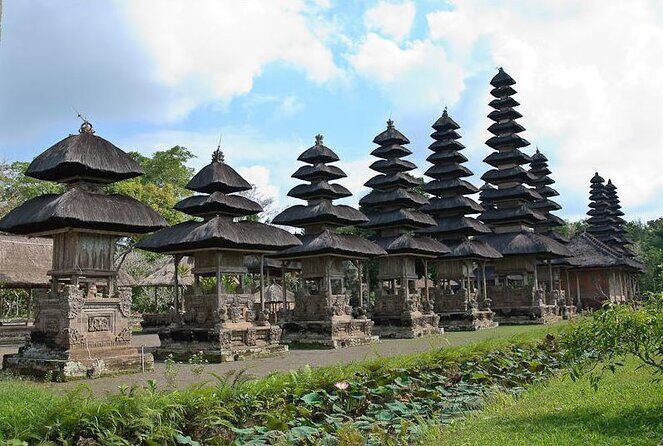
- Temple-garden calm at Taman Ayun, a temple set in a park with ponds and trees
Why a Balinese cleansing ceremony belongs on your Ubud list
Ubud is great for art shops and coffee stops, sure. But the best Bali days often have a different goal: not just seeing places, but understanding how people move through the day spiritually.
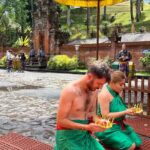
This tour’s main event is the cleansing ceremony, a ritual Balinese people believe helps release negativity and helps you find balance and harmony in your body. The focus is also on gaining more clarity about the direction you want to go in life. Even if you are not looking for anything mystical, this kind of ceremony can help you reset your attention. You stop treating the trip like a checklist, and start treating it like a day with meaning.
You also do not just sit at one stop. After the ceremony, you connect the spiritual theme to what you see in Bali’s temple culture and sacred-water spaces. That link matters because it makes the day feel like one story instead of random pickups.
You can also read our reviews of more tours and experiences in Ubud.


Getting your morning right: start time, private pace, and ride comfort
The day starts at 8:30 am and runs around 8–9 hours. That timing is useful because you get into the first sights with decent daylight, and you avoid the late-afternoon heat crush as much as possible.
This is a private tour/activity, meaning it’s only your group, not a giant crowd shuffle. That tends to make everything feel smoother: you spend less time waiting around for other people and more time moving through your stops with a clear rhythm.
You can also arrange pickup, and you’ll be in an air-conditioned vehicle. For an island day that includes walking and outdoor sites, air-con transport is not a luxury. It’s a sanity saver when the sun is high and everyone wants to cool down between stops.
One note: bottled water is included. Bring a simple plan for hydration and you’ll feel better at the waterfall and temple grounds.
The heart of the day: how to approach the cleansing ceremony respectfully
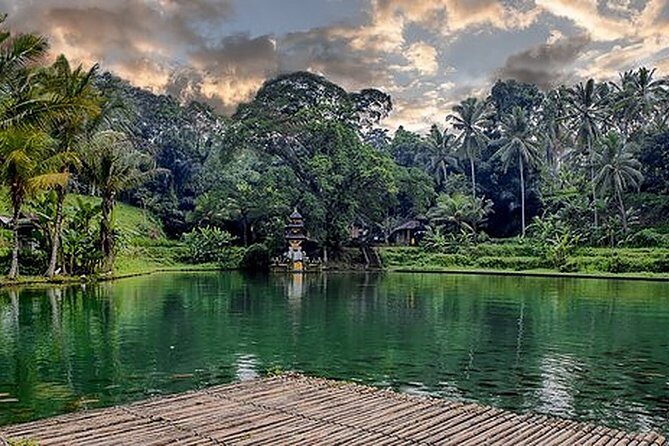
The cleansing ceremony is the reason to book this tour, but it also may be the part that feels most personal. You’re not just watching something. You’re joining in, which means you should approach it with a calm, respectful mindset.
Based on how it’s described, the goal is releasing negativity and finding balance and harmony in your body. That means the ceremony is built around intention, not entertainment. So the best strategy is to go in with clear expectations: treat it like a reset moment.
Practical tip: wear clothing that you can comfortably manage for a temple-like setting. You do not want to spend your time adjusting your outfit while you’re supposed to focus on the ritual. If you are unsure, ask your guide how to handle clothing and timing once you’re with Dewa Alit.
Also, if you’re traveling solo, this is one of those tours where having a guide who helps you feel safe and comfortable matters. The guide experience shared for Dewa Alit includes that kind of reassurance, which can make a spiritual activity feel less intimidating and more welcoming.
Stop 1: Nungnung Waterfall and the 400-step reality check
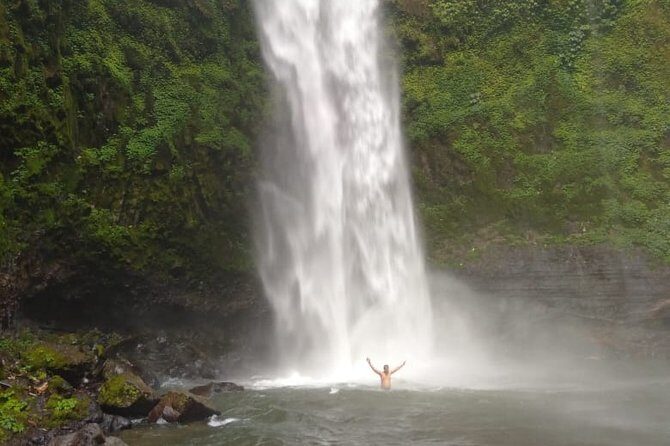
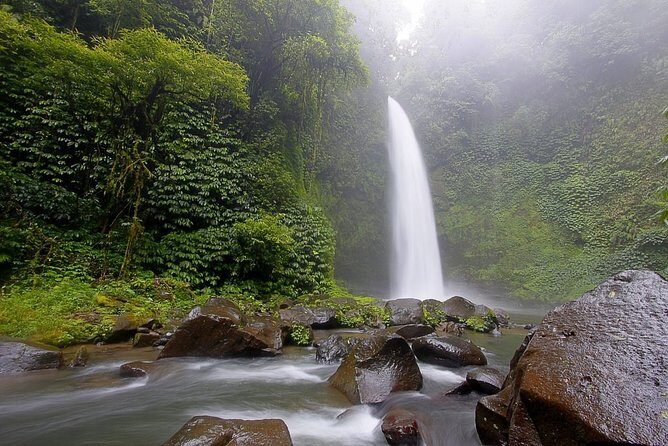
Nungnung Waterfall is described as one of the biggest waterfalls on the island, and the pace here is very “walk it, then enjoy it.” The trail involves descending about 400 steps, and you’ll also be walking back up after.
That is the main trade-off. This is not a roadside viewpoint. It’s a real walk, so bring decent footwear and take your time. If your legs are happy and your body likes exercise, you’ll find it satisfying. The waterfall itself is framed as quiet, with beautiful nature and solid photo spots.
There’s also a strong reason people add this stop: fresh water and a recommendation to swim. If you want to cool off, this is one of your best chances on the day. The tour description even notes the water temperature is good, which helps you decide instead of hovering on the edge.
My practical advice: don’t plan to rush. The value here is the combination of the steps and the payoff at the water. If you go too fast, you’ll save time but lose the moment.
Entrance fees are not included at the stops, so keep that in your budget too. Factor that in and your day stays stress-free.
Stop 2: Sangeh Monkey Forest and how to stay relaxed around macaques
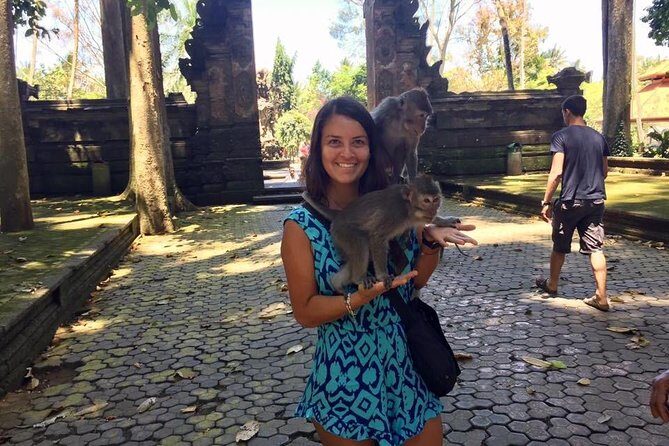
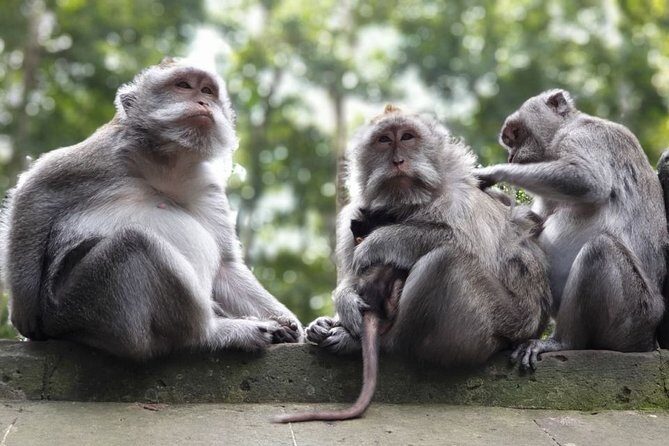
Next up is Sangeh Monkey Forest, a sanctuary for grey long-tailed macaques. This is not the kind of place where you treat monkeys like props. It’s a protected area, and the tour’s tone is more about seeing them in their environment than posing for a photo.
The key word here is sanctuary. That should guide your behavior: be calm, keep some distance, and avoid sudden moves. Monkeys are fast and curious. If you go in tense or try to outsmart them, the day can feel annoying.
The short time window (about 45 minutes) also means you’ll want to get your camera strategy together early. Decide if you’re aiming for wide forest shots, close monkey moments, or both. You won’t have hours to wander and still feel relaxed.
Value tip: if you treat this stop as a quick nature break rather than a chore, it fits perfectly. It gives you variety between temple and water moments, without turning the day into another long hike.

Stop 3: Taman Mumbul’s sacred water temple and clear bathing pools
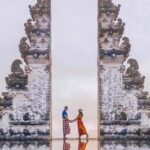
Taman Mumbul is one of the most interesting stops on this kind of itinerary because it’s described as sacred and centered on water. It’s sanctified by the Sangeh and surrounding communities, and you’ll see a large pond-like area with clear water.
What makes it more than just a pretty site is the layout. You’re looking at a water temple, a lake-like pond, and bathing pools around the area. That combination creates a distinct feel: people visit for spiritual and practical water-related meanings, not just for photos.
Time here is about 1 hour, which is a good amount. You’ll have enough time to look around, take in the site’s atmosphere, and still move on before fatigue builds. It also matches the theme of the day: the cleansing idea connects naturally to sacred-water places.
Practical advice: treat this like a respectful temple/water site. Keep your voice calm, move slowly, and follow any cues from your guide. If you’re thinking of getting in or touching the water, ask first how it works in that specific area. Not every sacred-water spot uses the same rules.
Entrance fees are not included, so include that in your total cost calculation.
Stop 4: Taman Ayun Temple’s garden setting and pond-and-tree calm
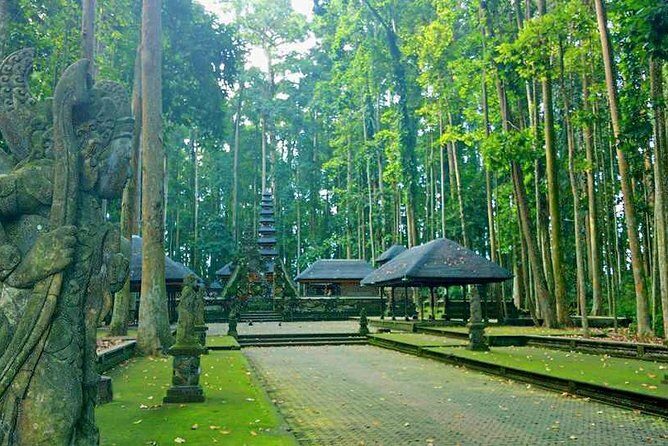
After water and monkeys, you get balance with a temple garden. Taman Ayun Temple translates roughly to beautiful garden, and it’s generally regarded as one of Bali’s attractive temple experiences.
What you should expect is a temple set in a park with trees and ponds. That matters because it changes the mood. Instead of “hot, hard, busy,” you get a slower rhythm. It’s the kind of place where your photos look good without you sprinting from point to point.
Time on site is about 45 minutes, which is perfect for temple appreciation without turning it into a lecture marathon. You’ll likely spend most of that time walking the grounds, soaking in the setting, and absorbing the temple details from your guide’s explanation.
If you’re the type who enjoys cultural context, this is a great place to ask questions. A guide can help you understand why the space is arranged the way it is, and why the water-and-garden theme shows up in multiple Bali sacred locations.
Where the ceremony meets the sightseeing: making sense of the whole day
The tour’s structure is not accidental: it’s built around the idea that purification is not just a one-time moment. It’s a way of changing how you experience your surroundings.
So when you join the cleansing ceremony, you’re doing it in a framework tied to balance, harmony, and clarity. Then you move through places where water and temples play central roles, and where daily life in Bali still connects to spiritual practice.
That is why I like this itinerary for value. You’re paying for a long day with transport and a guide, but you’re also paying for continuity. Your stops relate to each other thematically, so you come away with more than “I saw a waterfall and some monkeys.”
If you want to maximize the meaning, do one simple thing: take a few minutes after the ceremony to collect your thoughts before rushing to the next stop. Let the ritual land, then let the rest of the day support it.
Price and value: is $40.50 per person fair for an 8–9 hour day?
At $40.50 per person, this is positioned as a value-packed Bali day, especially because you get private transportation in an air-conditioned vehicle, plus bottled water and parking-related costs.
What you should weigh is what’s included versus what’s not. The tour includes transport and logistics, but entrance fees to attractions are not included. That means your true total cost will depend on the site charges you pay on the day.
Still, the core value holds because you’re not just buying tickets to one place. You’re combining a spiritual ceremony moment with multiple major stops across nature and culture. For a trip where you want a single guided day that hits several high-interest areas near Ubud, the price can feel reasonable.
If you’re comparing to piecemeal planning (driving yourself, arranging separate tickets, and losing time), a guide-organized route often saves more money than you expect, mostly through time. Time on Bali is part of the cost.
My practical take: it’s good value if you plan to pay entrance fees separately and if you’re comfortable with a full day schedule.
What to pack and who this tour suits best
This day works best for people who like a balanced mix of nature and culture, and who are curious about Bali spirituality without turning it into a spectacle.
You’ll probably be happiest if you:
- want a guided day around Ubud with meaningful stops
- can handle a walk that includes about 400 steps at Nungnung
- enjoy temples and sacred-water areas as more than photo backdrops
- like the comfort of a guide who helps you feel safe, especially if you’re traveling solo
You might want to skip or adjust if:
- stairs and long walking stress you out
- you prefer a short, low-effort itinerary
- you do not want to participate in a cleansing ceremony and would rather only watch cultural sights
For packing, the only safe bet based on what’s described is to plan for outdoor weather, sun, and walking. Bring comfortable shoes for uneven ground and steps, and use water and cooling breaks as the day requires.
Should you book this Ubud cleansing ceremony day trip?
I think this is a strong pick if you want one guided day that feels anchored in Bali’s spiritual side, not just the usual sightseeing loop. The combination of the Balinese cleansing ceremony, major nature stop at Nungnung, and temple moments at Taman Mumbul and Taman Ayun gives you a balanced story in one stretch of time.
Book it if you like: culture with context, a guide you can ask questions to, and stops that connect to the theme of cleansing and harmony. With Dewa Alit specifically noted for friendliness and making solo travelers feel comfortable, it also fits well if you’re traveling on your own and want less uncertainty.
Skip it if you’re looking for a lightweight day, or if you know you will struggle with stairs and a full schedule. This one asks you to show up as a participant, not just an observer.
If you’re okay with that, you’ll likely leave Ubud with both photos and a calmer sense of direction.
FAQ
How long is the tour?
The tour runs about 8 to 9 hours.
What time does the experience start in Ubud?
It starts at 8:30 am.
Is pickup available?
Yes, pickup is offered.
What’s included in the price?
The price includes bottled water, an air-conditioned vehicle, private transportation, fuel surcharge, and parking fees.
Are entrance fees included?
No. Entrance fees are not included for the attractions.
If I cancel, do I get a refund?
Yes. You can cancel for a full refund if you do it at least 24 hours before the experience’s start time. If you cancel within 24 hours of the start time, it’s not refunded.