REVIEW · UBUD
Canyoning Bali : Anahata CANYON (Adventure, discovery, nature)
Book on Viator →Operated by Adventure and Spirit · Bookable on Viator
Anahata canyoning has a way of waking you up fast. In Bali, it’s one of those trips that turns a normal day into rope work, water moves, and jungle canyon time, with a real focus on preparation before you ever touch the rap lines. This is adventure and discovery in one package, starting with a proper briefing and equipment check so you know what to do when the gorge starts getting serious (Anahata CANYON near Ubud).
I really like that the day is built around safety and skill, not just adrenaline. You get ICOpro Canyoneer Initiation training at basecamp, plus all gear that meets ICOpro/CE standards and a small group feel (maximum 6 people). I also love the simple value of the included meals: a light breakfast at basecamp and a full lunch after your descent, with vegetarian or vegan options.
One possible drawback: this is not a sit-back tour. Swimming ability is compulsory, fitness needs to be solid, and the canyon is demanding with lots of rope moves plus walking approach/return. If you’re unsure about your comfort level in moving water and ropes, read the details below before you commit.
In This Review
- Key highlights you’ll care about
- Anahata in plain terms: what makes this Bali canyon special
- The schedule: how the 6 hours actually unfold
- Hotel pickup → basecamp rhythm
- Short drive to the start point
- The descent: where the canyoning happens
- Return to basecamp: shower, lunch, and your media
- What you’ll do in the gorge: rappels, jumps, and slides
- Upper section: open and sunny rappels
- Excalibur: the narrow, deep gorge with technical moves
- The raw numbers
- Meet your guide team: safety energy and real competence
- Price and value: why $350 can make sense here
- How fit and swimming ability affect your experience
- What to bring (and what they already handle)
- Transportation, group size, and timing: small details that change the day
- The real takeaways: what you’ll remember after the wet day
- Who should book Anahata canyoning—and who should skip it
- Should you book Adventure and Spirit’s Anahata Canyoning?
- FAQ
- FAQ
- Is pickup from my hotel included?
- What’s included in the tour besides the canyoning?
- How long is the experience?
- Do I need to know how to swim?
- What should my fitness level be?
- Are there age limits?
Key highlights you’ll care about
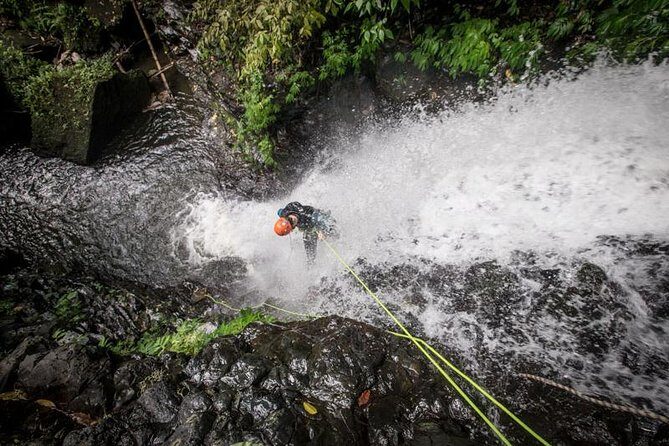
- Up to 35m rappels plus jumps up to 8m and slides up to 8m, so it’s varied, not one-note adrenaline
- ICOpro standard initiation training at basecamp so you understand the system before you start
- All-inclusive day with breakfast, lunch, tea/coffee/water, shower kit, and free photo/video
- Small group size (max 6) which usually means more attention from the instructor team
- Swim ability is required and the route involves technical canyon sections
Anahata in plain terms: what makes this Bali canyon special
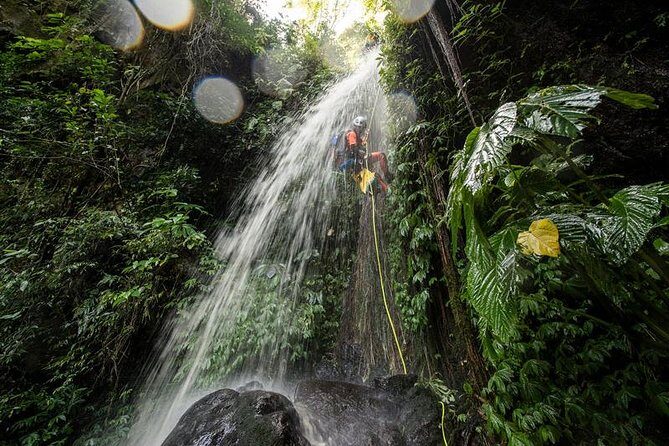
Canyoning in Bali is often sold as a single thrill moment. Anahata feels different. It’s built like a progression: you start with open, sunny canyon sections where you get comfortable on the ropes, then you move into a narrower, deeper gorge where things get technical and more intense.
The canyon is also designed to test more than one skill. You’ll do rappels, yes, but you’ll also face jumps and slides, plus the kind of trekking that makes you feel like you’re actually moving through a real place, not just watching it from the edge. The result is a full-body day: legs for approach/return walking, core for rope control, arms for handling yourself on the line, and a calm head when you’re judging timing for the jump or slide.
What I appreciate most is that the experience treats you like part of a team. The description is clear that you’ll need teamwork in the canyon, and that matches what makes a rope-based activity feel safe: it’s not just equipment, it’s people coordinating. That’s why training at basecamp matters here.
You can also read our reviews of more tours and experiences in Ubud.


The schedule: how the 6 hours actually unfold
The day runs about 6 hours total, but the real adventure comes from a longer middle block: descent time around 5 to 6 hours, with shorter approach and return walking time (you’ll see this as quick but you’ll still feel it).
Here’s how the flow usually goes:
Hotel pickup → basecamp rhythm
You’re picked up from your accommodation in the specified area and driven to the operator’s basecamp. This part matters because it reduces friction. You’re not hunting for the meeting spot or figuring out transport while wearing canyon gear ideas in your head.
At basecamp, you’ll handle:
- registration
- coffee or tea and a light breakfast
- equipping and canyon initiation training with an ICOpro standard approach
That training time is the difference between feeling tossed into adventure versus understanding your role. Even if you’ve done something similar before, you’re getting the system used by this outfit, with the right gear setup and the safety rules for this specific descent.
Short drive to the start point
Then you drive about 10 minutes in a local small truck to the start point. The reason this is short is practical: you spend more time in the canyon, not on transfer roads. When you arrive, you’ll hike downhill briefly before reaching the river.
The descent: where the canyoning happens
Once you’re at the river, the canyoning takes over. This is when you’ll swim, slide, jump, and rappel through waterfalls and canyon walls. The exact moment-to-moment route can shift with water conditions and the day’s conditions, but the activity structure stays consistent: multiple technical sections with ropework, plus water movement sections that keep it active.



Return to basecamp: shower, lunch, and your media
When the descent ends, you return to basecamp for shower and lunch. You also get photos and videos (free). That’s a practical perk because you won’t be juggling a camera while you’re managing movement and safety decisions.
One more value note: they include shower/shampoo/soap/towel. That’s one of those small details that makes the whole day easier. You can go from muddy wet gear to comfortable without scrambling for supplies.
What you’ll do in the gorge: rappels, jumps, and slides
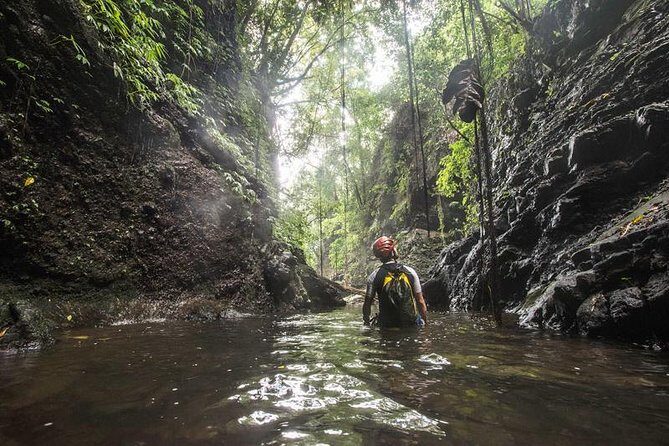
Anahata is designed as a set of different water-and-rope moments, so you’re not repeating the same motion for hours.
Upper section: open and sunny rappels
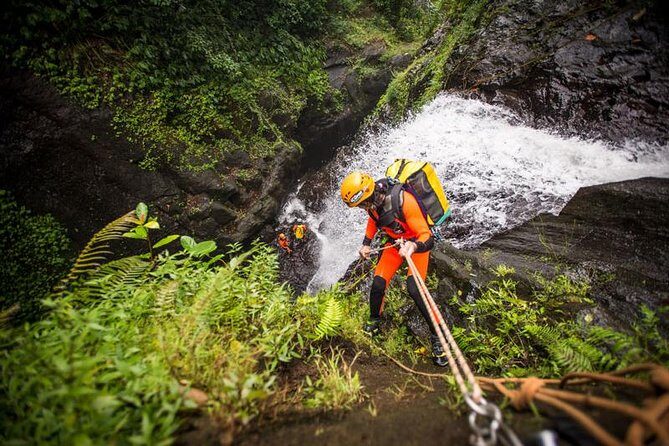
The upper section includes nice rappels, up to around 35 meters. It’s described as open and sunny, which can make it feel less claustrophobic and gives you a chance to build confidence as the day starts.
There’s also a seasonal note that matters: this upper section can be dry during the dry season. That doesn’t remove the adventure, but it changes how much water you feel. If you’re hoping for lots of water flow on day one, keep seasonal expectations in mind.
Excalibur: the narrow, deep gorge with technical moves
The second section is called Excalibur. This is where the canyon narrows and feels deeper. You’ll see:
- jumps (up to about 8 meters)
- technical rappels
If you enjoy rope work, this is the part you’ll likely remember. The focus is on controlled movement and good technique. It also lines up with the emphasis on teamwork and instruction: in a narrow gorge, coordination and procedure are not optional.
The raw numbers
You can plan for:
- 15 rappels (up to 35 m)
- 7 jumps (up to 8 m)
- 3 slides (up to 8 m)
Those totals are meaningful. It means you’ll get multiple chances to practice and repeat proper form. It also means the day is active enough that you’ll want to be mentally ready from the start.
Meet your guide team: safety energy and real competence
The experience is run by an ICOpro instructor and an assistant team, and you can feel the emphasis on safety through the structure: training, equipment briefing, supervision during the canyon. In the guides, the tone described is friendly and professional, with energized personalities.
In particular, I’ve seen named guides like Jess and Rama mentioned with praise for being both fun and safety-minded. That combination matters. Canyoning can get intense, and what you want is an environment where you feel like your instructors are alert, not just entertaining.
What that looks like for you in the moment:
- you’ll start the day with clear instruction before action
- you’ll likely be guided step-by-step through rope procedures
- your team will manage pacing so you don’t feel rushed or lost
This is also why the small group size matters. Fewer people on the route generally means more direct attention when someone needs help or a quick reset.
Price and value: why $350 can make sense here
At around $350 for a roughly 6-hour experience, this isn’t a budget splash-fun activity. But it also isn’t just a guide pointing you at a canyon.
You’re paying for:
- comprehensive equipment included (ICOpro and CE-standard)
- trained supervision with an ICOpro instructor and assistant team
- initiation training at basecamp so you’re not guessing
- a lot of vertical work (15 rappels plus jumps and slides)
- included meals (breakfast and lunch)
- practical extras like shower kit and free photos/video
For many people, the real value comes from the all-in structure. You don’t need to buy a separate day pass to gear up, and you’re not managing food. If you’re staying in Ubud, that pickup/drop-off from your accommodation area also saves time and stress.
Is it pricey? Compared to casual activities, yes. Compared to guided technical rope days with included training and media, it feels more like a “pay for competence and time” kind of price.
How fit and swimming ability affect your experience
This tour is strictly over 18. Beyond age, the requirement is clear: you must be able to swim. That doesn’t mean you need to be a competitive swimmer, but you should be comfortable enough to move confidently in water.
The experience also calls for a good level of fitness. Practically, you’re dealing with:
- multiple rope sections
- repeated climbs/steps and canyon walking
- time in wet conditions
- jumps and slides where you need to commit and move on cues
If you’re the kind of person who gets flustered when you’re soaking wet or when you lose footing, you’ll want to think hard about whether this fits. If you’re reasonably active and comfortable with water, it’s the kind of day that feels earned rather than punishing.
What to bring (and what they already handle)
The basics are already covered, which helps. Equipment is provided, along with shower items afterward.
Still, you should plan around what’s not included:
- swimwear (they don’t provide it)
- a change of clothes (after the shower, you’ll still want your own outfit)
- sunscreen
- sunglasses/camera and personal items you care about (camera is not included)
- personal expenses
Also keep your footwear situation in mind. They provide canyon gear, but you’ll still want to wear something that makes sense for getting to the river and back. If you’re unsure, ask them what they recommend for footwear beyond the included canyoning equipment.
Transportation, group size, and timing: small details that change the day
This experience runs with pickup and drop-off from specified areas, and you’ll be confirmed within 48 hours of booking, subject to availability. There’s a minimum number of travelers too, so if the group doesn’t meet the threshold, you’ll be offered another date or a refund.
Group size is capped at 6 travelers. That usually means you’re not getting shuffled through like cargo. It also helps the guides manage technique and safety checks.
The other timing factor: the canyoning trip involves weather needs. If conditions are poor, the operator may cancel and offer a different date or a full refund. That’s not a guarantee, but it’s a reminder to plan like a real Bali traveler: build flexibility into your schedule when you can.
The real takeaways: what you’ll remember after the wet day
Anahata sticks because it’s not only one kind of thrill. You’ll be doing ropework, then water moves, then trekking, and it all feels connected.
Here are the most praised parts that translate into what you should expect to feel:
- Friendly, professional guide energy that keeps you calm while you’re getting technical
- Thorough equipment briefing and initiation training so you understand the rules before the hard parts
- Fun teamwork in a route that demands coordination
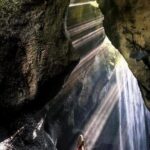
- Beautiful canyon scenery that you actually move through, not just look at from a distance
- A day that feels like real adventure: challenging descents, not a short photo stop and out
And yes, the photos/video being included is a smart bonus. It’s often hard to capture your own ropework day while staying safe. Having it handled for you lets you focus on the descent.
Who should book Anahata canyoning—and who should skip it
This is a great fit if you:
- can swim and feel comfortable in wet, moving environments
- have decent fitness and don’t mind a full activity day
- want a guided technical canyoning experience with training, not just basic supervision
- like variety: rappels, jumps, slides, and walking
You might want to skip or ask extra questions if:
- you’re uncomfortable with swimming as a requirement
- you hate heights and also struggle with committing to jumps or slides
- you’re looking for a gentle sightseeing outing
Should you book Adventure and Spirit’s Anahata Canyoning?
If you want a technical, real-feeling canyon day with training and a small team, I’d say yes—as long as you’re honestly ready for swimming and the fitness demand. The combination of included meals, included gear, ICOpro initiation training, and the vertical mix (15 rappels up to 35m plus jumps and slides) is exactly why the price can feel fair.
But don’t treat this as an easy bucket-list checkbox. The canyon is demanding, and that’s the point. If you like adventure that rewards teamwork and skill, this one’s worth your time.
FAQ
FAQ
Is pickup from my hotel included?
Yes. Pickup and drop-off from/to accommodation in a specified area is included, and your reservation team contacts you about the pick-up time and place.
What’s included in the tour besides the canyoning?
You get all canyoning equipment (ICOpro and CE-standard), ICOpro initiation training, supervision by the ICOpro instructor and assistant team, tea/coffee/water and snacks, and shower items (shampoo/soap/towel). Breakfast and lunch are included too, with vegetarian or vegan options available.
How long is the experience?
The overall tour is about 6 hours. The descent itself ranges from about 5 to 6 hours, with a short approach and return walking time.
Do I need to know how to swim?
Yes. The ability to swim is compulsory for this canyoning trip.
What should my fitness level be?
Moderate physical fitness is recommended, and the route is described as demanding. You’ll do lots of rope work, plus trekking approach and return.
Are there age limits?
Yes. It’s strictly for participants over 18 years old. You’ll also need to provide details like name, age, height, weight, and shoe size for each participant.