REVIEW · UBUD
Electric Cycling Tour of Ubud with Free Hotel Transfer and Lunch
Book on Viator →Operated by eBikes Bali · Bookable on Viator
This ride turns Ubud into a countryside walk, but with way less sweat. It’s a short electric bicycle tour that mixes classic photo spots like Tegalalang Rice Terrace with local village scenery, coffee-plantation stops, and a giant swing moment.
Two things I really like: the bikes make the route feel flexible (you choose how hard to pedal), and the tour is built around comfort and timing, with hotel pickup and drop-off plus bottled water. You also get guide support at the tricky parts, so you’re not just dropped onto a motorbike-ringed road and told good luck.
One drawback to plan for: while much of the path can feel calmer than central Ubud streets, expect some time riding on roads and narrow, bumpy sections near rice fields. If you’re not a confident cyclist, you’ll want to think twice and stick close to your guide.
In This Review
- Key things to know before you book
- Why an electric bike makes Ubud countryside feel doable
- Price and what $41 really covers
- Pickup, timing, and the start point you actually need
- The office briefing: where safety becomes real
- Tegalalang Rice Terrace: UNESCO views in a tight window
- Coffee plantation stop and the jungle swing: fun, plus an ethical question
- How much of the ride is traffic versus quiet lanes
- Lunch or dinner: the payoff after the ride
- What “good for most travelers” really means here
- Tips to make the ride smoother and the photos better
- Should you book the Electric Cycling Tour of Ubud?
- FAQ
- How long is the Electric Cycling Tour of Ubud?
- Is hotel pickup and drop-off included?
- Where does the tour start and end?
- What stops will we visit during the ride?
- Is there an admission ticket for the Tegalalang Rice Terrace stop?
- Can I cancel and get a full refund?
Key things to know before you book

- Electric assist, real control: you can pedal lightly or lean on the motor when the heat or hills get annoying.
- Tegalalang in the right time window: a 30-minute stop that fits a half-day schedule and still gives you photo time.
- Jungle swing stop comes with a coffee stop: you’ll likely face the Kopi Luwak conversation, so choose your comfort level.
- Traffic is not zero: guides help with crossings, but you still ride alongside normal Ubud traffic at parts.
- Small-group feel: capped at 20 travelers, with clear pacing and short stops instead of a long haul.
Why an electric bike makes Ubud countryside feel doable
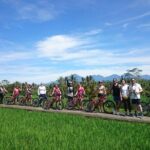
Ubud has a very specific rhythm: temples, rice fields, villages, and a lot of change in elevation—while heat and humidity do their own thing. A normal bike tour can feel like a workout you didn’t plan for. An e-bike flips that. You still get that outdoorsy motion and fresh air, but you’re not punished by every hill.
Here’s the practical magic: the e-bike setup means you can pedal when you feel like it and let the bike do extra work when you don’t. That matters on this kind of route because some stretches can be narrow and uneven. A motor assist helps you stay steady instead of rushing or wobbling from fatigue.
It also changes the vibe of the tour. With an e-bike, you’re more likely to enjoy the places you stop—rice terraces, village lanes, and scenic viewpoints—rather than thinking only about how your legs will survive the next kilometer.
You can also read our reviews of more cycling tours in Ubud
Price and what $41 really covers
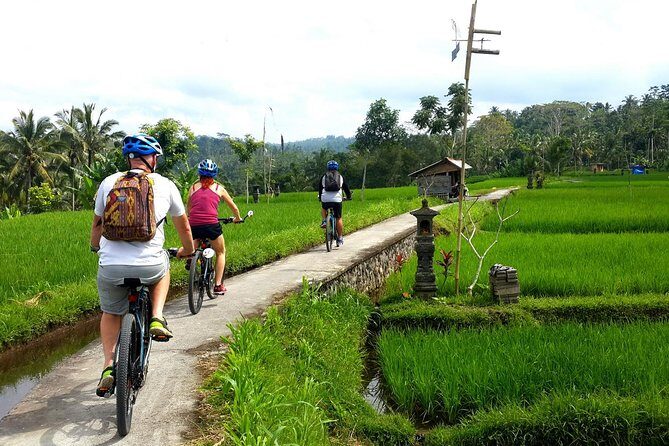
At $41 per person for roughly 3 hours, the value is mostly in what’s included, not just the bike. You’re getting:
- use of the bicycle and helmet
- a local guide
- bottled water
- transport in an air-conditioned minivan between your hotel area and the starting point
- hotel pickup and drop-off within Ubud area
- lunch on morning tours, or dinner on afternoon tours
When a tour bundles transport and food into a short timeframe, you save the biggest hidden costs: taxis and long waiting around. It’s one reason this feels like a good first-day activity in Ubud—short enough to keep you flexible, structured enough that you don’t have to plan each stop.
Do factor in one thing: this is still a ride through real streets and paths. If you’re expecting a fully car-free cycling fantasy, you’ll want to adjust expectations.
Pickup, timing, and the start point you actually need
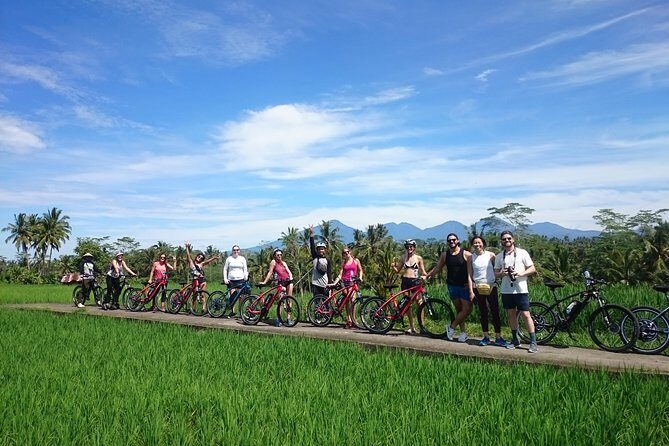
This tour uses central Ubud hotel pickup and drop-off by air-conditioned minivan. The meeting point is at the eBikes Bali office on Jl. Tirta Tawar, Petulu, Kecamatan Ubud, Kabupaten Gianyar, Bali 80571, Indonesia.
A few real-world points for your day planning:
- The tour is short (about 3 hours), so being late can throw off your whole group flow.
- The experience includes a “start at the office” step, so there’s usually time to fit the bike, explain the controls, and get organized before you roll out.
- One solo rider shared a concern about arriving while others had already started. That’s not something you should assume will happen, but it’s a good reminder: confirm your pickup window and make sure you arrive on time at the starting point if pickup is delayed.
If you’re staying right on the edges of Ubud area, it’s worth double-checking your pickup coverage before booking.
The office briefing: where safety becomes real
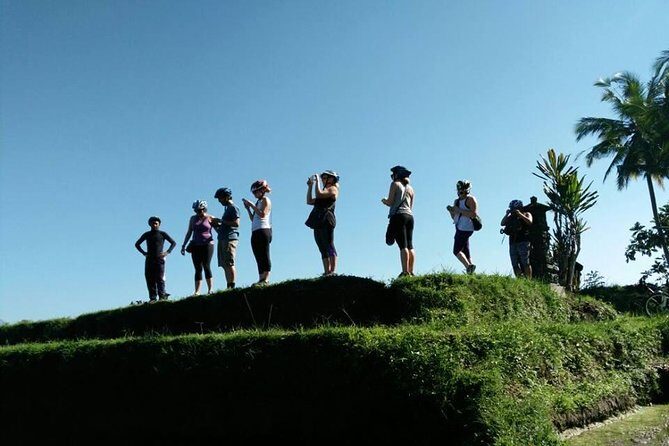
The first stop is the eBikes Bali offices for about 15 minutes. This isn’t just paperwork. This is where you get your helmet, bike sizing sorted, and a quick explanation for using the e-bike.
This matters because the tour mixes:
- crossings and intersections near regular traffic
- narrow paths where you need to stay alert
- occasional options for different routes, depending on comfort
In practice, good guide handling is a major part of why this tour works. Many groups are led by two guides (one near the front and one near the back), and they help keep you together. You’ll also get guidance on when to stop, when to move, and how to navigate turns and crossings without chaos.
If you’re new to biking, don’t fake confidence. Tell your guide right away that you want a slower pace. Electric assist helps, but your balance and steering still matter.
Tegalalang Rice Terrace: UNESCO views in a tight window
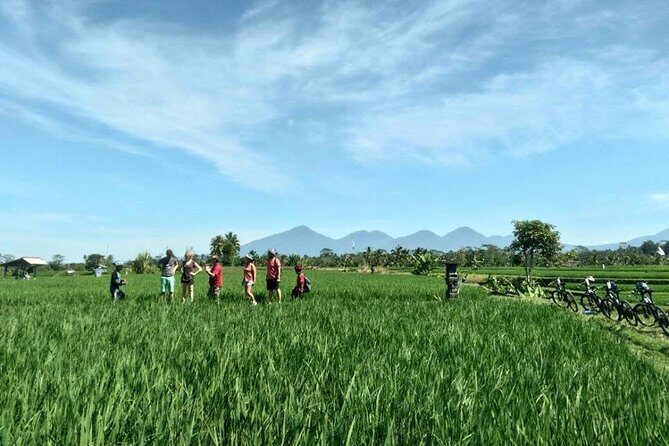
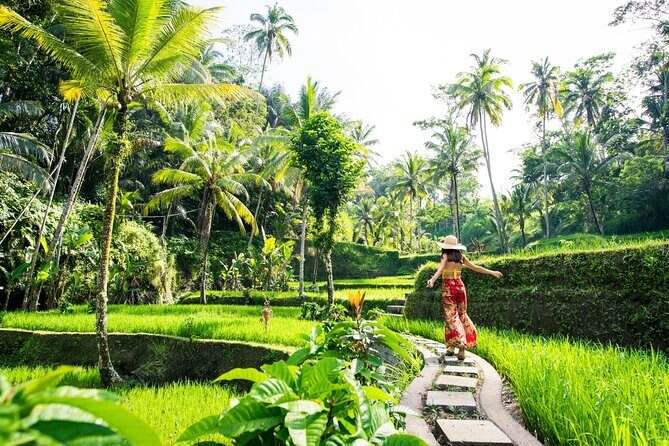
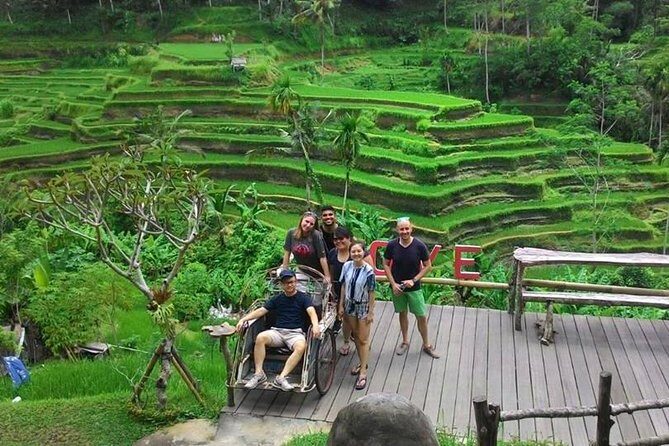
The highlight stop here is Tegalalang Rice Terrace, a UNESCO World Heritage site, with about 30 minutes on the ground. Admission is included for the stop, which is nice because it removes decision fatigue.
In that half-hour, you can do two things well:
- get your main viewpoint photos
- walk a bit and explore angles that show how the terraces stack along the hillside
Just keep expectations realistic. Thirty minutes goes fast when you’re trying to find the best angle, avoid foot traffic, and stay aware on uneven ground. You’ll also want to watch your footing because paths around terrace edges can be rough.
If you care about photos, arrive ready. Wear covered shoes (the tour strongly recommends them), use sunscreen, and bring small water—bottled water is provided, but you’ll still feel better if you’re not rationing at the end.
You can also read our reviews of more tours and experiences in Ubud



Coffee plantation stop and the jungle swing: fun, plus an ethical question

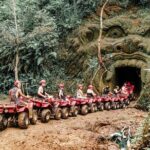
Next up is the Ubud Jungle Swing, paired with a stop at a local coffee plantation area. You’ll get about 30 minutes there, and the swing is the big visual payoff: giant swing time with views over the countryside.
This is also where the “coffee experience” can split people’s opinions. The tour description frames it as a local coffee plantation stop. One important caution from experiences shared by others: Kopi Luwak (also called civet coffee) is part of what you may be shown, and that can raise animal welfare questions. If you’re sensitive to that topic, you can adjust your mindset before you arrive, or ask for an alternative focus such as seeing a traditional home/house area instead of leaning into the civet coffee angle.
How to handle this practically:
- If you’re fine with coffee tasting as a cultural stop, enjoy it and keep it light.
- If you’d rather not participate in civet coffee, be clear with your guide during the stop so you don’t feel pressured to buy.
Either way, the swing moment is usually what people remember from this part of the day. Even if you skip coffee, you’re still getting that “high over the fields” photo opportunity.
How much of the ride is traffic versus quiet lanes
The truth: it’s not a fully private countryside track. Parts of the route can include riding on normal roads with cars, motorcycles, and pedestrians. That can feel intimidating if you’re used to cycling only on bike paths.
The good news is that many people report guides doing the heavy lifting here:
- guides help you stay grouped
- traffic is sometimes managed for crossings
- you’re guided through intersections carefully
You should also expect that the narrow rice-field paths can be bumpy and tight. One consideration: even with electric assist, you still need decent bike awareness. If you’re trying this on your vacation while also worrying about steering, potholes, and passing people, it’s harder to relax and enjoy the scenery.
If you’re an intermediate cyclist, you’ll likely feel more in control. If you’re a beginner, go slow and stick with your guide’s pace. Electric assist reduces strain, but it doesn’t remove the need to ride safely.
Lunch or dinner: the payoff after the ride
Food is part of the deal here. If you book a morning tour, you should expect lunch after the ride. If you book an afternoon tour, you should expect dinner after the ride.
This is valuable because it keeps the tour self-contained. You’re not scrambling to find a restaurant right after biking when you’re sweaty, hungry, and a bit sun-soaked. It also keeps the timing smooth: you finish the ride, then you eat without planning another stop.
One more reason food timing works: it ties directly to the swing/plantation area. You’re likely to eat in the same general stop environment, which means less “back and forth” time and a cleaner flow for the group.
What “good for most travelers” really means here
The tour sets a few clear requirements:
- You should have bicycle riding experience.
- Maximum rider weight is 120 kg / 260 lb.
- Minimum height is 150 cm.
- Children must be accompanied by an adult.
- Service animals are allowed.
What it doesn’t promise is a completely beginner-friendly traffic-free experience. The tour description says most travelers can participate, and many people find it easy to learn. Still, your comfort on real roads matters.
This tour is especially a good match if you want:
- an active day without a full workout
- a structured route that hits Ubud’s popular countryside areas
- a short introduction to rice terraces and Balinese culture from a guide
It might not be ideal if:
- you hate riding near motorbikes or crowded intersections
- you can’t handle narrow, uneven paths
- you’re looking for a slow, fully leisurely walk with zero cycling stress
Tips to make the ride smoother and the photos better
Here are practical moves that fit what this tour demands:
- Wear covered shoes. It’s recommended, and you’ll be glad when paths get rough.
- Use sunscreen before you leave. Heat and sun hit fast in open terrace areas.
- Bring a small plan for comfort. One rider noted rash cream can help if you get chafing easily from cycling.
- Pedal lightly and steady. Even on e-bikes, smooth control is better than powering through.
- Stay close to your guides. Their job is to keep you safe at crossings and intersections.
- Choose your coffee approach. If Kopi Luwak ethical concerns affect you, handle that early in the stop.
For photography, the terraces are your big moment, and the swing is your “wow” shot. Try to keep your phone accessible and ready before you reach the best angles—walking back and forth in the sun burns time.
Should you book the Electric Cycling Tour of Ubud?
Book it if you want a short, high-reward way to see Ubud’s countryside without turning your day into a grind. The e-bike assist, the guided route, and the included food plus hotel transfer make this feel like a sensible way to spend a half-day.
Skip it (or switch your expectations) if you’re a very nervous cyclist or you’re hoping for zero road riding. Parts of the route can include busy traffic moments and narrow bumpy sections near rice fields. Also think carefully about the coffee stop if ethical concerns around civet coffee would make you uncomfortable.
If you’re comfortable riding a bike in mixed conditions, you’ll probably love how quickly this tour gets you out of the center and into the rice-terrace views.
FAQ
How long is the Electric Cycling Tour of Ubud?
It runs for about 3 hours (approx.), including pickup, the ride, and the included meal stop (lunch on morning tours or dinner on afternoon tours).
Is hotel pickup and drop-off included?
Yes. You get hotel pickup and drop-off for hotels in the Ubud area, plus transport by air-conditioned minivan.
Where does the tour start and end?
The tour starts at eBikes Bali Electric Bicycle Tours (Jl. Tirta Tawar, Petulu, Kecamatan Ubud, Kabupaten Gianyar, Bali 80571). It ends back at the meeting point.
What stops will we visit during the ride?
You’ll stop at the eBikes Bali office to start, then visit Tegalalang Rice Terrace, and then go to the Ubud Jungle Swing area (with the plantation/coffee stop as part of that stop).
Is there an admission ticket for the Tegalalang Rice Terrace stop?
The tour states that admission ticket is free for the Tegalalang Rice Terrace stop.
Can I cancel and get a full refund?
Yes. You can cancel up to 24 hours in advance for a full refund, and cancellations made less than 24 hours before the start time are not refunded. The tour can also be rescheduled or refunded if canceled due to poor weather.