REVIEW · UBUD
Jatiluwih E-bikes Tour Cycling Group
Book on Viator →Operated by Giri Ebikes Tours · Bookable on Viator
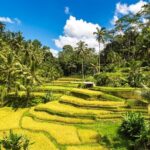
Riding through Bali’s rice terraces is a lot prettier than it sounds. This eBike tour takes you into the Jatiluwih UNESCO area in a way that feels calmer than standard sightseeing. You also get more than photos: your guide explains the irrigation system, plus temple culture tied to daily life.
What I like most is the way the eBike does the heavy lifting. Reviews from people in their 60s describe hills that felt manageable, even if you don’t ride much. The second big win is the guide-led storytelling, including how farmers use the terraces and even details about plants and leaves.
One thing to consider: the tour visits more than one stop, and not every entrance may be included. The first stop (Jatiluwih Green Land) notes admission not included, while the temple stop includes admission.
In This Review
- Quick Hits Before You Go
- Why Jatiluwih by eBike Feels Smarter Than Foot-Trekking
- Stop 1: Jatiluwih Green Land and the Irrigation System Story
- Stop 2: Luhur Besi Kalung Temple and the Gong-Chain Symbol
- Iron Necklace to Lunch at Gong Jatiluwih Restaurant
- The eBike Setup: Easy, Not Like Motorcycling
- Price and Value: Is $49.95 a Fair Deal?
- Timing, Weather, and Choosing the Best Start Time
- What It’s Like With the Guide (and Why That Matters)
- Who Should Book This Tour (and Who Should Think Twice)
- Should You Book Giri eBikes’ Jatiluwih Tour?
- FAQ
- How long is the Jatiluwih E-bikes Tour Cycling Group?
- Where is the meeting point?
- What’s included for admission tickets?
- What time does the tour operate?
- What happens if the weather is poor?
- How large is the group?
Quick Hits Before You Go
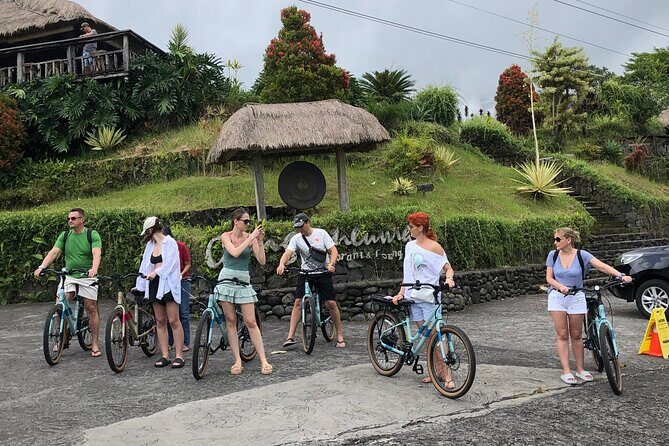
- Quiet access to Jatiluwih trails: eBikes help you reach rice-field paths without turning the ride into a hike.
- Irrigation systems with real-world context: you’ll learn how water distribution shaped terrace farming.
- Pura Luhur Besi Kalung temple details: the linga yoni presence and the chain-necklace gong idea get explained on-site.
- Comfortable, simple bikes for mixed ability: shifting gears and electric support make gradients easier.
- A real end point with lunch views: after the temple, you head to Gong Jatiluwih Restaurant and lounge to eat while looking out over the area.
- Small-group feel: the tour caps at 30 travelers.
Why Jatiluwih by eBike Feels Smarter Than Foot-Trekking
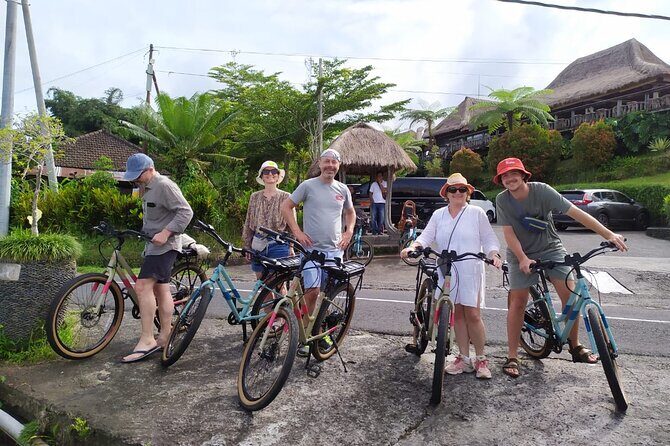
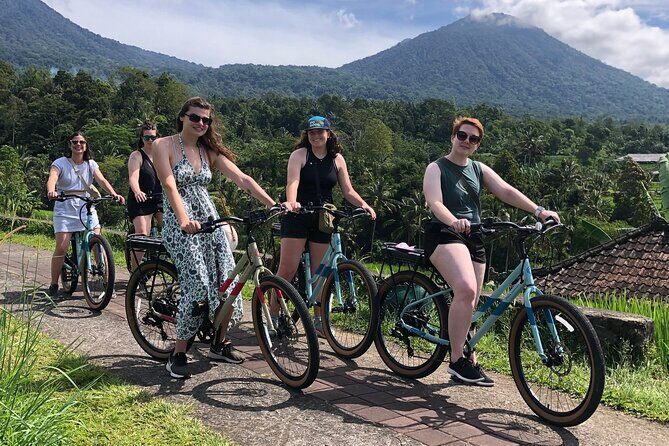
If you’ve ever tried to see rice terraces on foot, you know the tradeoff: either you walk a lot, or you miss the best angles. This tour gives you a third option. You move through the rice landscape on an electric bike, so you can spend more time looking around and listening, not just working your legs.
I like that the plan isn’t only about the views. You’re shown the systems behind the scenery—especially water management. Jatiluwih’s agriculture is built on an irrigation network that’s been around for hundreds of years, and UNESCO has recognized it. That changes how you see the terraces: they stop looking random and start looking engineered.
There’s also a cultural layer that’s easy to overlook when you’re sightseeing fast. You visit a temple in a traditional village setting, and your guide explains what you’re seeing and why it matters.
You can also read our reviews of more cycling tours in Ubud

Stop 1: Jatiluwih Green Land and the Irrigation System Story
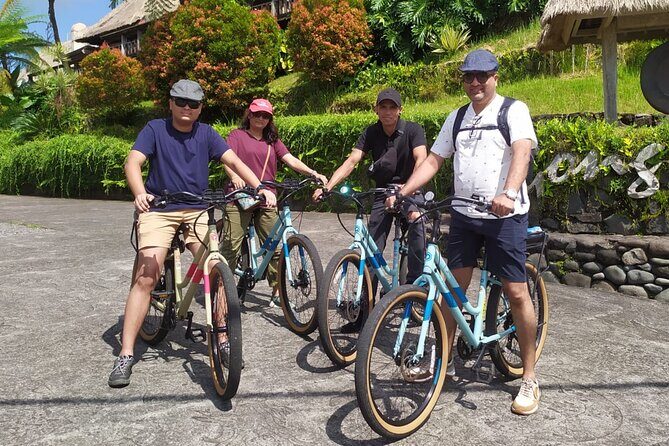
The tour starts at Jatiluwih Green Land, where you’ll spend about two hours in the rice-terrace zone. This is the portion that’s about agriculture first—how the terraces work, how water moves, and why the whole area looks the way it does.
The key detail here is the irrigation system. Your guide explains how water is distributed through the terraces so the fields can stay productive. It’s the kind of explanation that turns a “pretty place” into a place with logic. When you understand the water flow, you start noticing small features: where water seems to gather, where channels likely lead, and how the terraces relate to slope and elevation.
Practical note: admission for this first stop is not included in the info provided. So if you like to travel without surprises, budget a bit for entrance fees here.
Also, this is where the eBike really earns its keep. There can be uneven ground and changes in height. Electric support helps you keep moving at a relaxed pace, and people describe shifting gears as straightforward rather than stressful.
Stop 2: Luhur Besi Kalung Temple and the Gong-Chain Symbol
After the rice-terrace section, you head to Luhur Besi Kalung (often called the Iron Necklace Temple). Expect about 30 minutes here, and admission is listed as included for this stop.
This isn’t a generic temple stop. The temple you’ll visit is described as the residence of a hundred-year-old linga yoni, plus a chain necklace that’s associated with a gong-like sound. Even if you’re not religious, these specifics help you understand the temple beyond a quick photo.
Your guide explains the meaning of what you’re seeing and places it in the local life around the terraces. That connection matters because rice farming in Bali isn’t just agriculture; it’s tied to rituals, timing, and community rhythms. When your guide connects the temple and the farming landscape, the whole day clicks.
If you want a tour that teaches you how locals interpret places—not just how they look—you’ll probably appreciate this part a lot.
Iron Necklace to Lunch at Gong Jatiluwih Restaurant
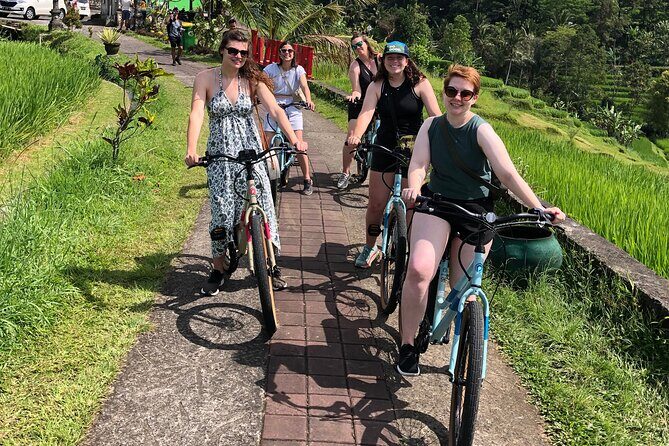
Once you’re done at the temple, you’ll take a short ride to Gong Jatiluwih Restaurant and lounge for lunch. The time is built into the experience after the temple, with you staying in the Jatiluwih viewing area rather than heading back to town immediately.
This is a smart move. Many tours squeeze everything and then dump you in a restaurant miles away. Here, your lunch comes with the setting still in front of you—mountain views and terraces—so you can slow down after the ride.
What I’d watch for: the info doesn’t spell out meal details in a way you’d bet your diet on. So if you have food rules, it’s worth checking when you book (for example, vegetarian needs). The “views while you eat” part is clearly part of the experience.
The eBike Setup: Easy, Not Like Motorcycling
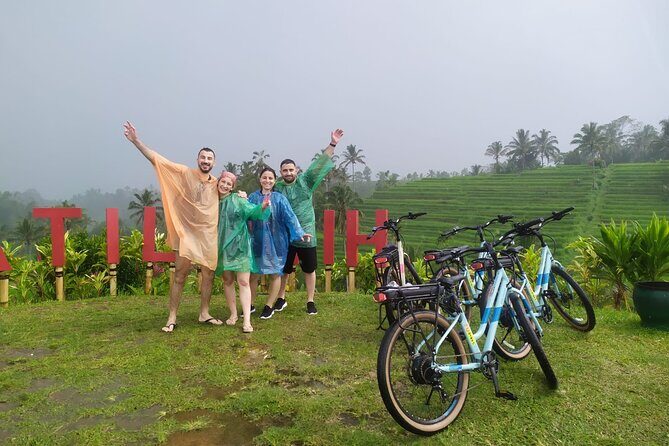
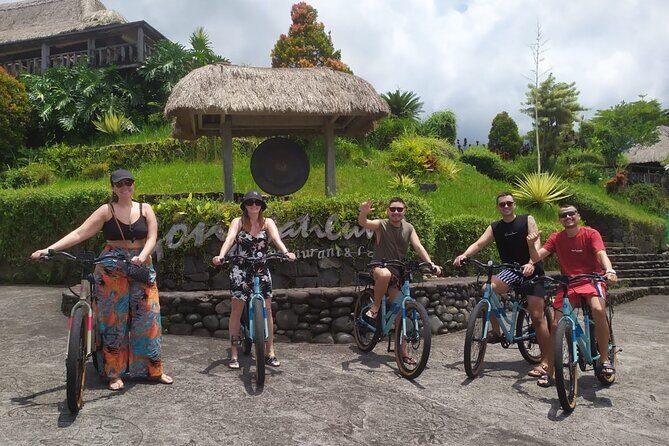
This isn’t a scooter-only day. You’ll be cycling on a purpose-built eBike designed to make it easier to explore. The electric assist helps on inclines, and the bike controls are described as simple and comfortable.
One of the strongest practical points from real experiences is that even with variation in height, the ride doesn’t have to feel brutal. People mention that the hills were manageable thanks to electric support and basic gear shifting. If you can ride a bicycle at all, you’re likely to be comfortable once the guide shows you how the bike works.
What to wear
- Light breathable clothes for Bali’s humidity
- Closed-toe shoes with grip (paths can be uneven)
- A rain layer you can handle in a quick stop
- Sun protection, because even shaded stretches aren’t guaranteed all day
You’ll also want to keep your expectations realistic. Electric help makes cycling friendlier, but it’s still time on a bike. If you’re not comfortable with the idea of riding for a few hours, skip this and choose a walking-plus-car style tour instead.
You can also read our reviews of more tours and experiences in Ubud


Price and Value: Is $49.95 a Fair Deal?
At $49.95 per person, this tour sits in the “worth it if you care about the route” category. Here’s how the value math works for you.
You’re paying for:
- an eBike experience designed for the terrain
- a guided explanation of irrigation and farming
- a temple visit with included admission for that stop
- a full morning/afternoon block (about 3 to 4 hours)
- a lunch stop after the temple at Gong Jatiluwih Restaurant and lounge
The only notable value wrinkle is that admission isn’t included for the Jatiluwih Green Land stop. So the actual out-of-pocket can be a bit higher depending on entrance fees that day.
Still, when you compare this to doing it on your own, the price covers the “know what you’re looking at” factor. Guides don’t just point. They explain irrigation systems, temple meanings, and how locals use plants and farming cycles. One guide named Gideon is mentioned for detailed cultural and geography explanations, and another guide named Gilan is praised for helping people access trails with less fatigue in hot weather.
That’s the part you can’t replicate with a map app.
Timing, Weather, and Choosing the Best Start Time
This activity runs daily from 6:00 AM to 3:00 PM. That gives you options, but it also means you should pick your timing based on heat and light.
The tour requires good weather. If weather is poor, you’ll be offered a different date or a full refund. That policy matters because rain can make paths slick and the rice terraces less pleasant to cycle through.
If you want the day to feel cooler and calmer, choose an earlier departure. A review recommendation points specifically toward sunrise timing, and even if you don’t chase sunrise, starting early usually means less heat and better light for photos.
One more tip: wear sunscreen no matter what time you start. On a bike, you get a lot of sun exposure while you’re focusing on the road and scenery.
What It’s Like With the Guide (and Why That Matters)
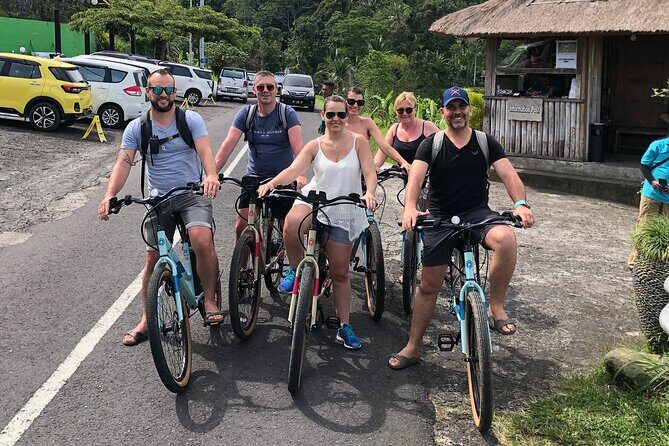
The best part of this tour isn’t the fact you’re on an eBike. It’s how your guide turns the day into a story.
Guides named Gideon and Gilan come up in real experiences for a reason. They don’t just rattle off facts. They connect:
- irrigation to terrace design
- farming life to the view you’re riding through
- temple details to the culture that surrounds it
Some explanations even go into plants—how leaves and plants are discussed, including mentions of medical properties and sensory/organoleptic characteristics. If you like nature + culture teaching, you’ll likely have a great time. If you prefer a more silent, ride-only experience, you might still enjoy the tour, but it may be more talk than you expect.
Also, the group size cap (max 30) helps the guide keep the ride organized. The bike route stays manageable, and you aren’t stuck in a giant chain of people.
Who Should Book This Tour (and Who Should Think Twice)
Best fit
- You want the Jatiluwih rice terraces without turning the day into a full-blown hike
- You like learning what you’re seeing: irrigation, agriculture, and temple meaning
- You want a day with views but still feel comfortable biking
Good fit if you have limited cycling stamina
People in their 60s describe doing the ride with reasonable fitness. Electric assist makes it easier, but it still helps if you’re okay with the idea of spending time cycling.
Consider skipping if
- You strongly dislike bike riding
- You’re expecting only a short photo stop with no explanations
- You need a strictly wheelchair-friendly route (the information here doesn’t claim accessibility beyond general participation)
A quick practical note: service animals are allowed, and confirmation comes at booking time. That’s useful if you travel with specific needs.
Should You Book Giri eBikes’ Jatiluwih Tour?
If your goal is to see Jatiluwih in a way that makes sense—terraces, irrigation, temples, and then lunch with the scenery still there—this is a solid pick. The price feels fair for what you get: eBike access to the area plus a guide who actually explains the place.
I’d book it if:
- you want a guided day that’s not just driving from spot to spot
- you’d rather ride than trek and you want to arrive with energy for photos and questions
- you like cultural context and agriculture stories
I’d pause if:
- you don’t want to pay separate entrance fees for the Jatiluwih Green Land stop
- you’re uncomfortable with cycling for a few hours, even with electric help
- your schedule is tight and weather could disrupt outdoor parts (the tour does require good conditions)
Bottom line: for many people, the combination of eBike convenience + irrigation/temple storytelling is exactly what makes this tour feel worth it.
FAQ
How long is the Jatiluwih E-bikes Tour Cycling Group?
It runs about 3 to 4 hours.
Where is the meeting point?
You meet at Giri eBikes Rental and Tour, Jl. Batu Luwih Kawan Br. Gunungsari No.259, Jatiluwih, Kec. Penebel, Kabupaten Tabanan, Bali 82152, Indonesia. The tour ends back at the meeting point.
What’s included for admission tickets?
Admission for Jatiluwih Green Land is not included, while the Luhur Besikalung Temple stop includes admission.
What time does the tour operate?
It operates daily between 6:00 AM and 3:00 PM.
What happens if the weather is poor?
The experience requires good weather. If it’s canceled due to poor weather, you’ll be offered a different date or a full refund.
How large is the group?
The tour has a maximum of 30 travelers.