REVIEW · TULAMBEN
PADI Open water Course in Tulamben – Get certified & dive anywhere in the world
Book on Viator →Operated by Bali Diving Academy · Bookable on Viator
Tulamben turns nervous first-timers into steady scuba students. This 3-day PADI Open Water course is run from a fixed training center in Tulamben, which helps because the guides know the reef and conditions well. You’ll also be in small groups, which makes it easier to get real feedback instead of feeling like you’re rushed.
I especially like two things. First, the PADI e-learning theory can be done before you arrive or during the course days, then it’s reviewed with a certified instructor. Second, the price is refreshingly straightforward because it includes instructor time, pickup/drop around Tulamben, and the use of scuba equipment (plus porter and park fees).
One thing to consider: this experience runs on a schedule that starts early, and it depends on good weather. If conditions aren’t right, the plan can shift, and that means you’ll want flexibility in your Bali days.
In This Review
- Key points worth knowing
- Tulamben training: why this coastline works for beginners
- Your PADI Open Water certification: what you really earn
- Day-by-day: pool skills first, then structured open-water sessions
- Day 1: confined water sessions in the pool
- Days 2–3: open-water sessions 1 to 4
- Instructor quality: why I Made Sutama comes up so often
- Price and what’s included in the $325 value
- Small group size (max 6): the hidden comfort feature
- What you’ll actually do underwater (and why it feels unreal)
- Scheduling reality: early start, good weather, and a calm mindset
- Who this course is best for
- Should you book Bali Diving Academy in Tulamben?
- FAQ
- How long is the PADI Open Water course in Tulamben?
- What certification do I earn at the end of the course?
- What time does the course start?
- Is the theory part online?
- What happens on the first day?
- What happens during the ocean/open-water days?
- How many people are in the course group?
- What’s included in the price, and what’s not?
- What if the weather is bad?
Key points worth knowing
- Small group size (max 6) so you get hands-on attention when skills get tricky
- E-learning theory through PADI that you can finish before day one or during the 3 days
- Confined water sessions in the pool first, then structured open-water sessions 1 to 4
- Tulamben’s usually gentle current makes it a strong beginner-friendly area
- Equipment and instructor included, plus porter and park fees—fewer surprise add-ons
- Local, experienced guidance with instructors like I Made Sutama mentioned for patient coaching
Tulamben training: why this coastline works for beginners
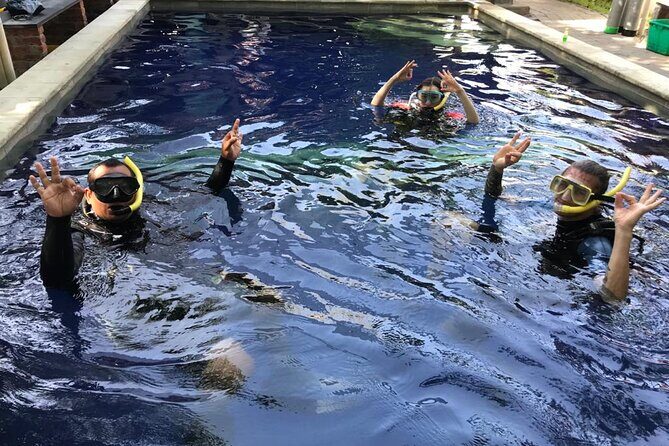
Tulamben is one of those Bali places where the underwater world is accessible without feeling chaotic. The course is recommended for beginners because the current around the common training areas is usually gentle, so you spend more time learning control and less time fighting the water.
That matters more than people think. Early scuba skills hinge on staying calm while your breathing, buoyancy, and gear setup all happen at once. When conditions are calmer, your brain can actually learn the system instead of just surviving it. You’ll still practice properly, but the environment helps you focus.
Another practical win: you’re training from a fixed center in Tulamben. That typically means shorter scrambling time on the day of lessons, and it also means your instructors know what to expect from local sites and underwater life. In a course like PADI Open Water, consistency is your friend.
You can also read our reviews of more tours and experiences in Tulamben.
Your PADI Open Water certification: what you really earn
PADI Open Water is the entry level certification. It’s recognized worldwide, and by the end of the course you’re certified to go to 18 meters. That’s a big milestone because it takes you from learning the basics to being able to plan and enjoy real underwater time later with proper guidance.
The course structure is built to turn theory into muscle memory. You’ll learn the basic sides of scuba training through:
- theory work (handled via PADI e-learning)
- practical skill drills in controlled conditions (pool/confined water)
- then a sequence of open-water sessions that build up your confidence
You’ll also learn the underlying concepts, not just the steps. That’s what keeps you safer when conditions change later. When you understand the principles, you don’t have to memorize commands in the moment.
And because the course is PADI, the knowledge and skills connect to a global standard. If you keep traveling, that portability is real value.
Day-by-day: pool skills first, then structured open-water sessions
The course runs about 3 days, starting at 8:00 am. That early start is normal for training days because calmer morning conditions tend to make everything easier to run smoothly.
Day 1: confined water sessions in the pool
Your first day is about building confidence in a safe, controlled space. In practical terms, this is where you practice the foundational skills: handling your gear, breathing comfortably underwater, and learning how to manage buoyancy and basic movements while you’re still learning what feels normal.
Pool-style training also helps you understand your own body and comfort level. You get multiple tries without the extra variables of open water, like swell and visibility changes.
Days 2–3: open-water sessions 1 to 4
The second and third days move you into the ocean. You’ll do open-water sessions 1 to 4, using what you practiced first.
This is where the “real-world” part shows up. Even in Tulamben, you’ll feel that change: depth, currents (usually gentle), and the fact that the water is bigger than a pool. The best part of a structured course is that you’re not left to guess. Skills are introduced, practiced, and checked while you’re in that learning zone.
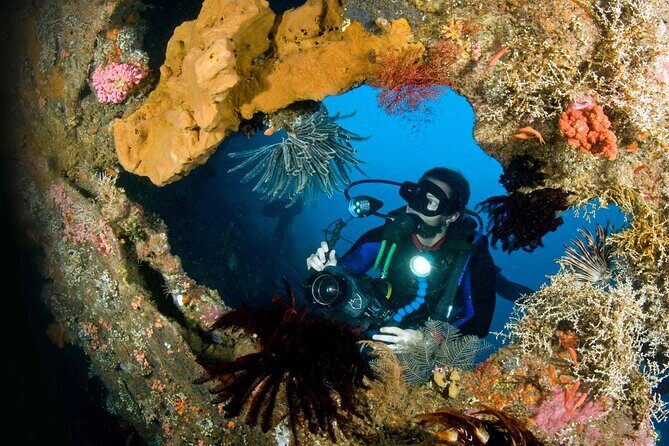
You’ll likely see classic Tulamben highlights during open-water training—people mention targets such as the USAT Liberty wreck, Coral Garden, and the Tulamben drop off. Exact sites can depend on conditions and your progress, but Tulamben is well-known for giving beginners unforgettable first underwater impressions.
Instructor quality: why I Made Sutama comes up so often
In a scuba course, the instructor can make or break your comfort level. The good news here is that the academy has a reputation for calm, attentive teaching, including instructors named I Made Sutama and a general staff that communicates quickly and clearly.
What I like about this teaching style is how it handles the moment skills get slightly tricky. In this kind of training, there’s usually a point where you feel unsure—maybe about buoyancy, breathing rhythm, or what to do when something feels off. A patient instructor keeps you from spiraling. They guide you step-by-step until you feel in control.
Also, there’s a clue in how instructors work with complete beginners and younger students. One review highlighted a family setup with teens learning alongside adults, with the instructor described as super attentive and relaxed. That tells me the coaching approach is geared toward real learning, not just checking boxes.
If you’re new, you don’t just want knowledge—you want confidence. The best instructors teach you how to think underwater, then they give you chances to practice until your body catches up.
Price and what’s included in the $325 value
At $325 per person for about 3 days, this course can be good value because several key items are included.
Here’s what you should expect included:
- a certified PADI instructor
- pickup and drop-off around the Tulamben area
- use of scuba equipment
- porter and park fees, plus community contributions
And here’s what typically adds cost if you want it:
- lunch (not included)
- camera rental and digital souvenir photos/videos (available to purchase)
This package is worth looking at because scuba courses often turn into a “nickel and dime” experience if fees and equipment aren’t clearly handled. Here, the big-ticket parts—instructor + equipment + local fees—are already covered.
Group discounts are also mentioned, and the group size max is 6. Smaller numbers matter. When you’re learning new skills, the “time per student” advantage is huge, even if you’re not consciously timing anything.
Small group size (max 6): the hidden comfort feature
A max of 6 travelers might sound like a small detail, but it affects your whole course experience. In a course like Open Water, you need personal feedback: body position, hand signals, breathing cues, and how you’re managing buoyancy.
Small groups help because the instructor can actually watch you closely and correct mistakes before they turn into habits. You also get a calmer vibe on the days you move between pool and ocean, because you’re not competing with a crowd.
That’s especially good if you feel anxious about trying something technical for the first time. The less chaotic the group energy, the easier it is to learn.
What you’ll actually do underwater (and why it feels unreal)
The course is designed to teach you to breathe underwater comfortably. That’s the headline moment. It’s also the reason people talk about this experience like it sticks with them: you become weightless, and the ocean feels vast in a way that photos can’t capture.
But the practical side is just as important. The goal isn’t to slap on gear and hope. You’ll learn how to operate your equipment and stay controlled, so later you can enjoy underwater sights without feeling overwhelmed by the mechanics.
Tulamben’s underwater reputation helps. People often mention wreck and reef areas in this region, which means you can get that mix of scenery—coral and marine life, plus larger underwater structure like the Liberty wreck. Even if you’re still early in the training, the environment helps the learning feel worth it.
And yes, you’ll do it while your skills are still being checked. That’s normal for Open Water. The point is to practice in a supported way, not to pretend you already know everything.
Scheduling reality: early start, good weather, and a calm mindset
The course starts at 8:00 am, and that’s not an optional “maybe” vibe. It’s set up for practical training conditions, so plan your Bali days around it. If you’re the type who likes late mornings and slow coffee, this will be an adjustment.
Weather matters too. The experience requires good weather. If it’s canceled due to poor weather, you’ll be offered a different date or a full refund.
Also, plan for a moderate fitness level. You don’t need to be an athlete, but you do need to be able to handle the movement and practice involved in scuba skill training.
One last reality check: you’ll get the most from the course if you take the online theory seriously. You can do it before you start or during the 3 days, but either way, finishing it helps the practical sessions click faster.
Who this course is best for
This PADI Open Water in Tulamben fits best if you:
- are a beginner or returning beginner and want clear structure
- prefer small groups and close coaching
- want an internationally recognized certificate from a place known for beginner-friendly conditions
- like the idea of training in an area with classic underwater sites nearby (like wrecks and reef areas)
It might be less ideal if:
- you want lunch included in the price
- you hate early mornings
- you can’t be flexible if weather shifts your timing
Should you book Bali Diving Academy in Tulamben?
If your goal is to get PADI Open Water with small-group attention, solid equipment support, and an instructor team that’s known for calm teaching, I think it’s an easy yes. The blend of pool-first skills, open-water sessions 1 to 4, and Tulamben’s usually gentle conditions is a smart setup for first-time scuba students.
Book it if you can handle an early start and you’re ready to do the theory work. Choose it confidently if you want your certification to feel guided and practical, not rushed and confusing.
FAQ
How long is the PADI Open Water course in Tulamben?
The course is 3 days long (approx.).
What certification do I earn at the end of the course?
You earn a PADI Open Water certification, which is recognized worldwide. By the end, you’re certified to go to 18 meters.
What time does the course start?
The start time is 8:00 am.
Is the theory part online?
Yes. The theory is done online via the PADI e-learning platform, and it is reviewed with your certified instructor. You can do it before the start of the course or during the 3 days.
What happens on the first day?
On the first day, your instructor teaches confined water sessions (pool) to learn basic scuba skills in a controlled environment.
What happens during the ocean/open-water days?
Open-water sessions 1 to 4 take place in the ocean in Bali, letting you use the skills you learned earlier.
How many people are in the course group?
The experience has a maximum of 6 travelers.
What’s included in the price, and what’s not?
Included are a certified PADI instructor, pickup and drop-off around the Tulamben area, community contributions/porter/park fee, and use of scuba equipment. Not included are lunch and camera rental or digital souvenir photos/videos.
What if the weather is bad?
The experience requires good weather. If it’s canceled due to poor weather, you’ll be offered a different date or a full refund.