REVIEW · UBUD
Traditional Balinese Meal in Ubud in Dewa’s Family Village Home
Book on Viator →Operated by Traveling Spoon · Bookable on Viator
Banana leaves hide a whole lot of meaning.
This private family dinner in Ubud pairs a quick pickup with a walk through the foods and plants that shape daily Balinese cooking, then lands you at Dewa and Jero’s village home for an in-house feast. What makes it different is the way the meal is handled: the hosts keep with family tradition and spirituality, so you eat on your own and focus on personal meditation instead of sharing at a dining table.
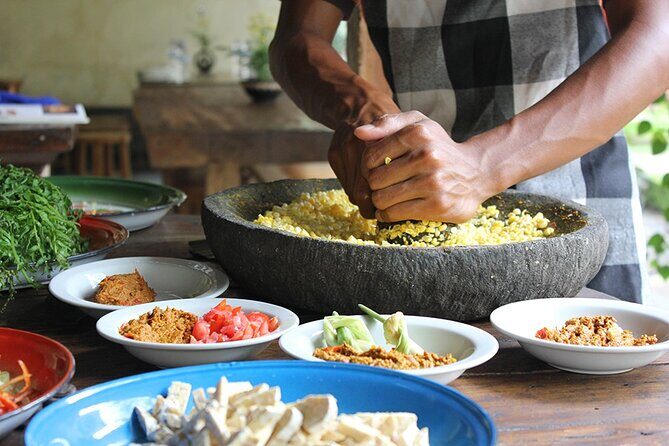
I like the farm-to-table feel—ingredients you’ll hear about as homegrown, with dishes built around turmeric, coconut, and seasonal vegetables. I also like that the experience doesn’t act like cooking is a magic trick; you get to see and understand the spices (like galangal, cloves, cacao, and nutmeg) and what they’re used for, then sit down to classics such as pepes ikan, bumbu kuning, bregedel, and jukut urab.
One possible drawback: if you’re hoping for a big, chatty group-style dinner where everyone plates together and talks over the meal, this format is different. The hosts will not share the meal with you at the dining table, so you may feel a little out of sync at first.
In This Review
- Key things to know before you go
- Why a family compound dinner beats Ubud restaurants
- Getting there: pickup in Ubud and the Alam Sari meeting spot
- The spice walk: learning galangal, cloves, cacao, and nutmeg
- Entering Dewa and Jero’s walled village home
- Dinner structure: what you’ll eat, and how the meal is served
- The meditation-style tradition
- Vegetarian option
- Beverages and gratuities
- How this $56 price makes sense for what you get
- What to do during the 2 hours (and how to make it enjoyable)
- Practical tips for a smooth night in Keliki
- Who should book this, and who might not
- Should you book this Balinese home meal?
- FAQ
- Is pickup offered, and where?
- How long is the Balinese meal experience?
- Is this a private tour?
- What dishes are typically served?
- Are beverages included?
- Can I request a vegetarian option?
- Do the hosts eat with you at the dining table?
- What is the cancellation policy?
Key things to know before you go
- Walled family compound setting: several open pavilions around a central courtyard, with daily life built around family spaces.
- Spice and fruit introduction first: galangal, cloves, cacao, and nutmeg get explained for their medicinal uses.
- Balinese home-cooking menu: pepes ikan, bumbu kuning, bregedel, and jukut urab are the types of dishes you can expect.
- Meditation-style dining: you’ll eat on your own rather than a shared table moment.
- Private by design: only your group participates, with a host from Dewa’s family (or an equally welcoming family member).
Why a family compound dinner beats Ubud restaurants
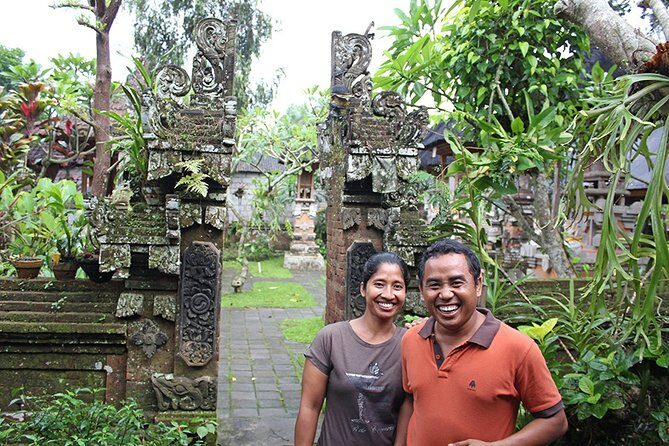
Ubud is full of great food. But this kind of dinner hits differently because it’s built into the rhythm of a Balinese household, not a dining room built for tourists.
Dewa and Jero’s home sits in a traditional walled family compound in the terraced foothills north of Ubud. You’ll see open pavilions around a central courtyard, plus the quiet structure of family life that includes temples and daily routines. It’s the kind of place where the atmosphere feels practical, not staged.
And then there’s the food. Balinese dishes are often defined by balance—fresh aromatics, coconut depth, spice heat, and the way banana leaves carry fragrance. Here you’re not just tasting flavors. You’re also hearing how ingredients connect to everyday life, including medicinal properties of common spices and plants.
You can also read our reviews of more tours and experiences in Ubud.



Getting there: pickup in Ubud and the Alam Sari meeting spot
This is designed to be easy on arrival. If you’re staying in Ubud, you’ll get hotel pickup and drop-off from Ubud hotels only. That matters because getting to small villages can turn into a time tax if you’re on your own.
If you’re not based in Ubud, you’ll meet Dewa at Alam Sari Resort near his house (Jl. Raya Keliki, Keliki). You start and end at the area around Rumah Makan Jero Nini (G7X7+Q9M, Jl. Arjuna, Keliki, Tegallalang, Kabupaten Gianyar, Bali 80561), so it’s not a situation where you’re dropped far away and left wondering how to get back.
The tour runs about 2 hours. That’s a sweet spot: long enough to feel like an evening, not so long that you’re stuck waiting around while hunger grows teeth.
The spice walk: learning galangal, cloves, cacao, and nutmeg
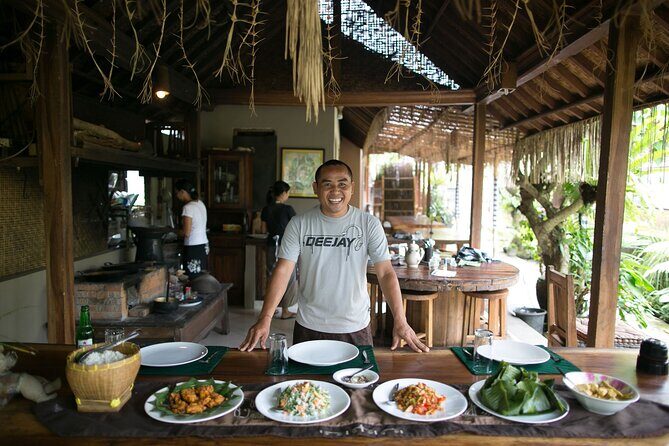
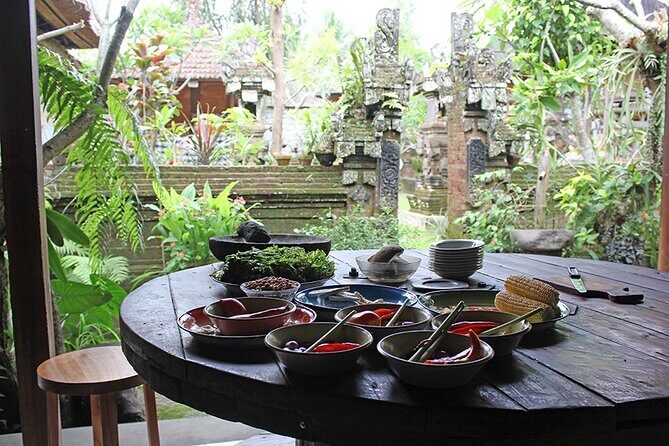
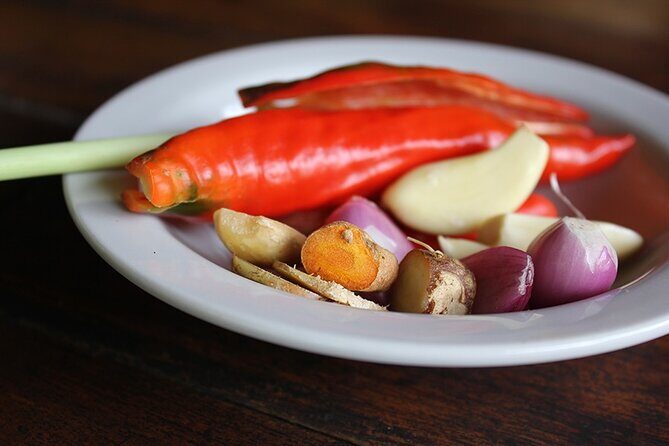
Before you eat, you’ll step into the food ecosystem that drives Balinese cooking. Near the home, you’ll find fruits, herbs, and spices—galangal, cloves, cacao, and nutmeg are specifically part of what you’ll learn about.
This part isn’t random. It’s your first clue that Balinese cuisine is built on plants with multiple roles. You’ll hear about medicinal properties, which helps explain why ingredients are treated with respect, not just flavor chasing. It also makes the later dishes make more sense because you’ll recognize the source of the aroma.
Depending on the day and the host’s style, you might also get extra guidance around common food plants and how family members use them. The key is that the explanation is meant for real home use—how you identify ingredients, how you think about them, and how you connect them to meals.
Entering Dewa and Jero’s walled village home
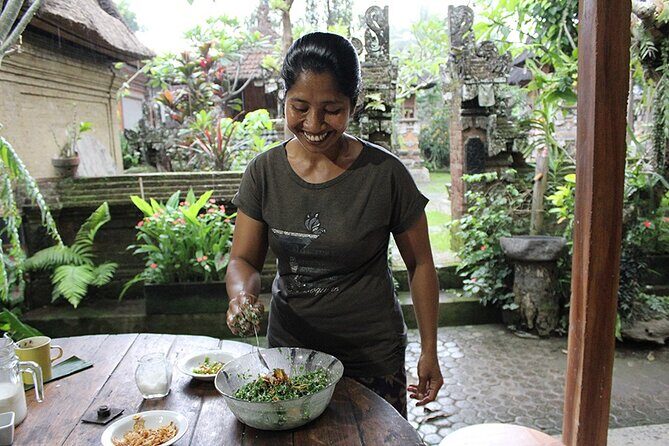
After the plant and fruit introduction, you’ll walk about 10 minutes to the family compound for a tour. This is where the experience becomes “inside Bali,” not just “eat Bali.”
The compound has multiple open pavilions around a central courtyard, and it’s home to Dewa, Jero, and extended family. You get to see how people live in spaces that aren’t designed around strangers. Temples and family areas are part of the structure, so you see the spiritual side of daily life without it turning into a performance.
From the names shared during the experience, you may also meet Putu and other family members who take the time to explain foods clearly. In particular, Putu has a reputation for patient, step-by-step teaching and for making sure you understand more than just the end result.
This is one of the most praised parts of the evening because it does two things at once: it gives you cultural context and it helps you connect the food to the people who grow, prepare, and serve it.
Dinner structure: what you’ll eat, and how the meal is served
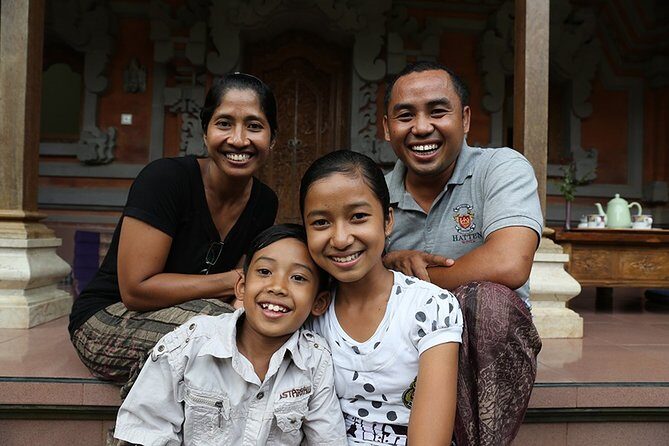
The meal is a Balinese homecooked feast, and you’ll be served dishes that can include:
- Pepes ikan: grilled tuna in banana leaves, described as delicate and deeply satisfying
- Bumbu kuning: chicken cooked in a turmeric and coconut milk sauce, gentle but flavorful
- Bregedel: corn fritters
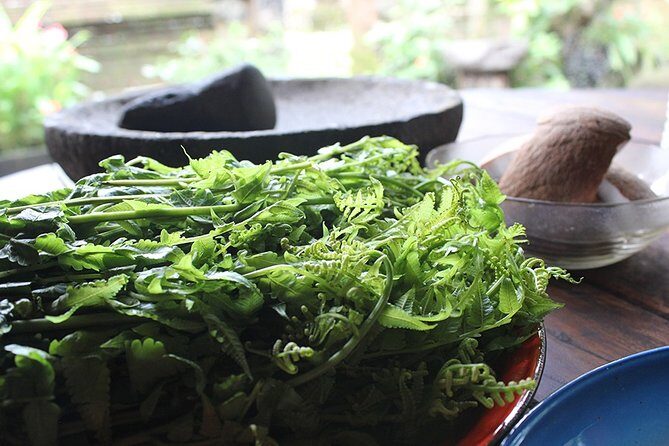
- Jukut urab: seasonal vegetables with grated coconut and fried shallots
Be aware: the exact spread can vary, but these dish types are the core of what’s offered.





The meditation-style tradition
Here’s the big culture detail that surprises many people at first: the hosts will not share the meal with you at the dining table. Instead, you’ll eat on your own and focus on personal meditation to achieve a positive state of mind.
This doesn’t mean the dinner is awkward. It means it’s different from a typical Western or even restaurant-style dining moment. If you like quiet reflection, you’ll probably find it peaceful. If you’re expecting constant conversation while food arrives, you might need a minute to recalibrate.
Vegetarian option
If you eat vegetarian, you can request a vegetarian option when you book. That’s important because Balinese menus often rely on shrimp paste or fish-based flavoring. Having a clear vegetarian path makes the whole evening feel respectful, not like you’re politely declining half the dishes.
Beverages and gratuities
Beverages are included, and gratuities are included too. Translation: this is one less thing you need to think about during the evening.
How this $56 price makes sense for what you get
$56 per person sounds like a lot until you break down what’s included. You’re not paying just for food. You’re paying for:
- a private host experience in a family home
- hotel pickup and drop-off within Ubud
- an in-home meal with multiple dishes
- beverages included
- and gratuities taken care of
On top of that, you’re getting the story layer: explanations about ingredients and their uses, plus a look at a compound that functions as part home, part temple life, and part daily routine.
I also like that you leave with family recipes. That turns the evening into something you can repeat at home. Even if you don’t recreate everything exactly, you can use what you learn—spice combos, texture ideas, and how banana leaf cooking changes flavor.
One practical note: this experience is commonly booked about 18 days in advance on average. If you’re traveling in busy seasons, plan ahead so you’re not scrambling for the one night you wanted.
What to do during the 2 hours (and how to make it enjoyable)
This is the kind of evening where your mindset matters as much as your appetite. Here’s how I suggest you approach it.
First, treat the spice and compound time like part of the meal. The more attention you pay to what you’re seeing and being told, the more the later dishes feel like a payoff.
Second, accept the dining format. If the hosts eat differently from what you’re used to, let it be. The silence and personal space are part of the tradition they’re following, and it often makes the food taste calmer and more intentional.
Third, if you have dietary needs, say them clearly when you book. The option is available, but you need to request it ahead of time so the family can plan properly.
Practical tips for a smooth night in Keliki
You’ll be moving a bit. There’s a short walk—about 10 minutes—from the spice/plant area to the compound. Wear comfortable shoes you can walk in without thinking.
Also, remember this is in a family home setting. Keep your camera use respectful and ask if you’re unsure. It’s okay to want photos, but it’s better to treat the space like someone’s house, not a backdrop.
If you’re not staying in Ubud, you’ll meet at Alam Sari Resort near the host’s home area. Arrive a few minutes early so you don’t stress about timing. Even with private tours, nerves can ruin your appetite.
Finally, if you’re sensitive to quiet rules, this one deserves a quick heads-up: the hosts won’t share the meal at the dining table, and eating is paired with meditation. You don’t have to be spiritual to appreciate it—you just need to be open-minded.
Who should book this, and who might not
This works best if you want more than a restaurant meal. If you care about where food comes from, like learning spice names and uses, and enjoy the idea of eating with a calm, reflective rhythm, you’ll likely love it.
It’s also a great pick for people who like smaller, more personal travel moments. It’s private—only your group participates—so you’re not competing for attention or rushing through someone else’s schedule.
Consider skipping or adjusting expectations if you strongly prefer interactive cooking over dinner. This experience centers on an in-home meal with explanations. Some hosts (including Putu, in many accounts) teach clearly, but the core is not a full “stand at a stove all night” cooking class.
And if you dislike meditation-style traditions entirely, the no dining-table sharing could feel uncomfortable. If you can accept it as a cultural ritual, you’ll probably find it memorable.
Should you book this Balinese home meal?
I think it’s a strong yes if you’re the type of traveler who likes your food with context. You get a spice walk, a look inside a traditional family compound, and a proper Balinese dinner made in a home setting—plus pickup in Ubud, beverages, and gratuities handled.
Book it if you want to take home more than recipes on paper. This evening is designed to leave you with a clearer idea of how Balinese households connect plants, spirituality, and cooking.
Skip it if your ideal night is loud, shared, and restaurant-style. Here, the meal is quieter and more personal by design. If that’s not your thing, you may prefer a different Ubud food experience.
FAQ
Is pickup offered, and where?
Hotel pickup and drop-off are offered from Ubud hotels only. If you are not staying in Ubud, you meet the host at Alam Sari Resort near his house.
How long is the Balinese meal experience?
It runs about 2 hours (approx.).
Is this a private tour?
Yes. It’s private, and only your group will participate.
What dishes are typically served?
The meal may include pepes ikan (grilled tuna in banana leaves), bumbu kuning (chicken in turmeric and coconut milk sauce), bregedel (corn fritters), and jukut urab (seasonal vegetables with grated coconut and fried shallots).
Are beverages included?
Yes. Beverages are included with the meal.
Can I request a vegetarian option?
Yes. A vegetarian option is available if you advise at the time of booking.
Do the hosts eat with you at the dining table?
No. In keeping with their family tradition and spirituality, your hosts will not share the meal with you at the dining table. You will eat on your own and focus on personal meditation.
What is the cancellation policy?
Free cancellation is available up to 24 hours in advance for a full refund. If you cancel less than 24 hours before the start time, the amount paid will not be refunded.