REVIEW · BALI
Bali Mangrove Canoeing Tour
Book on Viator →Operated by Tour East Indonesia · Bookable on Viator
Mangroves move slower than your plans. This Bali mangrove canoeing tour mixes quiet paddling with a hands-on conservation mission that supports local fishermen of Wana Segara Kertih, not just a photo stop. I also like that it’s set up for an easy day with hotel pickup and drop-off.
Paddling stays calm and beginner-friendly, with the kind of smooth water that makes the trip feel more relaxing than sporty. In the same spirit, guides can be great at explaining what you’re seeing; one guide named Simon is singled out for friendly help and clear English while talking about the trees and animals around you.
There’s one thing to plan around: this is a nature-based activity, so tides and weather can change timing or even cancel for safety. It’s also shared with other guests (maximum 99), so don’t expect a private boat for the whole time.
In This Review
- Key Points Before You Go
- Why Bali’s Mangroves Are Worth Trading Time For
- Getting There: Hotel Pickup and the PT JTB Indonesia Briefing
- On the Water: Smooth Paddling, Safety Checks, and Wildlife Spotting
- What the Guides Teach You About the Mangrove Ecosystem
- The Conservation Side: Your Donation and Support for Local Fishermen
- Where the Time Goes: From Briefing to Return to Your Hotel
- What to Pack: Shoes, Clothes Change, Sunscreen, and Comfort
- Price and Value: Is $61.54 Worth It?
- Who This Tour Suits Best (And Who Might Be Less Happy)
- Quick Safety and Reality Checks
- Should You Book This Bali Mangrove Canoeing Tour?
- FAQ
- How long is the Bali Mangrove Canoeing Tour?
- Is hotel pickup and drop-off included?
- Where does the tour start and end?
- What’s included in the price?
- What isn’t included?
- What fitness level do I need?
- Can the tour change due to tides or weather?
- Is free cancellation available?
Key Points Before You Go
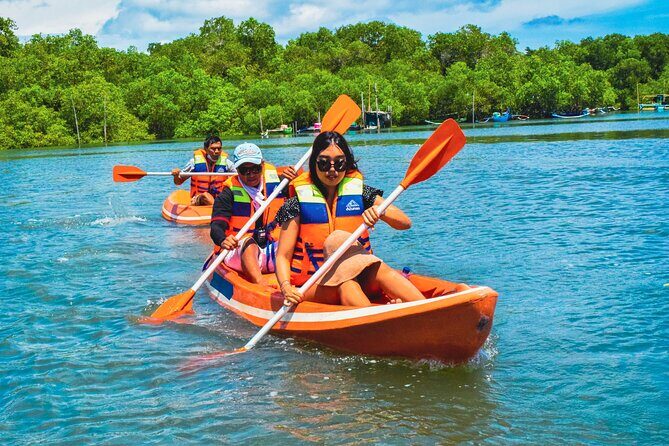
- Hotel pickup and return make this a low-effort outing from Kuta, Legian, Sanur, Jimbaran, and nearby areas.
- About 1–1.5 hours on the water keeps it short and manageable for most moderate fitness levels.
- An on-site briefing at PT JTB Indonesia office includes a toilet break and a chance to change attire.
- Easy paddling with safety gear is part of the experience, not an add-on.
- Your donation is included, supporting mangrove conservation with the local community and fishermen of Wana Segara Kertih.
- Wildlife spotting is a bonus, with guides pointing out birds, fish, and mangrove life as you paddle.
Why Bali’s Mangroves Are Worth Trading Time For
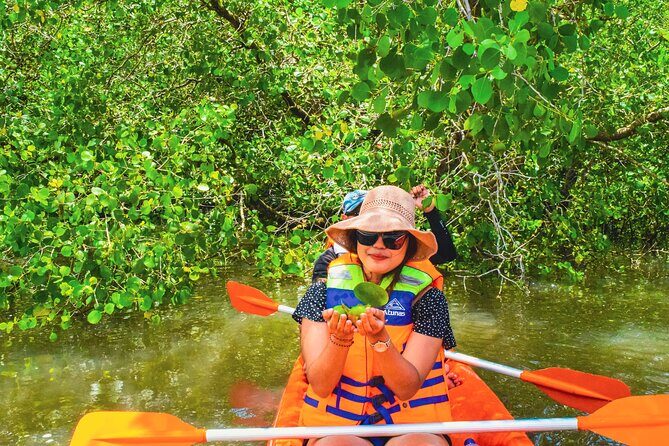
Bali has plenty of beaches that steal the spotlight. I like that this tour flips the script and gives you time in the mangrove system, where the water, roots, and shade create a different rhythm. You’re not just watching nature from the shore—you’re traveling through the channels and seeing how the forest works.
The best part is the mission angle. This trip is tied to mangrove conservation and sustainable tourism with the local community, including fishermen from Wana Segara Kertih. That means your ticket is more than entertainment; it contributes to keeping these coastal ecosystems healthy.
Mangroves also tend to feel calmer than open water. If you’re looking for a break from traffic-heavy days, the gentle pace and close-to-water views can be a nice reset.
You can also read our reviews of more tours and experiences in Bali.

Getting There: Hotel Pickup and the PT JTB Indonesia Briefing
Your day starts with hotel pickup and drop-off, offered from centrally located hotels in Kuta, Legian, Tuban, Sanur, Jimbaran, Tanjung Benoa, and Nusa Dua areas. If you’re outside those zones, there can be additional charges, and pickup from other areas isn’t recommended. This matters because it keeps the schedule tight and helps you avoid long waits.
Then you head to the PT JTB Indonesia office for a short briefing. Expect a toilet break and a chance to change into more comfortable clothes before heading out. I like this step because mangrove canoeing is wet-enough to matter, but not so intense that you’re stuck in soggy clothes the whole day.
Before you get into the canoe, there’s also a safety briefing. That’s a big deal for first-timers. It helps you understand how the canoe works, how to sit, and what to do if conditions shift.
On the Water: Smooth Paddling, Safety Checks, and Wildlife Spotting
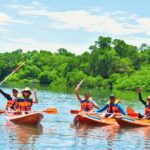
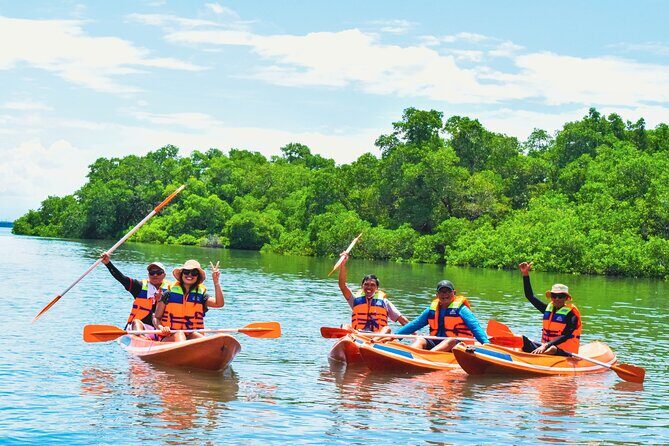
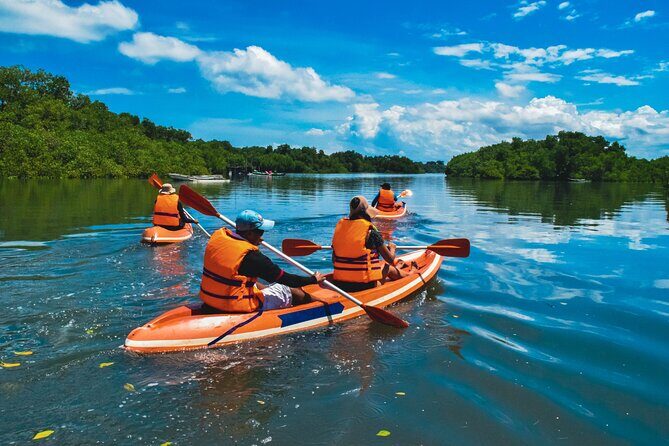
Once you’re on the water, the core of the experience is the canoe time: about 1–1.5 hours moving through the mangrove area. The setup is meant to feel manageable. The tour is described as having an easy feel on smooth water, which is exactly what you want if you don’t want this to turn into a workout class.
You’ll be guided, and that’s not just for steering. A guide’s job is to point out what you’re actually passing—like the mangrove trees themselves and the animals connected to them. In the reviews, Simon is specifically praised for friendly help and for talking clearly in English about the trees and animals you can spot along the way.
Wildlife spotting is never guaranteed, but the tour is designed to give you chances. You may see birds, fish, and other mangrove wildlife. Even if you don’t spot everything, the experience is still about being in the mangrove ecosystem, not collecting a checklist.
This is also a shared activity, so you’ll likely share time and space with other guests. The group size cap is high (up to 99), but what matters to you is the feel while you paddle: your canoe time is still guided and structured.
What the Guides Teach You About the Mangrove Ecosystem
The education piece is subtle but important. Mangroves protect coastlines, support biodiversity, and act like a living nursery for coastal life. Your guide helps you connect those ideas to what you’re seeing right now—roots that hold the forest in place, water channels that feed the system, and animals that use the habitat.
What I like here is the practical style of interpretation. It’s not framed like a lecture. It’s more like a guided walk, except you’re floating. That’s why the tour feels more relaxing than “nature class,” especially when the guide explains in clear English.
If you’re the type of person who usually skips birdwatching because it feels slow, this is a good compromise. You get motion, scenery, and mini facts at the right pace.
The Conservation Side: Your Donation and Support for Local Fishermen
This tour includes a donation, and that’s central to the point of the experience. The conservation work is described as a collaboration with the local community and fishermen of Wana Segara Kertih. That connection helps you understand where the money goes and why it matters.
It also ties into broader sustainable tourism goals, including the UN’s Sustainable Development Goals (SDGs). You don’t need to memorize the framework to feel the difference. You can just see it as a trade: you spend a couple of hours in a natural area, and your participation supports efforts to protect it.
I also like that the tour doesn’t pretend conservation is the same thing as a souvenir. This is built into the experience itself. It’s not a separate optional purchase after the fact.




Where the Time Goes: From Briefing to Return to Your Hotel
Plan on about 2 hours total. In a short time window, you get a lot done: pickup, office briefing, safety talk, then the canoe time itself, followed by the return.
Here’s how the timing usually feels in practice:
- You start with pickup and head to the office area for briefing and comfort stops.
- You get safety instructions before you step into the water.
- You paddle for roughly 1 to 1.5 hours, with your guide explaining what’s around you.
- After the tour, you’re brought back, with drop-off at your hotel.
This structure is ideal if you want something nature-focused without losing an entire day. It also works well for pairing with other plans in the Kuta–Legian–Sanur zone.
One small caution: the tour can change or cancel due to tides and weather conditions for safety reasons. If your schedule is tight, keep some flexibility.
What to Pack: Shoes, Clothes Change, Sunscreen, and Comfort
For this type of outing, I’d treat comfort like a priority. Wear sport shoes (closed-toe), and bring comfortable clothes you can change into. The office stop includes a chance to change attire, which suggests you’ll be happier if you arrive prepared.
Pack sunscreen. It’s recommended, and mangrove areas can still mean sun exposure depending on the day. You’ll also want to have a good plan for what you’ll keep dry. The tour includes bottled water, but you’ll need to handle beverages yourself.
A small detail that’s easy to miss: there’s mention of bringing a voucher and having valid payment for souvenirs. If you think you might want something local, don’t leave that out of your day plan.
Price and Value: Is $61.54 Worth It?
At $61.54 per person, this isn’t a budget-only activity, but it also isn’t inflated for what you get. The value comes from the package: hotel pickup and drop-off, safety equipment, first aid, and rental canoe/kayaking are all included. You’re not paying extra to get there or to access the gear.
You’re also getting insurance from age 5 to 65 years old, plus the donation component. That’s part of the cost logic. If conservation is important to you, you’re not just funding a tour operator’s operations—you’re paying for the system you’re visiting to be protected.
One more value point: the trip is short. Two hours (with the active paddle portion around 1–1.5 hours) makes it easier to fit into a Bali itinerary without turning it into a full-day commitment. And the fact that tours are based on sharing with other guests helps keep the per-person price more reasonable.
If you’re someone who needs a long, deep adventure to justify the spend, this may feel short. But if you want an easy nature experience with a conservation mission, it’s priced in a way that makes sense.
Who This Tour Suits Best (And Who Might Be Less Happy)
This tour is best for people with moderate physical fitness. You don’t need to be a hardcore paddler, but you should be comfortable sitting and doing light effort with a canoe.
It’s also a strong fit if you want:
- a calmer alternative to crowded beach days
- nature viewing with a guide and clear explanations
- an activity tied to community conservation
- a short trip that doesn’t steal your whole day
Children can go too, with a child policy that lists a minimum age of 5 and a maximum of 11. That’s useful if you’re traveling with kids who can handle a short outdoor outing.
Who should consider skipping? If you’re looking for a private, quiet experience with no sharing, this is shared. If you’re very sensitive to schedule changes, remember that tides and weather can affect the itinerary.
Quick Safety and Reality Checks
Mangrove canoeing sounds simple, but conditions still matter. The tour notes that schedules may change or cancel depending on tides and weather for safety reasons. In practice, that means you should avoid stacking this as the one single “must-do” if you don’t have flexibility.
Also, bring the right footwear and clothing. Sport shoes and changing clothes are recommended for a reason. You don’t need to overthink it, but you do want to arrive prepared so the tour feels comfortable rather than stressful.
Should You Book This Bali Mangrove Canoeing Tour?
I’d book it if you want a short, easy paddle with a guide who talks clearly and points out what’s around you, and if you like knowing your money includes a donation that supports mangrove conservation with local fishermen. The hotel pickup and the structured briefing help make it low-stress, especially if you’re staying in Kuta, Legian, Sanur, Jimbaran, Tanjung Benoa, or Nusa Dua.
I’d hesitate if you’re traveling with a tight schedule and can’t handle the chance of tides or weather changing plans. I’d also skip if you need a private experience. This is about community and shared nature time, not a one-on-one outing.
If you’re on the fence, use this rule: if you can enjoy calm water, learn a bit from a good guide, and care about mangroves, this tour fits your Bali trip.
FAQ
How long is the Bali Mangrove Canoeing Tour?
The tour lasts about 2 hours total, including the time on the water (about 1–1.5 hours).
Is hotel pickup and drop-off included?
Yes. The experience includes hotel pickup and drop-off.
Where does the tour start and end?
It starts at the Bali Mangrove Forest Tour meeting point in Kedonganan, Kuta, Badung Regency, Bali 80361, Indonesia, and ends back at the meeting point.
What’s included in the price?
The included items are hotel pickup and drop-off, bottled water, safety equipment, first aid, insurance for ages 5–65, rental canoe/kayaking, and a donation.
What isn’t included?
Beverages and lunch are not included, along with personal expenses.
What fitness level do I need?
A moderate physical fitness level is recommended.
Can the tour change due to tides or weather?
Yes. The itinerary may change or cancel due to tides and weather conditions for safety reasons.
Is free cancellation available?
Yes. You can cancel up to 24 hours in advance for a full refund.