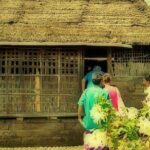
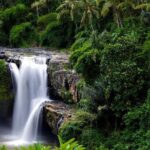
A temple blessing in the Bali jungle.
This experience takes you to the foot of Mount Batukaru, where a Mangku (Balinese priest) guides a real purification and blessing in a sacred spot by a secluded river. What makes it stand out is the mix of ritual and everyday village life, so you see spirituality as something lived, not something performed for tourists.
I especially love the hands-on parts: learning the bamboo instrument rindik and dressing in temple clothes before the ceremony starts. I also like how the day continues beyond the temple with homemade lunch, a walk through a spice and herb garden, and time at Balikaru farm (including stingless Trigona bees).
One thing to consider: purification and blessing are not permitted during menstruation and for pregnant women. If either applies, you’ll want to plan a different day in Bali.
In This Review
- Key highlights to know before you go
- Why this Bali purification day feels more personal than a tour
- Your morning at Warung Balikaru: starting in a real village
- Spice and herb garden walk: what you are really learning
- Rindik lesson: the bamboo instrument moment that sets the tone
- Temple clothes and the Mangku ceremony by the river
- What the lunch at Warung Balikaru is like
- Rice fields and village life: seeing work, not just scenery
- Balikaru farm animals and the stingless Trigona bees
- Belulang Hot Springs finish: sulfur water and a slow exhale
- Price and value: is $89 reasonable for this kind of day?
- Time, weather, and how to plan your day around it
- Who should book this, and who might skip it
- Small tips that help you get more from the experience
- Should you book Purification Ceremony in sacred Jungle Temple Bali?
- FAQ
- What is the duration of the purification ceremony experience?
- Where does the tour start, and what time does it begin?
- How big is the group?
- Is vegetarian food available for lunch?
- Who cannot participate in the purification and blessing?
- What is included besides the ceremony?
- Is there time to visit Belulang Hot Springs?
Key highlights to know before you go
- Mangku-led purification and blessing in a sacred temple setting near a secluded river
- Rindik lesson so you do something with your hands and ears, not just watch
- Spice and herb garden walk focused on how Balinese plants are used in daily life
- Village lunch at a warung with nasi campur and tumpeng
- Balikaru farm visit with animals and stingless Trigona bees
- Belulang Hot Springs to relax in natural sulfur water at the end of the day
Why this Bali purification day feels more personal than a tour
If you think Bali spirituality is only about temples you can photograph, this day corrects that fast. The point here is not a spectacle. It is a guided purification and blessing where you follow the steps, listen to the meaning behind the rituals, and feel how it changes the tone of the day.
The experience is also built for intimacy. The group is capped at six travelers, so you are not lost in a crowd. That small size matters during a ceremony, because the details and instructions land better when you can actually hear your guide and the Mangku.
Finally, you get a full arc: preparation in nature, ceremony at the temple, lunch with local flavor, then rice fields and farm life, ending with sulfur hot springs. It is one coherent day, not a string of disconnected stops.
You can also read our reviews of more tours and experiences in Bali.


Your morning at Warung Balikaru: starting in a real village
The day begins at Warung Balikaru in Belulang Village (start time 9:00 am). It is a practical start point that feels like you are stepping into the village rhythm rather than arriving at a bus-and-briefing scene.
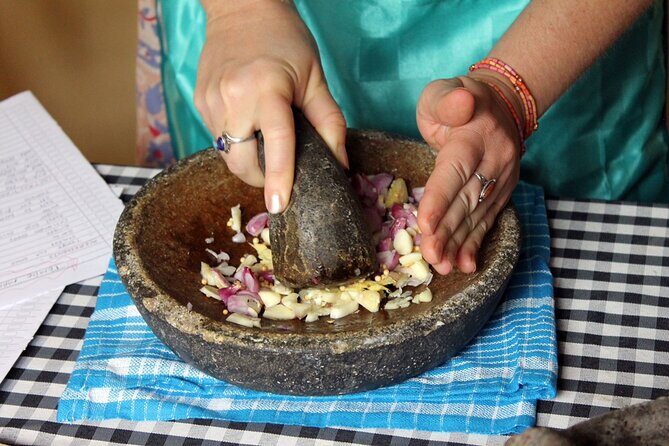
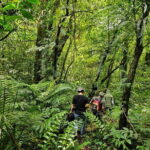
From there, you get a welcome drink and move straight into the outdoors. You walk through a spice and herb garden, where you explore tropical plants and herbs. This part works because it slows you down early. You start noticing smells, textures, and how people use plants, which sets you up mentally for the ceremony later.
One detail I appreciate: the focus stays on meaning. The garden is not just a photo walk. You are meant to understand the connection between nature, daily life, and Balinese spirituality, which is what the rest of the day keeps reinforcing.
Spice and herb garden walk: what you are really learning
This garden stop is about more than pretty greenery. It is a guided introduction to the kinds of plants that show up in traditional Balinese routines. Even if you do not remember every name, you should remember the feeling: the day is built around local knowledge, not a generic script.
Expect this to be a slower-paced section of the tour, with time to ask questions. If you like cultural experiences that connect daily practice to belief, this garden moment is one of the easiest wins of the day.
Practical note: because it is Bali and it is outside, bring water and expect humidity. Comfortable walking shoes help too, especially if the ground is uneven near garden paths.
Rindik lesson: the bamboo instrument moment that sets the tone
After the garden, you shift into a short but memorable activity: learning to play rindik, the traditional Balinese bamboo instrument. This is a great choice for a few reasons.
First, you are not just listening. Your body joins the experience through sound. Second, it gives you a mental transition right before the ceremony. The pacing matters: the rindik moment acts like a bridge between nature and the temple rite.
Finally, it is cultural without being overwhelming. Even if you cannot play music well, you still get to try. That makes it an experience you carry with you later, not just something you watched.
Temple clothes and the Mangku ceremony by the river
At some point, the group gets supported with offerings and Balinese temple clothes (rental). Dressing this way matters because it signals respect and shifts your mindset. You are not arriving in streetwear expecting the temple to accommodate your comfort. You are part of the ritual process.
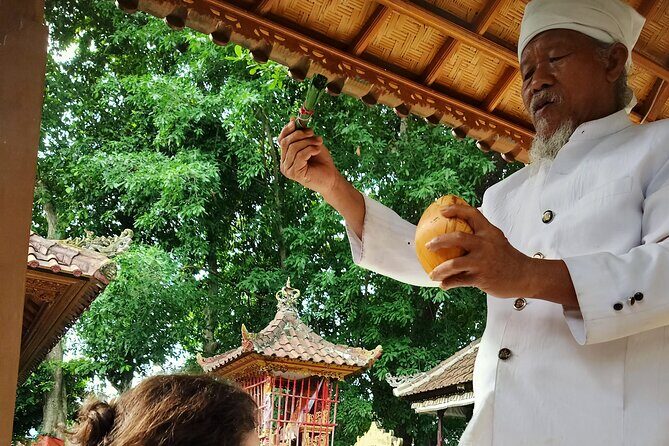
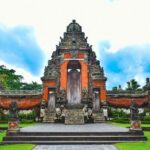
Then comes the centerpiece: the Balinese purification and blessing ceremony led by a Mangku at a sacred temple next to a secluded river. Your guide explains the meaning behind each ritual step, and you listen to sounds like sacred bells as the ceremony unfolds.
Here is the best way to approach this part: try to follow what you are doing step-by-step, and listen for the meaning your guide gives. If you treat it like a performance, you will miss the point. If you treat it like a guided ritual, it becomes quiet and personal in a way that is hard to fake.
Also remember the ceremony has clear rules. Purification and blessing are not permitted during menstruation and for pregnant women. If you are unsure how to handle this, ask before booking so you can plan what to do instead.




What the lunch at Warung Balikaru is like
After the temple, the day turns practical and delicious: homemade Balinese lunch at an authentic village warung. The meal is described as nasi campur tumpeng, which usually means a balanced plate with rice and a mix of sides, designed for a complete meal rather than a snack.
This lunch stop is more than fuel. It is where the day’s cultural approach becomes tangible. Eating with the group in a village setting helps you shake off the temple intensity and refocus on everyday life.
Good to know: dietary needs like vegetarian can be accommodated if you note them at booking. If you have other restrictions, communicate them early so the kitchen can plan.
Rice fields and village life: seeing work, not just scenery
In the afternoon, you join a farmer in the rice fields and get to see how farming fits into the rhythm of the village. You are not just walking past farmland. You are meeting the people who work it.
This is also where you can ask the questions that matter to you. The tour description emphasizes chatting with villagers, and that is often the difference between learning facts and understanding how life feels.
One practical consideration: farm areas can be hot and sometimes slippery. Wear shoes you trust, and take your time on uneven ground.
Balikaru farm animals and the stingless Trigona bees
Next, you visit Balikaru farm, where you meet animals and learn about stingless Trigona bees. Stingless bees are a fascinating topic because they connect local ecology to traditional knowledge and daily care of the land.
Even if you have never heard of Trigona bees before, you should come away with a clearer sense of how a village farm is both practical and connected to nature. This is one of those stops where you feel the day becoming more grounded again, after the more symbolic temple ceremony.
Belulang Hot Springs finish: sulfur water and a slow exhale
The day ends at Belulang Hot Springs, where locals bathe in natural sulfur water. This is the best kind of ending: it matches the theme of purification without turning the ceremony into a gimmick.
Sulfur water can feel intense at first, but the idea is simple. After a day that includes ritual and walking, your body appreciates a quiet reset. Think of it as a gentle way to let the day settle.
One thing I like about the structure: it gives you a decompression period before you say goodbye to the mountain village.
Price and value: is $89 reasonable for this kind of day?
At $89 per person for about 3 hours 30 minutes, this is not a bargain-basement tour. But it also is not priced like a big-vehicle, mass-market outing.
Your value comes from a few specific costs that usually drive price up:
- a guided Mangku-led ceremony with temple coordination
- included offerings and temple clothing
- a full set of village activities: garden walk, rindik lesson, warung lunch, rice fields, and farm time
- Belulang Hot Springs as the finishing moment
Also, the small group size (max six travelers) helps justify the price. A small group means your guide time is less diluted, especially during the ceremony where instructions matter.
If your Bali trip includes temples but you want one where spirituality is explained and paired with real village life, this price is easier to swallow. If you only want scenic photos and short stops, you might find the day slower than you expect.
Time, weather, and how to plan your day around it
The start time is 9:00 am, and the tour ends back at the meeting point. That makes it a good fit for a day where you want to keep your evenings free.
Weather matters. The experience notes that good weather is required, and if it is canceled due to poor weather, you will be offered another date or a full refund. Since part of the day is outdoors, rain can affect how comfortable it feels.
If you are planning other activities the same day, leave breathing room. This is the kind of tour where you may want to take your time after you return.
Who should book this, and who might skip it
Book it if you want:
- a meaningful Balinese purification ceremony, not a staged stop
- hands-on culture, like the rindik lesson and dressing for the temple
- a day that mixes spirituality with everyday life: spice garden, rice fields, warung lunch, and farm animals
- a small group pace (max six travelers)
You might skip it if:
- you need to avoid ritual participation due to the menstruation/pregnancy rule
- you prefer purely visual sightseeing and want less walking and fewer guided explanations
The tour also says most travelers can participate, and service animals are allowed, which makes it easier for more people to plan responsibly.
Small tips that help you get more from the experience
- Ask for guidance on what to do during the ceremony. The guide shares meanings, so your best move is to listen closely.
- Wear comfortable clothes and shoes. Even if you get temple clothing later, you are walking in the village and garden areas first.
- If you are vegetarian or have food limits, set it at booking so the lunch is handled correctly.
- Take the included photo moment seriously. You get purification memories with a personal photo by email, which is a nice way to preserve the day without turning it into a constant camera session.
Should you book Purification Ceremony in sacred Jungle Temple Bali?
I think this is a strong choice if you want a real-feeling day in Bali that connects ritual to village life. The combination of a Mangku-led ceremony, guided explanations, hands-on culture (rindik), village lunch, rice fields, farm animals, and the sulfur soak at Belulang Hot Springs makes the day feel complete.
If you are looking for a quick temple photo run, you may feel the ceremony is longer than you want. But if you care about how people actually live their beliefs, this is the kind of experience that sticks with you.
FAQ
What is the duration of the purification ceremony experience?
It runs for about 3 hours 30 minutes.
Where does the tour start, and what time does it begin?
It starts at Warung Balikaru in Belulang Village, Mengesta, Penebel, Tabanan, Bali, at 9:00 am.
How big is the group?
This activity has a maximum of 6 travelers.
Is vegetarian food available for lunch?
Yes. The tour can accommodate dietary needs such as vegetarian if you indicate your requirements at the time of booking.
Who cannot participate in the purification and blessing?
Purification and blessing are not permitted during menstruation and for pregnant women.
What is included besides the ceremony?
The experience includes an English-speaking guide, a welcome drink, a rindik lesson, offerings and temple clothes rental, homemade nasi campur tumpeng lunch, a spice and herb garden walk, a Balikaru farm visit with animals and Trigona bees, a farewell gift, and a personal photo sent by email.
Is there time to visit Belulang Hot Springs?
Yes. The day ends at Belulang Hot Springs where locals bathe in natural sulfur water.