REVIEW · UBUD
Kintamani Lake & Volcano Tour
Book on Viator →Operated by Tour East Indonesia · Bookable on Viator
Mount Batur steals the show in a day trip. You’re taken from Ubud into the Kintamani highlands, where Mount Batur and Lake Batur dominate the day.
This tour is interesting because it mixes nature and performance with hands-on Bali craft culture, all wrapped in hotel pickup and an English guide.
I also love how smoothly the cultural stops fit together. The Barong Dance in Batubulan is a real ritual-style performance, and guides like Guside, Anto, and Radi show up ready to explain what you’re seeing and help you time photos.
One thing to watch: the craft workshops can feel sales-forward, and bad weather can hide the volcano view. If you hate shopping pressure or misty days ruin scenery for you, plan your expectations.
In This Review
- Key takeaways before you go
- Getting from Ubud into the Kintamani highlands on one long, efficient day
- Barong Dance Uma Dewi in Batubulan: what you’re actually watching
- Mas woodcarving center: watching skill up close (and deciding how you shop)
- Goa Gajah (Elephant Cave): a carved stone entrance and a temple-like mood
- Kintamani highland views: Mount Batur and Lake Batur when the weather cooperates
- Holy Springs on the return: what to expect from the healing-water stop
- Celuk Village in Ubud: gold-and-silver craft, plus the real shopping test
- Tour logistics you’ll feel: timing, distance, and group dynamics
- Price and value: what $67.95 gets you and where extra money shows up
- Should you book in real life: who it suits and who should skip
- FAQ
- What’s included in the tour price?
- What’s not included?
- Do I get hotel pickup from anywhere in Bali?
- What time does the tour start and how long is it?
- Will I definitely see Mount Batur clearly?
- Is there free cancellation?
Key takeaways before you go
- A tight 8-hour route that hits volcano views, a sacred cave, and two craft areas in one shot
- Barong Dance at Batubulan (Uma Dewi) with a full showing time window built into the schedule
- Mas woodcarving watching where you see artisans work with real skill, not just souvenir displays
- Goa Gajah (Elephant Cave) with carved stone entrances and a cooler temple-feel walk
- Lunch is your cost, and one stop may not take card well if signal is weak
- Volcano visibility depends on weather, so bring flexibility if you want perfect views
Getting from Ubud into the Kintamani highlands on one long, efficient day
This is a classic Bali “see a lot, move with a plan” day. You start at 8:30am and spend about 8 hours in total, riding in an air-conditioned minivan with round-trip hotel pickup from many south Bali areas. The goal is simple: you get the art side of Bali and then you climb into the volcanic highlands before the day gets too late.
Value starts with pacing. You’re not left to figure out transit between scattered sights, and the route is built to keep the day connected: Batubulan performance, Mas carving, Goa Gajah cave, Kintamani views, then back through Ubud/Celuk-style craft stops.
The group size stays small, with a maximum of 15 travelers. That matters because you still feel like a group day, but it’s not a giant bus experience.
You can also read our reviews of more tours and experiences in Ubud.



Barong Dance Uma Dewi in Batubulan: what you’re actually watching
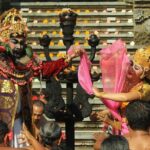
Your day begins with the Barong Dance at Uma Dewi in Batubulan, a place known for stone carving and ornate temples. The performance is built around the Balinese myth of the struggle between good and evil, with religious and profane forces shown through characters and movement. You’ll want to arrive with a calm mindset: this is ritual storytelling, not a modern stage show.
I like this stop because it gives you a cultural frame for everything else. Once you’ve seen Balinese myth represented through dance, the sacred feel of later stops like Goa Gajah makes more sense.
A practical tip: plan to stay seated and relaxed for the whole time window. Even when the strongest moments are early, the full slot can stretch, so bring patience if you’re the type who gets restless at performances.
Mas woodcarving center: watching skill up close (and deciding how you shop)
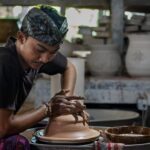
Next you head to Mas Carving Center, one of Bali’s woodcarving villages. You’ll watch artisans working at their craft, chipping intricate designs directly from wood blocks. This is the kind of stop where you get more value if you slow down and watch the process instead of sprinting to the next photo.
Why this matters for your day: it’s easy to think Bali souvenirs are all mass-produced. Here, seeing the work firsthand helps you judge quality and pricing better if you decide to buy something.
About buying: don’t feel pressured to commit on the spot. In the real world, craft stops can turn into sales conversations, especially with small groups. If you’re not interested in purchasing, you can still enjoy the demonstration—just be clear with your interest level and stick to your budget.
Goa Gajah (Elephant Cave): a carved stone entrance and a temple-like mood
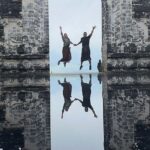
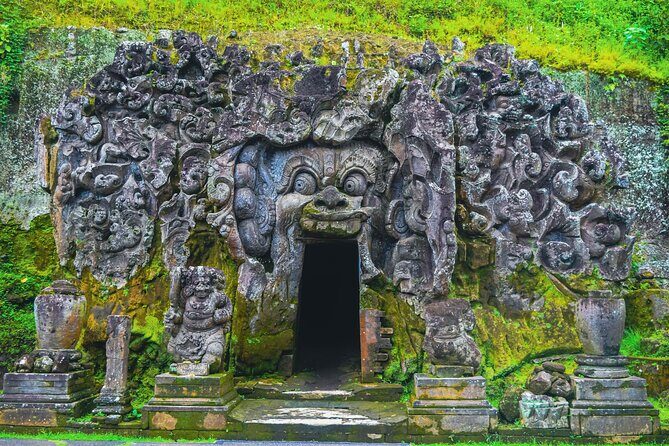
After Mas, the route brings you to Goa Gajah, also called the Elephant Cave. Dating to around the 11th century, it’s known for a dramatic rock-carved entrance and a sacred temple ground where you walk in a cooler, quieter-feeling setting.
What makes this stop memorable is the stone detailing. The carvings include entangled leaves, ocean-wave shapes, animals, and figures linked to local spirits. It’s not just a cave you look at from outside; you’re meant to wander through the temple grounds at a human pace.
If you’re traveling in rain or high humidity, Goa Gajah is also a nice break from the open-sky volcano area. You get shade, stone, and a different rhythm than the more scenic viewpoint stops.
Kintamani highland views: Mount Batur and Lake Batur when the weather cooperates

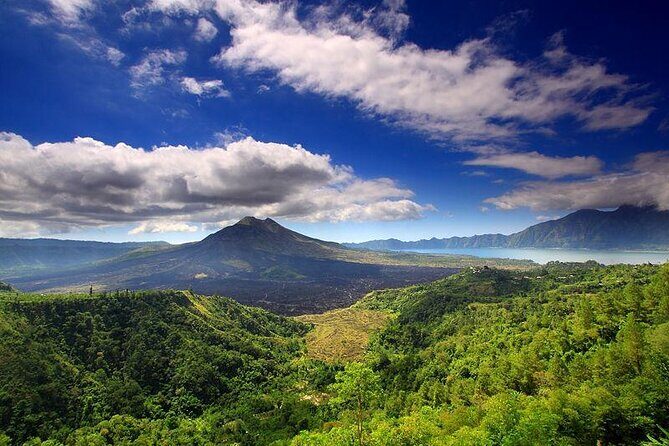
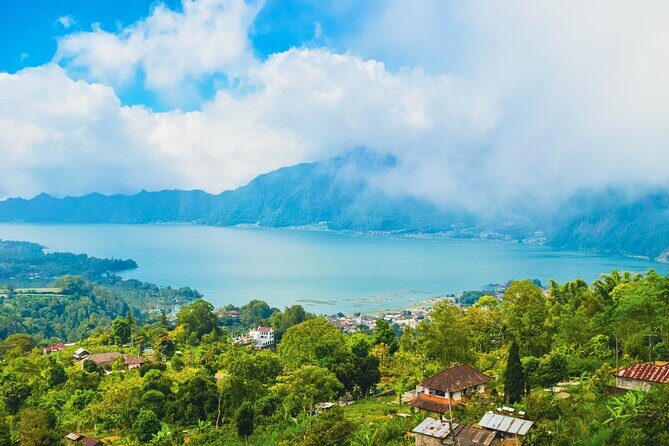
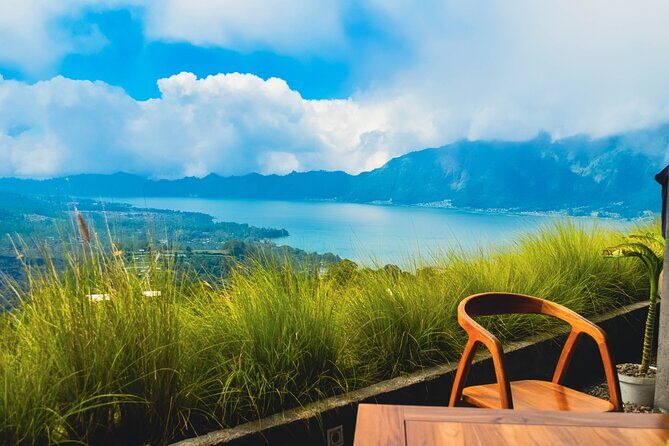
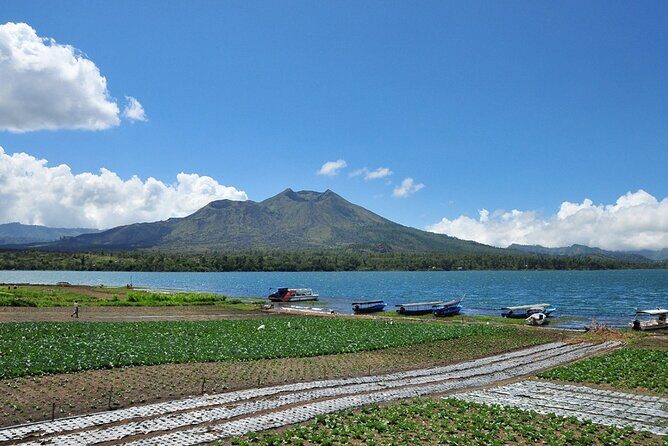
This is the headline moment: Mount Batur, an active volcano, with black lava ribbons running down from the peak. Beside it lies the shimmering Lake Batur, and the contrast is part of the magic—heat and rock on one side, water and cool air on the other.
You’ll get time for viewpoints and photos, and you’ll likely feel the pull to stare. One clear day can feel like Bali’s most cinematic postcard moment.
But here’s the reality check: mist and rain can blunt the view. If clouds wrap the mountain, you may not see the volcano as clearly as you planned. I’d plan this stop as “go for the views, but accept the weather,” because the Kintamani highlands often change hour by hour.
Lunch happens during the highland portion. The tour includes stop time for a restaurant with good views, and lunch is your own expense. Some lunches cost more than you’ll expect, and at least one recommended spot has been reported as not taking card well due to weak signal—so bringing cash is a smart move.

Holy Springs on the return: what to expect from the healing-water stop
On the way back, there’s a stop at the Holy Springs, believed to have therapeutic and healing properties. Practically, this is a short visit tied to the spiritual theme of the day. You’ll hear about the water and its reputation, and you’ll likely see people treat it like a meaningful tradition rather than a tourist photo spot.
This part is worth it if you like Bali’s spiritual framing. If you prefer pure scenery and hate “stop-and-learn” moments, it may feel a bit brief. Either way, it works as a calm transition between Kintamani and the more workshop-driven Ubud/Celuk area.
Celuk Village in Ubud: gold-and-silver craft, plus the real shopping test
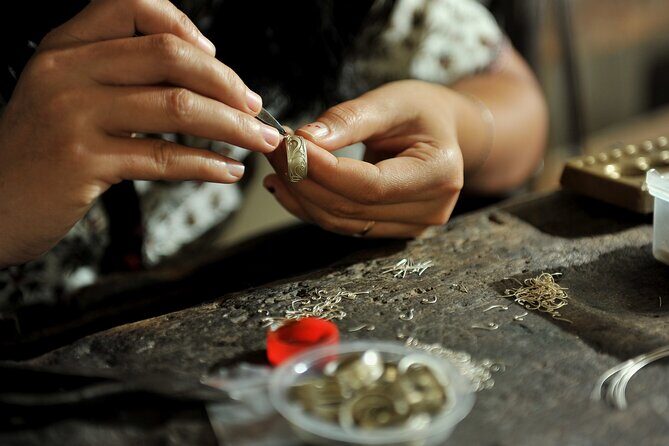
Your last major cultural stop leans into craft commerce: Celuk Village, known for gold and silver making. You’ll see the industrial craft side of Bali—where metalwork and fine detailing become everyday tourism storytelling.
This is where your attitude matters. If you like crafts and watching how artisans work with materials, you’ll enjoy it even if you don’t buy. If you don’t like shopping pressure, set boundaries early, because workshops can lead to persuasive conversations.
One review theme I take seriously: some people felt awkward when small group size meant personalized attention, especially when browsing or declining purchases. That’s not a “bad tour” signal by itself. It’s just a reminder to go in with a plan: decide if you’ll browse only, and decide your hard spending cap if you do buy.
Tour logistics you’ll feel: timing, distance, and group dynamics

The tour is built for one big day of transit. You’re bouncing between regions—Batubulan, Mas, Goa Gajah, Kintamani, then back toward Ubud and Celuk. That’s why this works best if you’re okay with a full schedule and want someone else doing the routing.
Pickup is offered in many south Bali hotel areas, and you’ll ride in an air-conditioned minivan. One important heads-up: if you’re outside the usual pickup zones, there may be an extra charge requested in cash at pickup for some locations. If you’re staying farther afield, ask your provider before the day so there are no surprises.
Group dynamics also matter. In very small groups, you might get a more customized route, and that can mean extra stops related to shopping-style experiences like batik or coffee. If you’re aiming to keep the day focused on volcano and temples, mention that preference before you go and stay firm about skipping anything you don’t want.
Price and value: what $67.95 gets you and where extra money shows up
At $67.95 per person, this is priced like a full-day guided circuit with admissions included at key stops. The big value is not just the guide—it’s the structure. You get:
- English speaking licensed guide
- hotel pickup and drop off from many south Bali areas
- admission tickets at each major stop
- mobile ticket
Where your wallet needs attention is lunch and any optional purchases. Lunch is at your own expense, and you may find the restaurant on the higher side—one report called a lunch buffet expensive and also warned about card limitations.
So here’s how I’d judge value for you: if you want volcano views plus cultural stops without arranging transport and tickets yourself, the guided package is often worth the money. If you’re only chasing the volcano and you’re comfortable hiring a private driver, you could potentially make the day cheaper and more direct.
Should you book in real life: who it suits and who should skip
This tour is a great fit for you if you:
- want a guided day that covers volcano views + sacred cave + Balinese performance
- like art and craft culture enough to tolerate workshop-style stops
- prefer pickup and a set plan over DIY navigation
- want small-group energy without going fully private
Skip or reconsider if you:
- need guaranteed close volcano views, rain-or-mist included (weather can block the mountain)
- dislike shopping pressure and feel drained by craft studio sales conversations
- want only “big sights” and minimal time in workshops
My best advice: go with a flexible mindset. The volcano is the payoff, but the craft stops and cave are what make the day feel like more than just a viewpoint run.
If you want a one-day sampler of Bali’s spiritual and creative side paired with active-volcano scenery, this is an efficient choice.
FAQ
What’s included in the tour price?
The tour includes hotel pickup and drop-off from many south Bali hotel areas, an English speaking licensed guide, and admission tickets for the main stops. Food and drinks are not included.
What’s not included?
You’ll pay for lunch and any drinks. Lunch is typically served at a restaurant with views during the Kintamani portion, but costs are your responsibility.
Do I get hotel pickup from anywhere in Bali?
Pickup is offered within many south Bali hotspots like Kuta, Seminyak, Sanur, Jimbaran, and Nusa Dua. If you’re outside those areas, there may be extra charges requested.
What time does the tour start and how long is it?
The start time is 8:30am, and the day runs about 8 hours.
Will I definitely see Mount Batur clearly?
Not always. If it’s raining or the mountain is surrounded by mist and cloud, visibility can be limited.
Is there free cancellation?
Yes. You can cancel up to 24 hours in advance for a full refund. If you cancel less than 24 hours before the start time, you won’t get your money back.