REVIEW · NUSA DUA
Day Trip: Ubud Monkey Forest, Rice Terrace, Temple and Waterfall
Book on Viator →Operated by Bali Natural Tours · Bookable on Viator
Some days in Bali feel like a postcard. This one feels like a working day. You’ll bounce between the big Ubud sights and the quieter crafts side of Bali, with a local driver/guide keeping the pace sane. I like that the route is built around real places of worship and making things, not just photo stops.
Two things I especially like: the door-to-door pickup from the Nusa Dua area and the fact that entrance fees are included, so you’re not doing little surprise math all day. One thing to consider is that you’re moving for hours in a single loop, so you’ll want good shoes and a little patience for crowds at the popular viewpoints.
In This Review
- Key things to know before you go
- Why Ubud, and why this day works
- Price and what $37 actually buys
- Stop 1: Tegenungan Waterfall (and when to plan for swimming)
- Stop 2: Sacred Monkey Forest Sanctuary (temples in the canopy)
- Stop 3: Tegalalang Rice Terrace (how the views are made)
- Stop 4: Tirta Empul Temple (a water temple with purpose)
- More Ubud than landmarks: Tohpati batik, Mas wood art, and silver crafting
- The full day flow: timing, energy, and logistics that matter
- Should you book if you hate crowds or love details?
- Guides: what can make or break a day like this
- Quick FAQ
- FAQ
- What does the $37 per person price include?
- How long is the tour?
- What time does the tour start?
- Do you pick up from Nusa Dua?
- Are entrance tickets included for the stops?
- Can I swim at Tegenungan Waterfall?
- What should I wear?
- Is free cancellation available?
- Should you book this Ubud day trip from Nusa Dua?
Key things to know before you go
- Door-to-door pickup from many Bali areas saves time and hassle, starting around an 8:30am departure.
- Eight hours of three different kinds of Bali views: waterfall, monkeys and temples, then rice terraces.
- Tirta Empul is part of the day, so you’re not only chasing scenery.
- Craft villages are not an afterthought: batik at Tohpati, wood art in Mas, and a major silver-crafting stop.
- Swimming at Tegenungan depends on conditions, so keep expectations flexible.
Why Ubud, and why this day works
Ubud gets talked about as a “nature and culture” hub, but in real life it’s more than that. It’s where Balinese life, religion, and daily production all overlap. This tour leans into that blend: temples and sacred spaces, then the skills people practice every day—batik, weaving, wood carving, and silver work.
What makes this day appealing is the pacing and variety. You get a waterfall stop early, then a forest sanctuary experience, then the iconic terraced rice landscape look at Tegalalang. After that, you shift into temples and crafts so the day doesn’t feel like nonstop sightseeing.
And here’s a practical bonus: the itinerary is long enough to feel like you escaped the hotel, but structured enough that you’re not piecing together half a dozen tickets and rides on your own.
You can also read our reviews of more tours and experiences in Nusa Dua



Price and what $37 actually buys
At $37 per person for an about-8-hour day, the value comes from what’s covered rather than just the price tag. Entrance fees are included, and you also get round-trip transportation from a long list of pickup areas in southern Bali, including the Nusa Dua side.
You’ll also get a comfortable, air-conditioned vehicle, parking fees covered, petrol covered, and a bottle of mineral water included. You’re not paying extra for the basic “get there and back” piece. Meals are not included, so you should plan for that.
One more detail that matters: it’s listed as a private tour/activity with your group only. That doesn’t guarantee a quiet day, since you’ll visit crowded landmarks, but it does usually mean you’re not squeezed into a huge cattle-car style group for the driving parts.
Stop 1: Tegenungan Waterfall (and when to plan for swimming)
Tegenungan is one of the more approachable waterfall experiences, with an estimated height of about 15–20 meters and plenty of foot traffic around it. The good news is that it’s visually strong even if you don’t swim. If you do swim, the tour notes that it depends on clear water conditions—so treat that as a bonus, not a promise.
This is also a good “wake up your eyes” stop. Early in the day, the light and the energy at the falls can make everything feel more alive. If you’re the type who likes a quick stretch, this is your chance: you’ll have about 1 hour here.
A consideration: with waterfalls that sit near visitor areas, you may find the vibe more busy than remote. If you want calm, keep your focus on the water, the view, and your timing—arriving right when your tour lands helps.
Stop 2: Sacred Monkey Forest Sanctuary (temples in the canopy)
Next up is the Sacred Monkey Forest Sanctuary in Ubud. The highlight here is simple: you’re walking through a Hindu temple area where gray macaques roam. The setting is part nature, part sacred space, with the animals living alongside temple life.
You’ll get around 2 hours at the sanctuary, which is a smart amount of time. It’s long enough to wander slowly, pause for viewpoints, and still avoid feeling rushed. It also means you’re not forced to “move like a camera crew” the whole time.
The main drawback is also the most obvious one: monkeys are monkeys. You can still have a great visit, but keep expectations grounded. Follow your guide’s instructions, keep your belongings secure, and focus on the temple details and the forest setting rather than trying to interact.
Stop 3: Tegalalang Rice Terrace (how the views are made)
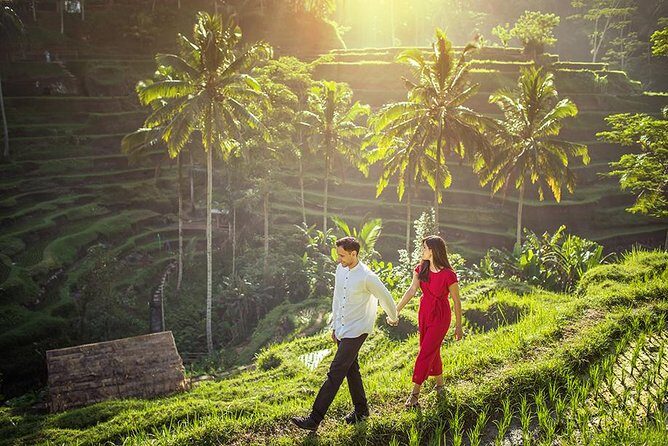
Then comes Tegallalang Rice Terrace, one of Bali’s famous terraced rice areas. The point isn’t just the postcard view. This stop connects the look of the terraces to the way rice is grown in layers—part of the island’s inherited approach to farming.
You’ll get about 1 hour at Tegalalang. That’s enough for a relaxed stroll along the viewpoints without turning it into a full-on hike. It’s also a good length for photos, but don’t treat it like a race. The terraces are best when you take a few minutes to watch how the levels step down and how the light moves across them.
One practical note: famous rice terraces draw crowds, and Tegalalang is no exception. If you want cleaner photo angles, aim for a few short pauses rather than one big sprint. Your guide can help with where to stand.



Stop 4: Tirta Empul Temple (a water temple with purpose)
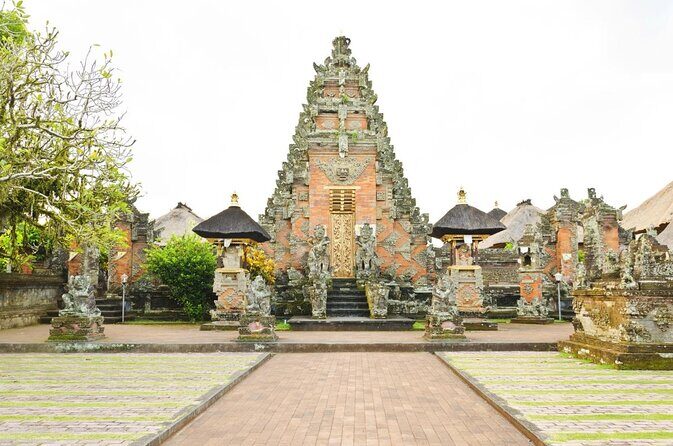
After the rice terraces, you shift from scenery to ritual space: Tirta Empul Temple, a Hindu Balinese water temple near Tampaksiring. The key idea here is that this temple compound centers on a petirtaan, described as a bathing structure, tied to water temple traditions.
You’ll have about 1 hour here. That timing works well because temple visits are about pacing—looking, respecting space, and taking in the environment. If you’re more interested in meaning than photos, this is one of the stops where your time pays off.
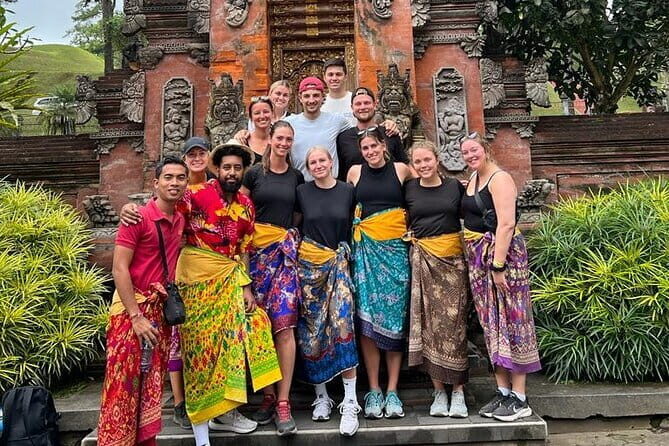
A good consideration: temples often involve specific expectations for behavior and dress. This tour already lists a smart casual dress code, which should help you show up appropriately. Still, keep your body language respectful and follow what your guide asks of you once you’re inside.
More Ubud than landmarks: Tohpati batik, Mas wood art, and silver crafting

What I like about this tour is that it doesn’t just drop you at major sights and call it done. You also visit craft areas tied to real Balinese production.
First, there’s a handicraft and handweaving batik village stop in the Tohpati area. The focus here is on textiles and the local craft side of Bali. If you’ve only seen batik as clothing back home, it’s a different feeling to see how it’s made and understand why it’s such a normal part of local life.
Next, you visit Mas village, known for arts—especially wooden arts. This is the kind of place where you can look at tools, techniques, and finished pieces and start to see the skill chain from raw material to finished work. It helps explain why Bali’s reputation for art isn’t random.
Finally, there’s a stop for silver crafting, described as the biggest silver crafting area in Bali. This is where you can slow down and actually notice design details: how patterns are formed, how pieces are built, and what makes one workshop’s style different from another.
A realistic note: these craft stops can include shopping pressure, depending on how each site operates. The best way to enjoy them is to treat purchases as optional. Even if you don’t buy, you’ll come away with a better feel for what people actually do for work.
The full day flow: timing, energy, and logistics that matter
The day runs for about 8 hours, with a start time of 8:30am. That early start is worth it. It helps you see the waterfall and other stops before the worst congestion turns the day into a long queue simulator.
You also get mineral water and transportation in a comfortable air-conditioned vehicle. That matters in Bali’s heat. The tour includes petrol and parking fees, so your costs stay predictable.
Meals are not included, so plan around that. Bring or buy a snack you like, especially if you’re the type who gets cranky when you’re hungry. Alcohol isn’t included either (it’s listed as available for purchase), so if you want drinks, budget extra.
Dress code is smart casual. That’s not the same as formal wear, but it does mean no sloppy, overly revealing outfit. For temples, bring the mindset that you’re entering a sacred space—not just sightseeing.
Should you book if you hate crowds or love details?
This tour is a good fit if you want a structured introduction to Ubud without building your own route. It works especially well for first-timers in Bali who want both the “wow” sights and the culture side in one day.
It’s also a solid choice if you like getting context. The craft stops make the day feel grounded in daily work. The temple stops keep it from becoming only scenery chasing.
If you hate crowds, you should know what you’re signing up for. Monkey Forest and Tegalalang are both famous. Even with a guide pacing you, the most popular viewpoints will be popular. You can still have a good day—just focus on slower walking, respectful behavior, and the parts of each place that connect meaning to place.
Guides: what can make or break a day like this
A day like this lives and dies by how well you’re guided. This tour has a high rating tied to the way the guides show up—kind, helpful, and very good at making the experience feel memorable.
When someone knows how to manage time between sites, it turns the day smoother. You spend less energy worrying about what comes next and more energy paying attention to what you’re actually seeing.
Even without a big “story” every minute, the best days have one thing in common: someone helps you get your bearings fast and keeps you moving at a human pace.
Quick FAQ
FAQ
What does the $37 per person price include?
It includes hotel return transfer/pick up and drop off in listed areas, an English speaking driver, petrol, parking fee, mineral water, air-conditioned comfort, and entrance fees.
How long is the tour?
The duration is about 8 hours.
What time does the tour start?
The start time is 8:30am.
Do you pick up from Nusa Dua?
Yes. Pickup and drop-off are offered in the Nusa Dua area (and many other nearby locations).
Are entrance tickets included for the stops?
Yes. Entrance fees are included for the listed sights.
Can I swim at Tegenungan Waterfall?
You can swim only when water conditions are clear.
What should I wear?
The dress code is smart casual.
Is free cancellation available?
Yes. You can cancel for a full refund up to 24 hours before the experience start time.
Should you book this Ubud day trip from Nusa Dua?
Yes, if you want a single-day Ubud hit list that doesn’t ignore culture. The value is strong because transport and entrance fees are included, and the mix of waterfall, sanctuary, terraces, a water temple, and craft villages gives you more than one kind of memory.
Book it especially if you’re traveling from the Nusa Dua side and want the convenience of door-to-door pickup. Skip it if you’re chasing quiet, remote nature or if you’d rather spend a full day on one site instead of moving through several.
If you go in with realistic expectations—popular places, a tight schedule, smart outfits—you’ll end up with a day that feels like Bali doing what Bali does best.