REVIEW · BALI
Pure Bali Village Experience, Cooking & Jamu Class+VIP Transfer
Book on Viator →Operated by Balikaru · Bookable on Viator
You will cook, plant, and sip jamu.
This 8-hour trip takes you out of the usual Bali crowds and into the Batukaru region for a hands-on day: learning the Rindik instrument, picking herbs for jamu, cooking lunch at an open-air bamboo-grill kitchen, and then finishing at Belulang hot spring.
Two things I really like: the very hands-on cooking (you make satay-style sate lilit on a live bamboo grill and try Lak Lak dessert using a traditional clay pot), and the jamu experience that starts in the herb & spice garden with 40+ plant varieties, then moves to the Jamu Pavilion for crafting and tasting two types of jamu plus fruit.
One consideration: it’s a morning start (pickup begins around 7:30am) and the schedule is weather-dependent. Also, the guide is English- or German-speaking, and other languages may cost extra.
In This Review
- Key highlights worth planning around
- Getting to the Batukaru region: the value of an early, small-group start
- Rindik first: why the music lesson matters (and not just for photos)
- Herb & spice garden tour: learning jamu starts with seeing the plants
- Paon Bali cooking class: hands-on, open-air, and actually fun
- The live bamboo grill moment
- Lak Lak dessert in a clay pot
- Lunch, rice planting, and the village walk: slowing down after the cooking
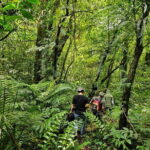
- The soft trekking segment
- Balikaru farm with stingless Trigona bees and animal time
- Belulang hot spring and what the end-of-day calm feels like
- Price and value: what $89 buys you in practice
- Who should book this village day (and who might want a different option)
- Should you book PURE BALI Village Experience, Cooking & Jamu Class + VIP Transfer?
- FAQ
- What time does the tour start?
- How long is the experience?
- Is hotel pickup and drop-off included?
- What language is the guide in?
- What kinds of dietary needs can be handled?
- Is the hot spring time included, and can I skip it?
- What’s included besides cooking and jamu?
Key highlights worth planning around
- Jamu from the garden: pick herbs and taste two types of jamu, not just a sip at the end.
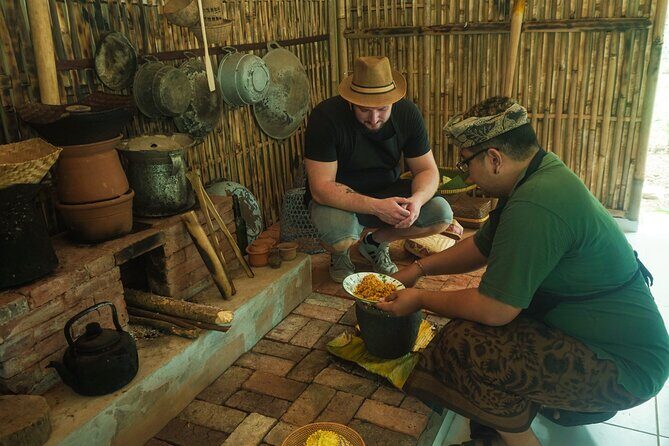
- Paon Bali cooking class: open-air kitchen cooking with live bamboo grill prep for sate lilit.
- Village work time: you’ll help with rice planting and take a relaxed village walk.
- Batukaru farm stop: meet animals and see stingless Trigona beehives at Balikaru farm.
- Belulang hot spring: optional soak to end the day on a calm note.
Getting to the Batukaru region: the value of an early, small-group start
Most Bali food-and-culture tours feel like a checklist. This one feels more like a slow morning that turns into a full village day. You start around 7:30am with hotel pickup in an air-conditioned vehicle, plus a scenic drive and at least one photo stop to help you get your bearings fast.
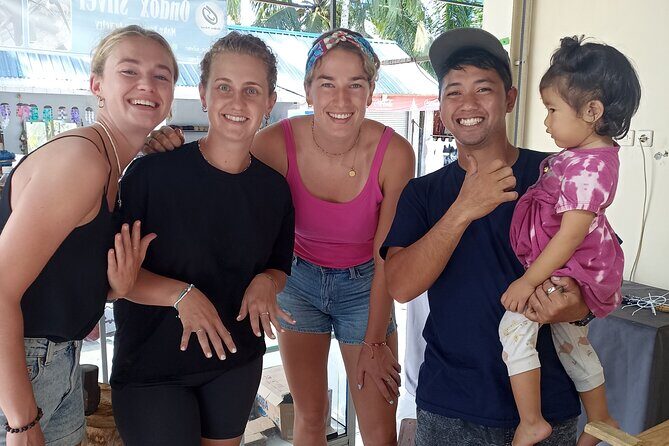
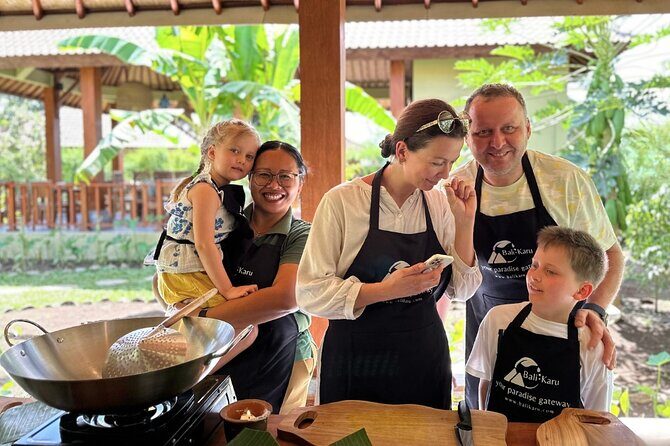
What you’re really paying for here is time and access. The group max is 12 travelers, so you’re not shouting over a dozen other voices while someone tries to explain how jamu works. In a small group, you get hands-on chances: chopping, mixing, tasting, and asking questions while your guide can still hear you.
Pro tip: Wear closed-toe shoes. Even though the day is not a hike marathon, you do a soft downhill trek (about 30 minutes) later, and muddy paths are common in Bali villages.
Possible drawback to remember: this experience needs good weather, and the hot spring part is labeled optional. If rain changes plans, you may not get the full effect of the outdoor segments.
You can also read our reviews of more tours and experiences in Bali.


Rindik first: why the music lesson matters (and not just for photos)
Before food shows up, you’re introduced to the Rindik, a traditional Balinese instrument. It’s a short, focused start that sets the tone: this day isn’t only about eating. It’s about understanding how village culture shows up in daily life, even in small things like music.
Then you walk through the mountain village at an unhurried pace. You’ll see a little of how people move through their day—paths, homes, and the way the village sits in the foothills near Mount Batukaru.
I like this order because it prevents the whole day from feeling like a food factory. You’re primed to pay attention before you start tasting. That’s when small details start to click.
Herb & spice garden tour: learning jamu starts with seeing the plants
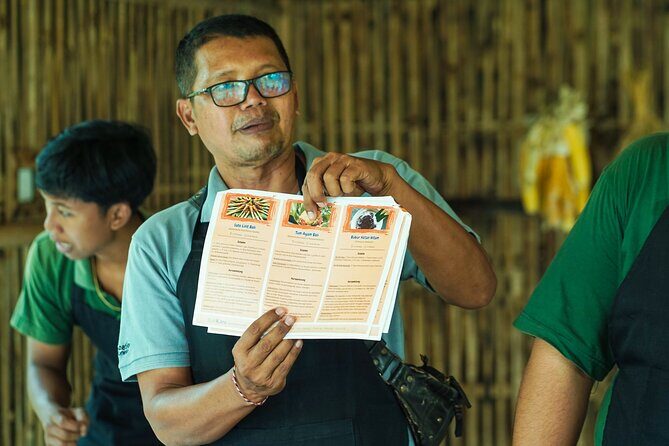
This part is one of the most memorable value hits of the whole experience. You get a guided tour through an herb and spice garden with over 40 plant varieties. The goal is simple: jamu is not a magic powder. It’s a plant-based tonic with real ingredients behind it.
You also pick herbs from the garden. That changes how you taste later, because you can connect a flavor to a leaf you actually held. You’re not just told what’s in your drink—you learn what the plant does and how people traditionally use these mixes.
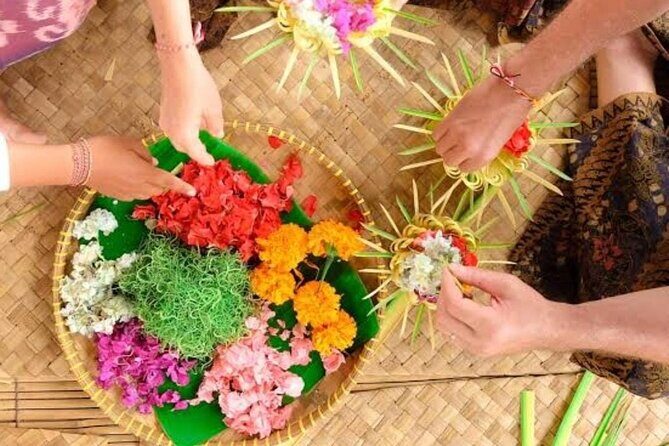
At the Jamu Pavilion, you’ll craft and taste two types of jamu, plus fruit tasting. In practice, this turns jamu into an experience with steps, not a quick sampling.
If you’re the kind of person who likes to know what you’re drinking, you’ll probably enjoy this section a lot more than you expect. If you only care about the final meal, you might still find it worth your time because it sets up the cooking flavors you’ll use later.
Paon Bali cooking class: hands-on, open-air, and actually fun
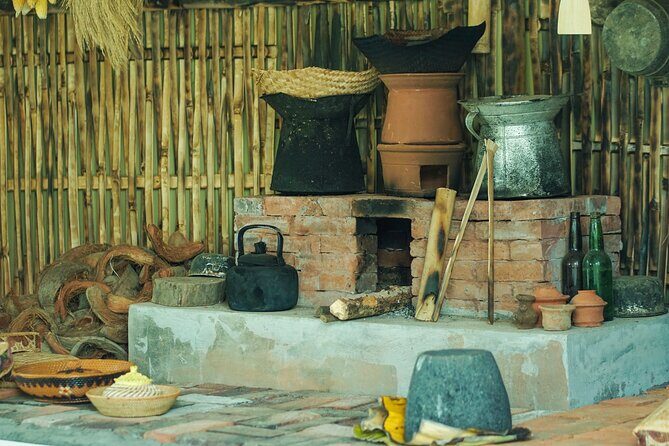
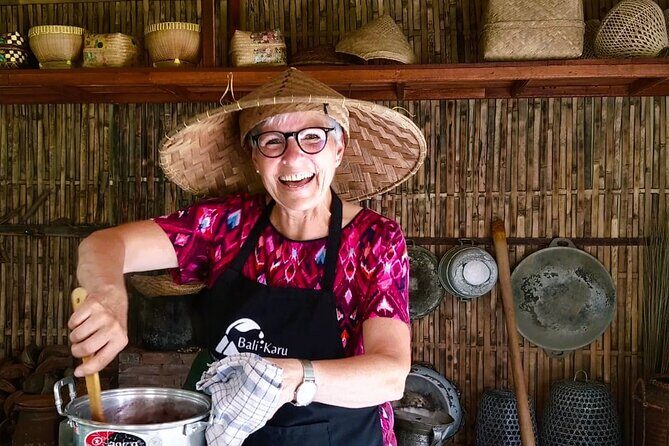
Now comes the part you’ll brag about later. You move to Paon Bali, an open-air kitchen, where a chef guides you through cooking an authentic Balinese meal. This is not a sit-and-watch class. You’ll cook your own lunch and also learn key techniques that make the food taste like Bali, not like a generic “tropical” menu.
The live bamboo grill moment
One of the best moments is the live bamboo grill station, where you prepare sate lilit. Sate lilit is very different from the skewers you might know elsewhere. It’s a hands-on station, and the grilling process is part of the lesson—watching, learning, and then doing it yourself.




Lak Lak dessert in a clay pot
You’ll also make Lak Lak, a dessert prepared with a traditional clay pot. Clay pots matter because they shape how the dessert cooks. Even if you’re not a cooking nerd, you’ll notice the difference in how it comes together.
After cooking, you eat the lunch you prepared: Nasi Campur Tumping plus dessert that you cook yourself. This is one of the strongest “value per minute” parts of the day because lunch is both included and earned.
Dietary needs: the operator says they can accommodate vegetarian diets. If you have other requirements, indicate it during booking.
Lunch, rice planting, and the village walk: slowing down after the cooking
After lunch, you get the chance to help with planting rice. This isn’t a staged photo op where you lightly tap the soil and move on. You’re doing a real farm task with guidance, and it adds contrast to the morning’s cooking class.
Then you take a walk through the village with mountain views and chat time with locals. This is where the small-group feel really shows again. You’re not rushed through a corridor of people. You’re moving at village pace.
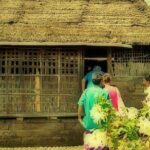
You’ll also visit an authentic Balinese compound and see a traditional house to learn about Asta Kosala architecture, influenced by Balinese Feng Shui. Even if architecture isn’t your main hobby, this kind of explanation helps you understand why homes and spaces are arranged the way they are.
The soft trekking segment
Earlier, I mentioned the 30-minute downhill soft trek. That segment matters for two reasons:
- It breaks up the day so you don’t feel like you only sit and eat.
- It reminds you you’re in real village terrain, not a paved tourist path.
Bring water, keep an easy pace, and don’t overthink it.
Balikaru farm with stingless Trigona bees and animal time
The day includes a visit to Balikaru farm, where you’ll see animals and get to know the stingless Trigona beehives.
Why this is interesting: stingless bees are a calmer entry point to understanding how pollinators live in the region. You’re not just hearing about insects. You’re seeing the hives and learning what makes them different.
From the tour description, you may also have a chance to feed a cow. If that happens on your day, it’s a simple but memorable touch. It grounds the farm part of the experience beyond “look at cute animals.”
Belulang hot spring and what the end-of-day calm feels like
At the end of the day, you’ll reach the Belulang hot spring. Bathing is labeled optional, but the fact that it’s there at the end is smart. After cooking, walking, and a bit of farm work, your body will appreciate the chance to slow down.
Some people also mention spiritual cleansing or purification during the broader experience. The data you have here clearly calls out the hot spring, so treat any ceremony as a possible extra that can happen during the day, depending on how the program runs.
Either way, plan to wrap up with a relaxed soak (if you want) and then head back to your hotel.
Price and value: what $89 buys you in practice
At $89 per person for about 8 hours, the value comes from the mix of included, hands-on components plus hotel pickup/drop-off by air-conditioned vehicle.
Here’s what’s included that usually costs extra on other Bali tours:
- guided herb & spice garden tour with 40+ varieties
- jamu production and tasting (including fruit)
- cooking class in Paon Bali with your own lunch and dessert
- rice planting help
- farm time with stingless Trigona bees
- entrance to the traditional compound and hot spring stop
- a farewell gift
- a cooking class certificate by email after the tour
What’s not included:
- drinks
- tips
- personal expenses
For me, the best value signal is that you’re not only learning. You’re doing. You make the food you eat. You craft the drink you taste. That’s harder to find in Bali than you’d think.
Who should book this village day (and who might want a different option)
This experience is best for you if:
- you care about real food skills, not just a tasting menu
- you want jamu that’s explained through plants you picked
- you like smaller groups and a slower, village-paced day
- you enjoy farms, animals, and learning how daily life works
It may be less ideal if:
- you dislike early starts (pickup is around 7:30am)
- you want a mostly indoor, seated experience
- you don’t do well with walking and a downhill trek segment
Language-wise, expect an English- or German-speaking guide. If you need another language, there may be a surcharge.
Should you book PURE BALI Village Experience, Cooking & Jamu Class + VIP Transfer?
If you’re trying to get beyond Bali’s busiest tourist stops, I think this is a strong choice. The combination of jamu from the garden, a real cooking class at Paon Bali, and village time with rice planting and farm animals gives you more than one kind of memory.
Book it if you want to leave with skills and stories, not just photos. Skip it if you’re looking for purely scenic sightseeing with minimal participation.
One last practical note: pick a date with good weather if you can. The outdoors parts are a big part of why this day works.
FAQ
What time does the tour start?
The tour starts at 7:30am (pickup begins around this time).
How long is the experience?
Plan for about 8 hours.
Is hotel pickup and drop-off included?
Yes. You get hotel pickup and drop-off using an air-conditioned vehicle, with a scenic drive and a photo stop.
What language is the guide in?
The guide is English- or German-speaking. Other languages may require a surcharge.
What kinds of dietary needs can be handled?
Vegetarian diets can be accommodated. If you have dietary requirements, you should provide them at the time of booking.
Is the hot spring time included, and can I skip it?
The hot spring visit is included, and bathing is labeled optional.
What’s included besides cooking and jamu?
Besides jamu and cooking, the day includes herb garden touring, rice planting help, a farm visit with stingless Trigona bees and animals, a village compound visit, and a soft downhill trek segment.