REVIEW · UBUD
Balinese Ubud cooking school (9 Dish Cooking and Market Tour)
Book on Viator →Operated by Wayan Aris · Bookable on Viator
A Balinese cooking class, but with context.
This one pairs market shopping with hands-on cooking, so you understand why each dish tastes the way it does. Two things I like a lot: you cook at least 9 recipes (not just a couple), and the team shares ingredient know-how you likely can’t get at home, from spice paste basics to the sweet chew of klepon. One thing to weigh: pickup is only guaranteed within Ubud, so if you’re outside the center you may need an add-on or to meet at the start point.
The morning option is the big draw. You’ll walk through a local market with a guide, then head to the rice fields and a nearby local Balinese home before getting to the cooking school setup. The vibe tends to be social and practical, with a step-by-step chef-led flow and recipe handouts you can actually use later.
Value-wise, it stacks up well for $58 if you’re a food person. You get bottled water, tasting, a cooked meal (lunch or dinner buffet-style with what you make), recipe copies to take away, and local hosting plus equipment. Just make sure you pick regular or vegetarian in advance so your menu matches what you want to eat.
In This Review
- Key highlights that make this class worth your time
- A 5-hour Ubud food day that starts at the market, not the stove
- Regular vs vegetarian: what you’ll make (and what to expect on the plate)
- Regular menu dishes
- Vegetarian menu dishes
- The morning market tour: how fruit, spices, and vendors shape the meal
- Rice paddies and a local Balinese home: the food story behind the flavors
- Inside the cooking school: making 9 dishes step by step
- What you’ll practice (beyond just eating)
- Lunch with what you made: tasting, shared stations, and take-home recipes
- Price and logistics: does $58 feel fair in Ubud?
- Who should book this Ubud cooking school?
- Should you book it? My practical recommendation
- FAQ
- FAQ
- What is the duration of the Balinese Ubud cooking school experience?
- Is pickup and drop-off included?
- Where does the tour start?
- Does the price include the market visit and rice paddies?
- How many dishes will I make?
- Can I choose a vegetarian menu?
- What types of dishes are included?
- Are drinks included?
- Do I get recipes to take home?
- What should I bring or prepare?
- Is there free cancellation?
Key highlights that make this class worth your time
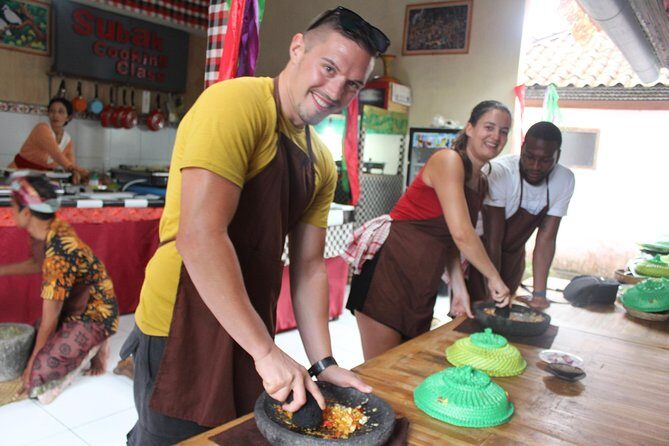
- Nine (or more) dishes you actively cook, each with the technique behind it
- Morning market tour with a local host plus ingredient basics you can repeat later
- Rice paddies visit where you learn about rice types and harvest timing
- Real home-style cooking tools and stations, so you’re not guessing at equipment
- Vegetarian and regular menus, both built around Balinese classics
- Recipe copies to take home, so your next meal is not just a memory
A 5-hour Ubud food day that starts at the market, not the stove
This experience is built around a simple idea: cooking in Bali makes more sense when you’ve seen the ingredients first. You start back at the Ubud Palace meeting point, and from there the day unfolds with local hosting and guided steps so you’re not just following instructions, you’re understanding them.
The total time is about 5 hours, and there’s a small group limit (up to 14 people). That matters because you’ll spend more time at your cooking station and less time waiting around. The kitchen setup is designed for hands-on participation, with equipment provided and staff support along the way.
If you choose the morning tour, the schedule focuses on seeing where food comes from. You’ll visit a traditional market (morning only) and get guided context on what people buy, how they select ingredients, and what those ingredients mean in Balinese cuisine. You’ll then move toward the countryside for rice-field context and a look at a local Balinese house before cooking begins.
You can also read our reviews of more shopping tours in Ubud
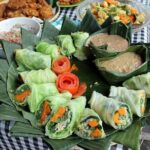
Regular vs vegetarian: what you’ll make (and what to expect on the plate)
You’ll choose between a regular menu and a vegetarian menu. Both options include the same dessert, and both follow the same main structure: soup, several mains and sides, spice-paste work, sambal work, and finally the sweet finale.
Regular menu dishes
You’ll cook:
- Sayur Bali (Balinese vegetable soup)
- Ayam santan bumbu Bali (Balinese fried chicken with coconut milk)
- Tempe manis (sweet fried tempe)
- Sate lilit Bali (Balinese chicken satay)
- Pepes ayam (grilled & steamed chicken in banana leaf)
- Lawar Bali (mix vegetable with Balinese spices)
- Sambal matah (raw spices with coconut oil)
- Base gede (basic spices paste)
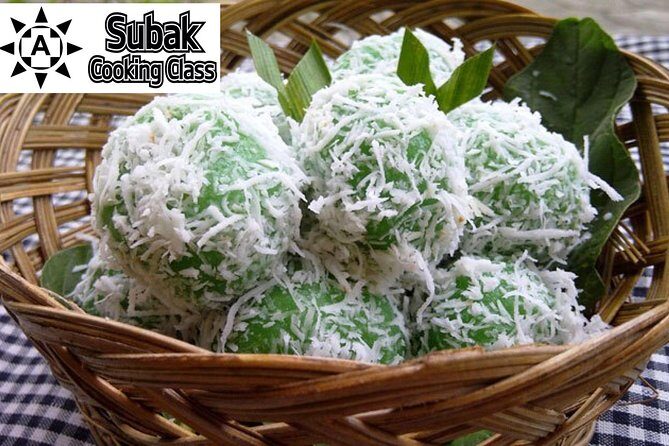
- Klepon cake (boiled sticky flour circles with palm sugar)
All main courses are served with white rice. The range here is smart: you’re not repeating one technique nine times. You’re working with fried, steamed/grilled-in-leaf, spicy raw sambal, and spice paste—so you learn more than the final flavors.
Vegetarian menu dishes
You’ll cook:
- Sayur Bali
- Tofu bumbu Bali (fried tofu with basic sauce)
- Tempe manis
- Sate tempeh (soybean cake skewers with peanut sauce)
- Pepes tofu (soybean curd grilled or steamed in banana leaf)
- Lawar Bali
- Sambal matah
- Base gede
- Klepon cake
Again, mains come with white rice. If you’re vegetarian, this menu doesn’t feel like a swap of convenience; it’s still built around Balinese classics and spice foundations, which is what lets you cook similar flavors at home later.
The morning market tour: how fruit, spices, and vendors shape the meal
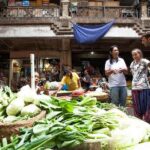
If you’re doing the morning option, this is where the day starts making sense. You’ll visit a local market with a guide and learn how people sell and buy food—especially ingredients used in everyday cooking.
From the way the class is described and the focus in the experience, expect tastings and practical education rather than museum-style history. You’ll see local produce and likely try fruits and sweets you don’t normally find in Western grocery stores. That matters because Bali cooks around freshness and balance: sweet, spicy, and aromatic pieces all have their jobs.
The guide is a real asset. In past sessions, people have named guides like Wayan and described English explanations about spices, heritage, religion, and local food ways. Even if your exact guide differs, the pattern is the same: you don’t just walk through the market, you leave with a map in your head of what goes into Balinese cooking.
You can also read our reviews of more tours and experiences in Ubud



Rice paddies and a local Balinese home: the food story behind the flavors
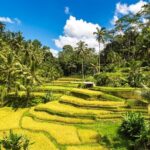
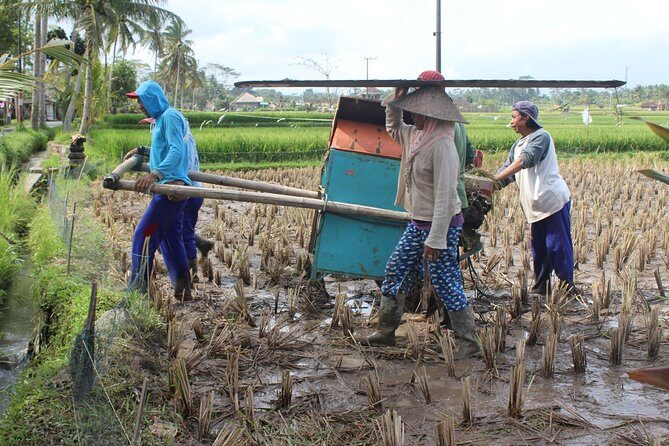
After the market, you’ll visit the rice paddies (morning option). This isn’t framed as a dramatic photo stop; it’s framed as food literacy. You’ll learn how rice is grown in Bali, the kinds of rice used locally, and the harvest timing.
Then you’ll head to a local Balinese house as part of the experience. This piece helps you connect ingredients to the people and routines that keep food culture alive. The payoff is small but real: when you later make a spice paste like base gede or build a dish around coconut and seasonings, you’re not treating it like a random recipe. It feels like part of a system.
If you’re the type who likes understanding why things taste the way they do, this portion is more than scenery. And if you don’t care about rice-field facts, the kitchen meal still earns your time—this just adds context.
Inside the cooking school: making 9 dishes step by step
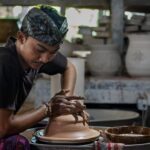
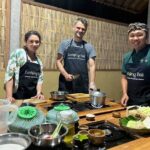
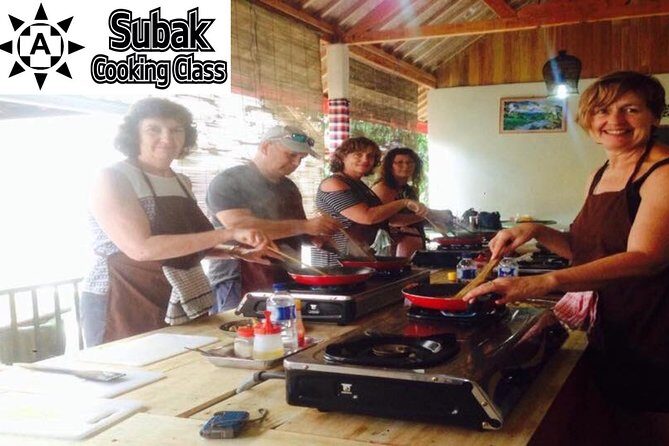
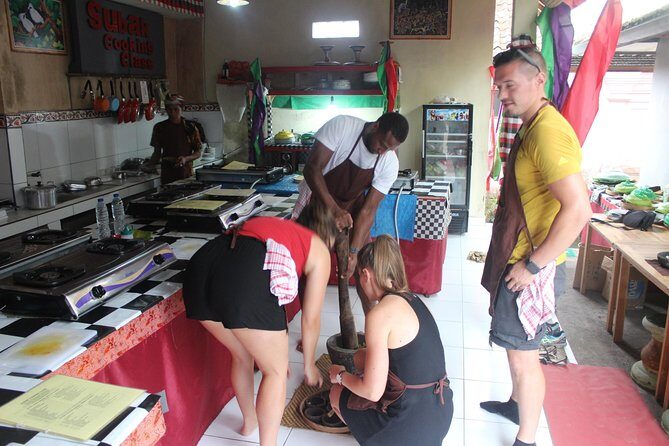
Back at the school, the day shifts from walking and watching to full-on cooking. Your chef and host team guide you through preparation step by step, and your station is set up so you can do the work rather than just observe.
Past participants have mentioned instructors such as Yogi, and described the process as thorough and easy to follow. You might also hear from a guide like Tata or an instructor like Putu depending on the session. Names can change, but the structure tends to be consistent: guided instruction, active cooking, and support from kitchen staff.
What you’ll practice (beyond just eating)
Here’s why the nine-dish approach is more useful than it sounds:
- Base gede (spice paste): you learn the backbone flavors and how to combine basic ingredients into a usable paste. This is the kind of technique you can bring home.
- Sambal matah: you work with raw-spice logic—mixing aromatics and flavors with oil instead of cooking everything down.
- Pepes (banana leaf cooking): you handle the banana leaf method, which shapes aroma and moisture.
- Lawar Bali: you work with Balinese spices and mixed vegetables, learning how balance shows up in texture and seasoning.
- Klepon: the dessert step teaches sticky rice flour handling and palm sugar flavor work.
One practical note: your menu is not restricted to just one cooking style. You’re rotating across frying, mixing, pasting, steaming/grilling in leaf, and dessert shaping. That’s why this class feels like real cooking education rather than a food tour with a side of chopping.
Lunch with what you made: tasting, shared stations, and take-home recipes
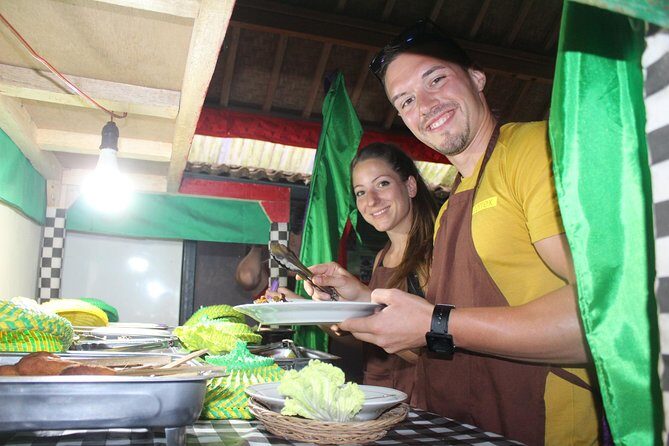
You’ll enjoy food tasting during the class, then your cooked meal afterward. The meal is described as lunch or dinner buffet style that includes what you cook, plus white rice with main courses.
You should plan to get hungry. One review detail that stands out from the overall feedback pattern is that the end result can leave you full enough to take leftovers back. Even if your appetite is smaller, you’ll likely want to pace yourself because you’re tasting multiple things during the day.
The biggest practical win is the recipe copies to take away. That’s what turns this from a nice memory into a skill set. If you want to cook Balinese food at home later, you’ll use those written guides for the spice paste and sambal steps first, then build outward to the banana-leaf method and dessert.
Also, the class includes bottled/mineral water, plus equipment in the kitchen. That reduces the friction factor. You’re not bringing supplies or guessing what to pack.
Price and logistics: does $58 feel fair in Ubud?
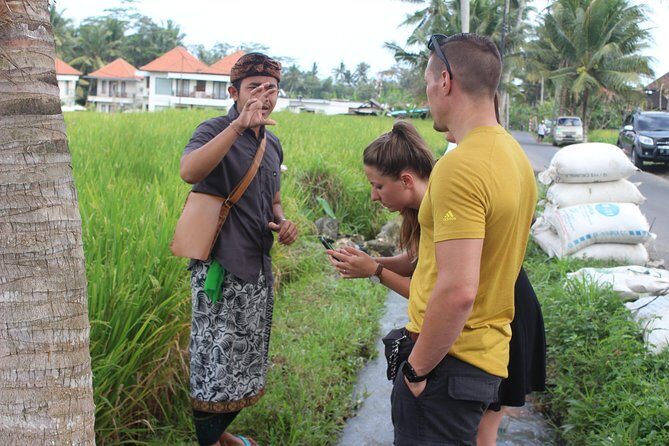
At $58, you’re paying for a full half-day food and culture package: market visit, rice-field context, local hosting, kitchen equipment, and a meal built around your work. In Ubud, cooking classes vary a lot. This one leans toward higher value because you’re not limited to a couple of dishes—you cook nine and you get recipe takeaways.
Logistics are where you’ll want to be alert:
- Pickup and drop-off only cover the Ubud area. If your hotel is outside Ubud, additional charges apply.
- If pickup isn’t included for your exact location, you’ll need to factor in meeting at the Ubud Palace start point.
- The activity uses a mobile ticket, and you’ll be asked to show your reservation.
There’s also a vegetarian option (so you’re not stuck with a plain fallback). And alcoholic drinks are explicitly not included, so if you want a drink with your meal, you’ll plan on paying separately.
Who should book this Ubud cooking school?
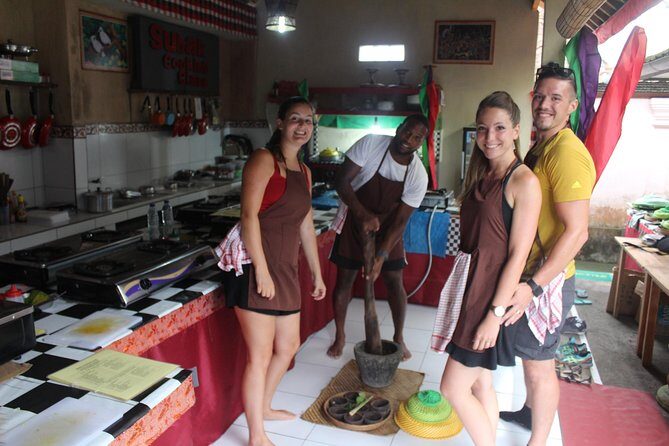
This class is a great match if:
- You want to cook more than two dishes and actually learn repeatable steps
- You enjoy market energy and want ingredient context, not just a cooking demo
- You like vegetarian-friendly menus that still focus on Balinese flavor foundations
- You want a small-group feel (max 14) with real chef guidance
It may be less ideal if:
- You’re staying outside Ubud and don’t want any extra transport charges
- You prefer a very short class or a less structured day (this is scheduled and active)
- You want a strictly restful, sit-and-watch experience (this is hands-on by design)
Should you book it? My practical recommendation
I’d book this if you care about learning real technique, not just collecting photos. The mix of market + rice paddies + nine dishes + recipe copies makes it one of the more complete ways to understand Balinese cooking in a single morning or afternoon.
If you’re on the fence, decide based on two questions: Do you want ingredient context before you cook? And will you commit to cooking enough dishes that the meal feels like a payoff, not a snack? If yes, this is a solid $58 choice in Ubud.
FAQ
FAQ
What is the duration of the Balinese Ubud cooking school experience?
It runs for about 5 hours (approx.).
Is pickup and drop-off included?
Pickup and drop-off are included for the Ubud area only. If you stay outside Ubud, additional charges apply unless pickup is requested.
Where does the tour start?
The start point is at Ubud Palace, Jl. Raya Ubud No.8, Ubud. The activity ends back at the meeting point.
Does the price include the market visit and rice paddies?
Yes. The morning class includes the traditional market visit, and both morning options include a rice paddies visit.
How many dishes will I make?
You’ll prepare at least 9 recipes of Balinese food.
Can I choose a vegetarian menu?
Yes. You can choose regular or vegetarian when booking.
What types of dishes are included?
Both menus include soup, spice-based dishes, fried items, banana leaf style dishes, sambal, spice paste (base gede), and a Balinese dessert (klepon).
Are drinks included?
No. The price excludes alcoholic drinks.
Do I get recipes to take home?
Yes. You receive copy recipes to take away.
What should I bring or prepare?
Bring your booking reservation to show, bring a camera, and bring cash for any additional transport charges if you stay outside Ubud.
Is there free cancellation?
Yes. You can cancel for a full refund up to 24 hours before the experience starts.