REVIEW · UBUD
Crafting Heritage Batik Painting Workshops
Book on Viator →Operated by Five Art Studio · Bookable on Viator
Hot wax, calm hands, and a souvenir you made. This 3-hour batik class at Five Arts Studio turns a traditional craft into something you can actually follow, even if you’ve never touched a brush before. You sketch a design, draw it onto fabric with hot wax, paint with dyes, then wash the wax off so the protected lines stay their original color—simple concept, satisfying results.
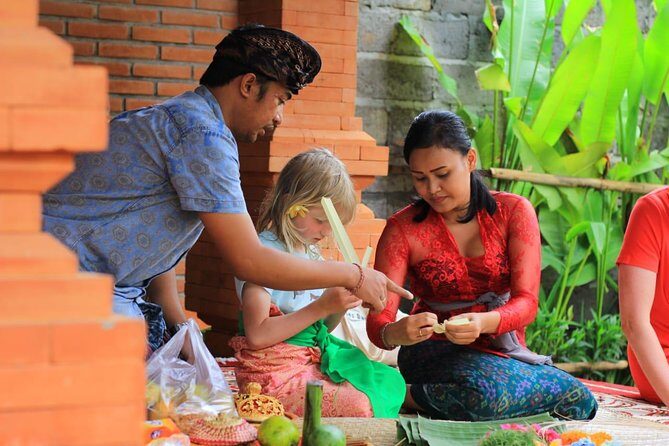
I love the way the studio feels like real working space in a family compound rather than a staged showroom. You can work independently or get closer help from the tutor, and the vibe stays mellow throughout. I also like that the instruction is practical and patient, with names you’ll hear from the team—people mention Dika and Agong by name, and they make sure you’re not stuck.
One thing to keep in mind: batik takes patience. Wax work is fiddly, and it’s easy to make happy mistakes before you learn where to slow down and breathe. If you’re the type who hates taking your time, you might want to mentally prepare for a practice, not perfection session.
In This Review
- Key Highlights You’ll Care About
- Batik at Five Arts Studio: Why This Feels More Than a Souvenir Stop
- The 3-Hour Flow: What You’ll Do From Sketch to Finished Batik
- 1) Settling In and Choosing How You Want to Work
- 2) Sketching Your Design
- 3) Drawing with Hot Wax (The Part That Teaches You the Technique)
- 4) Coloring with Dyes
- 5) Washing Off Wax and Revealing the Final Lines
- What You Actually Get for $29: Value That’s Hard to Beat
- Studio Vibe and Teaching Style: How Support Works
- Practical Tips for a Smooth Class (So You Can Enjoy It)
- Wear clothes that can handle art-making
- Plan to arrive a little early
- Use the support option that matches your mood
- Bring patience with you
- If you need calm, you’ll get it
- Timing, Food, and Nearby Getting Around
- Who Should Book This Batik Workshop—and Who Might Skip It
- Should You Book Five Arts Studio Batik Painting in Ubud?
- FAQ
- FAQ
- How long is the batik workshop?
- Where is the workshop meeting point?
- What does the $29 price include?
- Are snacks and drinks included?
- Is lunch included?
- Can I make my own design or do I have to use a set motif?
- How large are the groups?
- Is alcohol included?
- What is the cancellation policy?
- Is this activity easy to reach and can I bring a service animal?
Key Highlights You’ll Care About
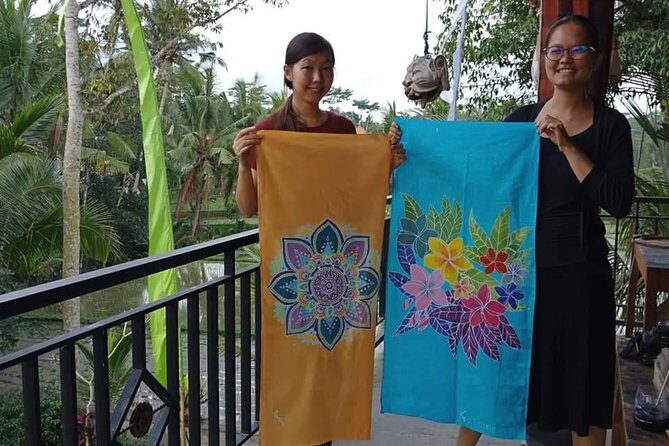
- Hot-wax resist technique in plain steps so you understand what’s happening, not just copy a pattern
- Work solo or get guided depending on how hands-on you want to be
- A working family-compound studio feel tied to how Balinese artists actually live and work
- Stencils and motif choices that can be hand-drawn, with room to use your own ideas
- In-class support that helps beginners succeed without rushing you
- Snacks, coffee or tea, and water included so you can focus on the process
Batik at Five Arts Studio: Why This Feels More Than a Souvenir Stop
Ubud is full of crafts. The trick is finding one where you learn the method—not just the ending. This workshop is built around the batik process: hand-painted fabric art using hot wax to block dye in selected areas. That means your final piece isn’t just decorated fabric. It’s a record of decisions you made with wax and color, line by line.
I also like the setting. The class happens in a casual studio inside a family compound outside Ubud. That matters because it changes the tone. You’re not just consuming a product—you’re watching a living craft environment and learning the steps in that same context. When the instructors explain how the artwork is made, it connects the technique to the people who do it daily.
And yes, the finished fabric is a great souvenir. People leave with something unique, because the patterning comes from your design choices and how you apply wax and dye.
You can also read our reviews of more historical tours in Ubud

The 3-Hour Flow: What You’ll Do From Sketch to Finished Batik
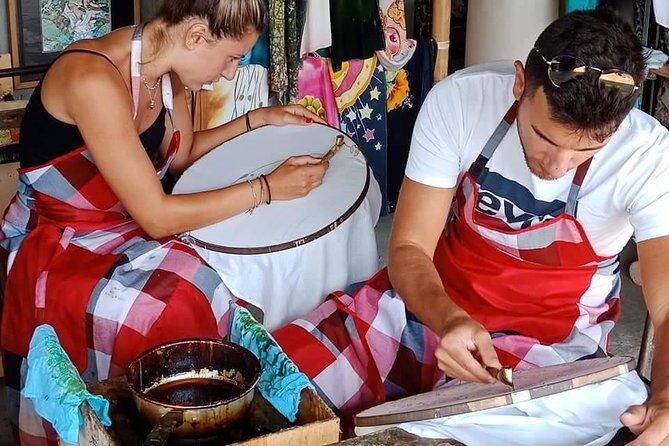
This is a one-stop experience: you start at Five Arts Studio and the class ends back there. There aren’t multiple sightseeing stops to hop between. Instead, the time is spent on the stages of making batik, paced so beginners can keep up.
Here’s the practical flow you should expect:
1) Settling In and Choosing How You Want to Work
At the start, you get oriented in the studio and brought into the batik workflow. You’ll have a choice in how you approach the design. Some people like to take a more guided path with close tutor support. Others prefer to work more independently through the steps. That flexibility is one of the reasons the class works for mixed skill levels—first-timers and repeat creators.
If you’re unsure what motif to pick, you’ll likely be shown stencil and design options. Many classes in this format offer multiple stencil styles, and you can often choose the level of detail and intensity you want.
2) Sketching Your Design
Before wax ever touches fabric, you plan the layout. This is where you decide what you want to say with your artwork. Do you want bolder, simpler shapes or finer lines? Are you building around a motif you brought from your own inspiration, or selecting from suggested patterns?
This stage is worth slowing down. Your later wax lines follow this early thinking, so the sketch is where your success starts.
3) Drawing with Hot Wax (The Part That Teaches You the Technique)
Now you transfer the design onto the fabric using hot wax. This is the “resist” step. The wax protects the fabric underneath so selected areas won’t take dye. When you later wash the wax off, those areas reveal the original fabric color, with crisp edges where the wax was laid.
This is also the part that feels hardest at first. The wax is a tool you have to control, and the lines matter. Expect a learning curve. The best sessions coach you on pace and consistency: don’t rush the wax application, and focus on where the line will end up after dye.
You can also read our reviews of more tours and experiences in Ubud




4) Coloring with Dyes
After the wax pattern is set, you apply dye to the fabric. You typically use dye in colors that match the look you’re aiming for. Many people love this step because it’s the first moment the work starts looking like real batik art instead of outlines.
A useful mindset here: dye looks different as it spreads and sets, so your first attempt might not look exactly like your picture in your head. That’s normal. The whole craft is about learning how the material responds.
5) Washing Off Wax and Revealing the Final Lines
Once the wax is removed, the design appears in contrast—your wax-blocked areas keep the original fabric tone, and the dyed areas show your color choices. This reveal is why the class is so satisfying: you see the result of your resist pattern, not just your brushwork.
It’s also why patience matters. Wax placement drives the outcome. When you do it right—or even when you do it imperfectly and learn—you end up with something you can remember.
What You Actually Get for $29: Value That’s Hard to Beat
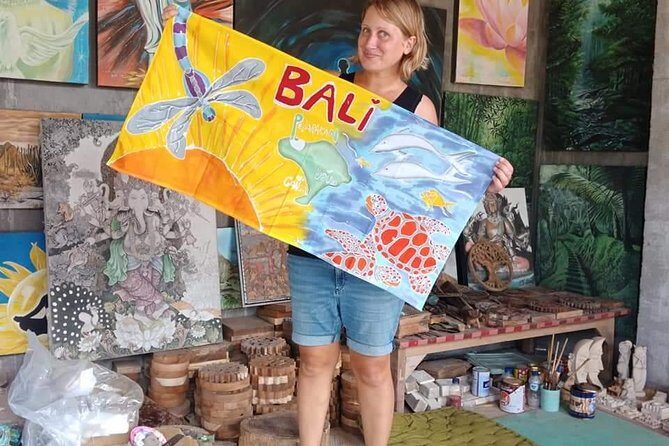
At $29 per person, the price is positioned as an accessible creative workshop. You’re paying for three big things:
- Instruction and guidance through each stage of the batik method
- All materials included, which is a big deal for art classes (you’re not hunting down supplies)
- A finished take-home piece, made during the session
On top of that, you get snacks, coffee and/or tea, and mineral water included. That sounds small, but in a 3-hour workshop it helps a lot. You’re not planning a meal mid-class, and you don’t have to buy drinks just to stay comfortable while you focus on wax and dye.
Also: group size is capped at 30 travelers. Smaller groups can mean more attention, and even with 30, the workshop format stays hands-on rather than lecture-style.
If you’re comparing this kind of experience to buying pre-made batik, the math gets clearer. You’re not just purchasing a product—you’re paying for the chance to understand the process and create a unique souvenir.
Studio Vibe and Teaching Style: How Support Works
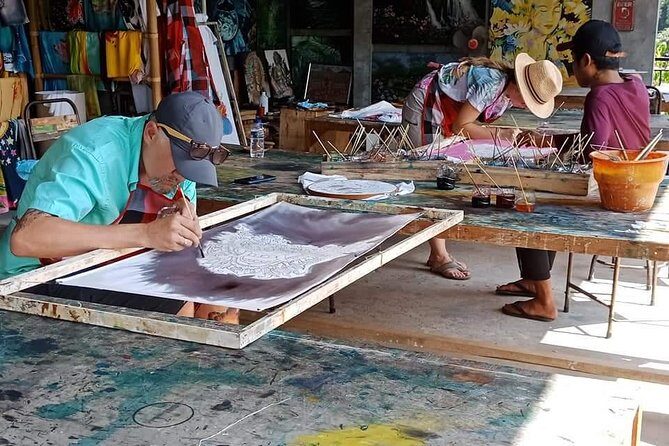
One of the strongest themes in the experience is support that doesn’t feel pushy. The teaching approach is step-by-step, and people describe the staff as patient and helpful. That matters because batik isn’t “instant art.” It’s a process, and the learning curve is real.
You can expect guidance in things like:
- how to trace and place your design
- when to slow down for cleaner wax lines
- how to think about color areas so they don’t blend into something you didn’t plan
People also mention the experience feels relaxed, peaceful, and encouraging. Some sessions include a lot of direction. Others give you room to create your own motif ideas while still staying safe in the technique. Either way, the goal is that you leave with a piece you’re happy to show later.
There’s also a feel-good factor: even when wax goes wrong, you can recover. The studio culture is more about learning than blaming. That’s key if you’re worried you’ll mess up.
Practical Tips for a Smooth Class (So You Can Enjoy It)

This workshop is short enough that small choices make a difference. Here’s how you can set yourself up for an easier time.
Wear clothes that can handle art-making
You’ll be handling hot wax and dyes, so dress for possible splatters and stains. That doesn’t mean you need to show up in rags—it just means you shouldn’t wear your favorite outfit.
Plan to arrive a little early
The class starts at Jl. Raya Keliki, Keliki, Kec. Tegallalang, Kabupaten Gianyar, Bali 80561. Since the workshop is in a family compound area outside Ubud, arriving early helps you settle in before materials and tools are brought out.
Use the support option that matches your mood
If you want more hand-holding, choose the guided route. If you want to try on your own, do that. The class structure supports both ways of learning.
Bring patience with you
This is worth saying twice: batik is not fast craft. It’s controlled craft. Even if you’re careful, wax lines and dye spread can take a moment to understand. The payoff is that you learn the technique, not just the final product.
If you need calm, you’ll get it
The studio is described as mellow and relaxing. If you’ve been riding scooters and touring all day, this kind of slow creativity is a nice reset.
Timing, Food, and Nearby Getting Around
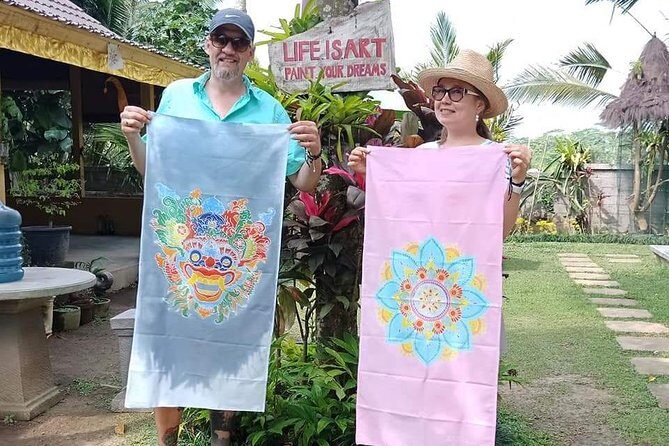
The workshop runs about 3 hours. It ends back at the meeting point, so you don’t have to solve your route home as part of the planning.
You also get snacks, coffee and/or tea, and mineral water included. Lunch isn’t included, but you can order local food if you want something more substantial. Alcohol is available to purchase.
For getting there, it’s noted as near public transportation, which helps if you don’t want to rely entirely on a driver.
One more note: the activity asks for strong physical fitness level. That doesn’t mean it’s an extreme hike, but it does suggest you should be comfortable standing and moving around in a working studio environment for the duration.
Who Should Book This Batik Workshop—and Who Might Skip It
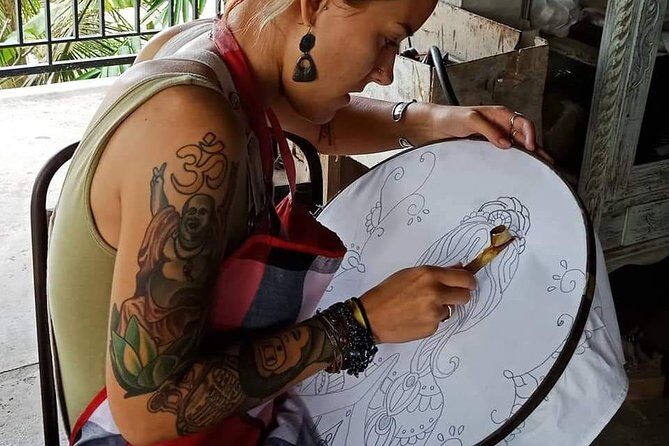
This workshop is a great match if:
- you want a hands-on Balinese craft class in a real studio environment
- you want to learn the batik method using wax and dye, not just watch someone else do it
- you like taking home something personal that you made yourself
- you enjoy creative activities that are calm and structured
It may not be the best fit if:
- you hate slow, finicky steps and want instant results
- you’re uncomfortable with small material mess (wax and dye are part of the experience)
- you’re expecting a quick photo-op rather than a real art session
If you’re traveling with kids, the class can still work because instruction is step-by-step and supportive, but you’ll want to pay attention to the physical fitness expectation and how your child handles fine-motor tasks.
Should You Book Five Arts Studio Batik Painting in Ubud?
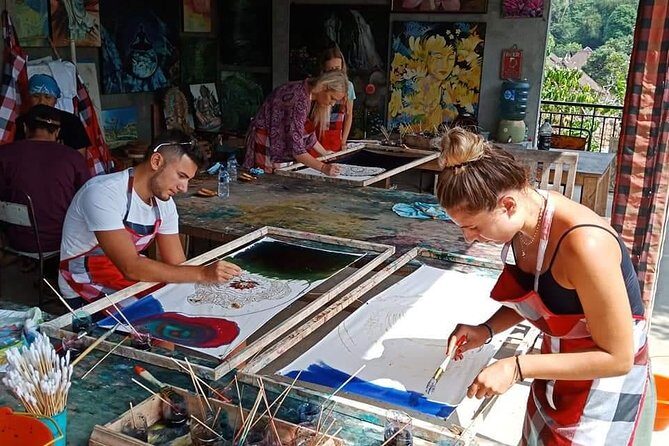
If you’re choosing between a batik class and another activity, I’d lean toward this one—especially because it’s priced at $29 and includes materials plus refreshments. That turns the cost into something practical: you’re paying for coaching, tools, and a take-home piece, all in about 3 hours.
Book it if you want a calm, skill-building craft experience with a studio feel that connects to how artists work in a family compound. The support style—often named with instructors like Dika and Agong—also makes it a safer bet for beginners who worry about messing up.
Skip it if you’re truly looking for something effortless and fast. Batik rewards people who can slow down for wax lines and accept that the first attempt is learning.
FAQ
FAQ
How long is the batik workshop?
It runs for about 3 hours (approx.).
Where is the workshop meeting point?
It starts at Five Arts Studio, located at Jl. Raya Keliki, Keliki, Kec. Tegallalang, Kabupaten Gianyar, Bali 80561, Indonesia.
What does the $29 price include?
The class includes all materials you need to make your own original batik.
Are snacks and drinks included?
Yes. Snacks, coffee and/or tea, and mineral water are included.
Is lunch included?
No. Lunch is available to order local food.
Can I make my own design or do I have to use a set motif?
You can work independently or more closely with the tutor, and you can choose designs and ideas during the process.
How large are the groups?
The maximum group size is 30 travelers.
Is alcohol included?
Alcohol is not included, but it’s available to purchase.
What is the cancellation policy?
You can cancel for a full refund up to 24 hours before the experience starts. If you cancel within 24 hours of the start time, you don’t get a refund.
Is this activity easy to reach and can I bring a service animal?
It’s near public transportation, and service animals are allowed. The experience also states travelers should have a strong physical fitness level.