REVIEW · UBUD
Balinese Farm Cooking Class by Pemulan Bali
Book on Viator →Operated by Cooking Class Ubud - Pemulan Bali Balinese Farm Cooking School · Bookable on Viator
Cooking Bali is a real-world lesson.
In this Ubud farm-to-table class, you shop, pick ingredients, and cook in an open-air kitchen with Balinese countryside calm. I like that it is hands-on, not just watching, and you still get to eat what you make.
Two things I especially enjoy: the Ubud market visit, where you see ingredients before they hit your cutting board, and the farm picking time, where you choose greens and herbs yourself. The result feels grounded in place, not staged.
One consideration: even with a set start time, plan for a longer stretch on your feet. The full flow can run past people’s expectations, so if you have a tight schedule later, don’t book right on top of it.
In This Review
- Key things to know before you go
- Market Morning in Central Ubud: Picking Ingredients Before You Cook
- From Garden to Cutting Board: Choosing Greens and Spices at the Farm
- The Open-Air Kitchen: Cooking Six Balinese Dishes (and Learning the Why)
- The Meal: Coffee, Tea, Recipes, and Leftovers to Take Home
- Timing That Works in Ubud: Morning, Afternoon, and Evening Sessions
- Getting There: Meeting Point and Pickup From Central Ubud
- Price and Value: Is $39.71 Worth It?
- Who This Class Suits Best (and Who Might Want a Different Option)
- FAQ
- How long is the Balinese Farm Cooking Class by Pemulan Bali?
- Where does the class take place?
- What time options are available?
- Does the class include a market visit?
- How many dishes will I cook?
- Is coffee and tea included?
- Will I receive recipes or take-home food?
- What is the group size?
- What’s the cancellation policy?
- Should You Book This Farm Cooking Class?
Key things to know before you go
- A market stop in central Ubud to shop for what you’ll actually cook
- Hand-picking produce and herbs at an organic-style farm before cooking
- Open-air cooking time with guided help in a countryside setting
- A full meal you help make with coffee and tea afterward
- Recipes and leftovers to take home so the class sticks beyond one sitting
- Small group size (max 20) for better attention and easier teamwork
Market Morning in Central Ubud: Picking Ingredients Before You Cook
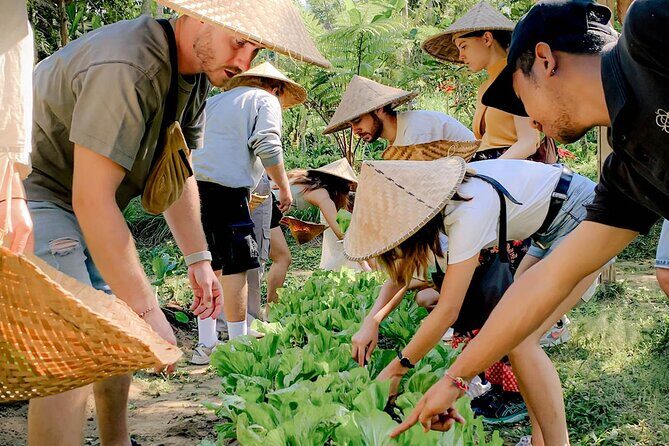
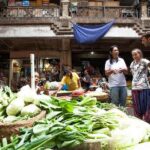
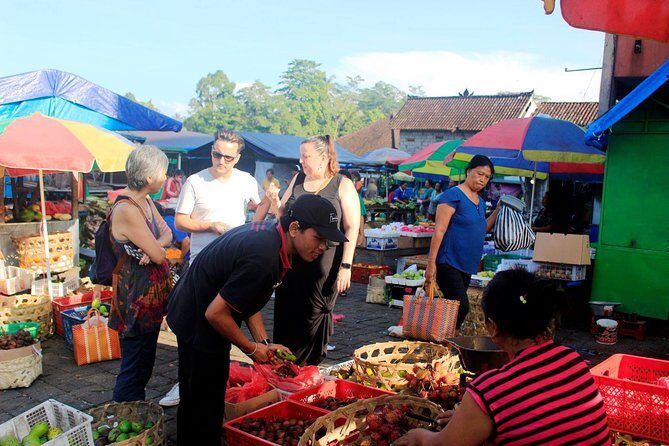
If you like food experiences where you can trace flavors back to the source, the start here is smart. The morning option begins with free pickup from central Ubud, then you head to a traditional market to shop for ingredients and sample fresh fruit and local treats along the way.
This market stop is not just window dressing. It gives you context for what Balinese cooking is built on: spices, aromatics, and ingredients that taste very different than what you’ll find back home. You also learn how local vendors think about freshness, ripeness, and what pairs well in everyday meals.
The practical win for you is decision-making. Once you’ve seen the ingredients in person, you understand why a recipe calls for certain herbs or how a spice blend changes as it cooks. When you later chop and pound those ingredients yourself, everything clicks faster.
A small drawback to consider: markets can be busy and the pacing can feel quick. If you like long, wandering shopping time, build in a little extra buffer beyond the scheduled pickup and departure, and keep your mindset on learning rather than browsing.
You can also read our reviews of more cooking classes in Ubud
From Garden to Cutting Board: Choosing Greens and Spices at the Farm
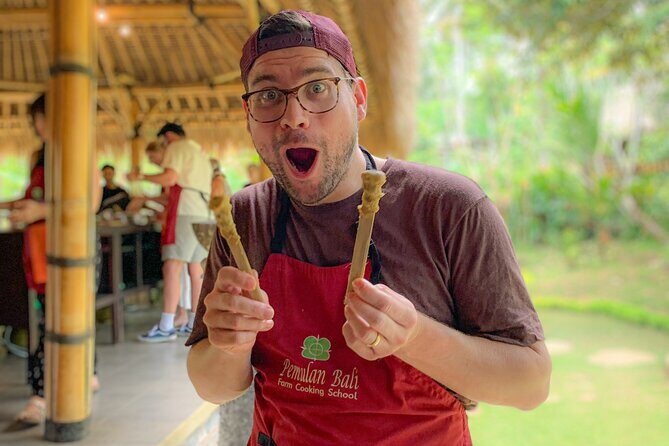
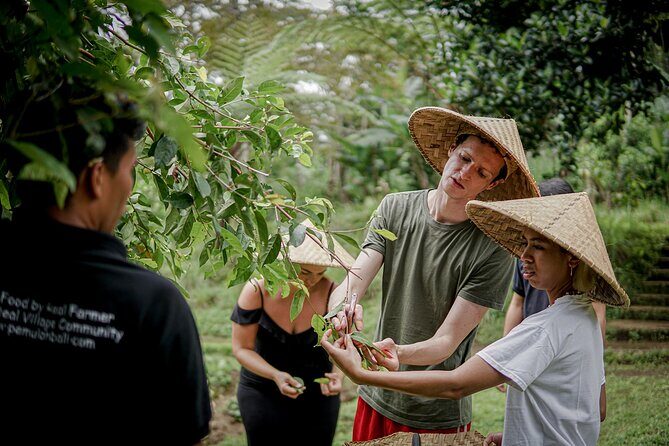
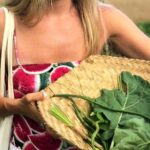
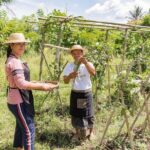
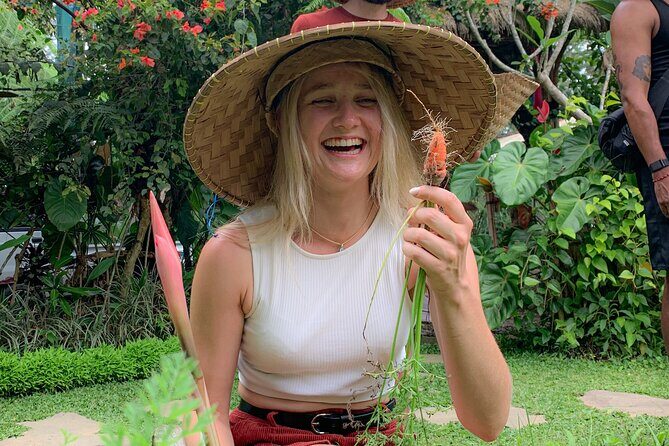
After the market, you move to the farm to hand-pick produce. This is where the experience becomes genuinely hands-on. You tour the garden, then select your own greens and herbs for the dishes you’ll prepare in the kitchen.
The farm portion also helps you notice how many Balinese flavors come from living plants and everyday spice usage. You’re not just buying ingredients; you’re connecting the recipe to the plant itself. That makes you more confident when you try cooking later, because you’ll recognize the ingredients by sight and smell, not only by name.
Expect an organic-countryside vibe and a calmer pace than the market. You’re walking, looking, and learning from what’s growing around you. It’s also a nice break from Ubud traffic, and the setting makes the next part feel less like a class and more like a communal day outdoors.
One practical tip: wear shoes you can stand in for a while. You’ll be moving through garden areas, and you don’t want to feel stuck because your feet are done. Also, bring your energy—this portion is active, not a quick photo stop.
The Open-Air Kitchen: Cooking Six Balinese Dishes (and Learning the Why)
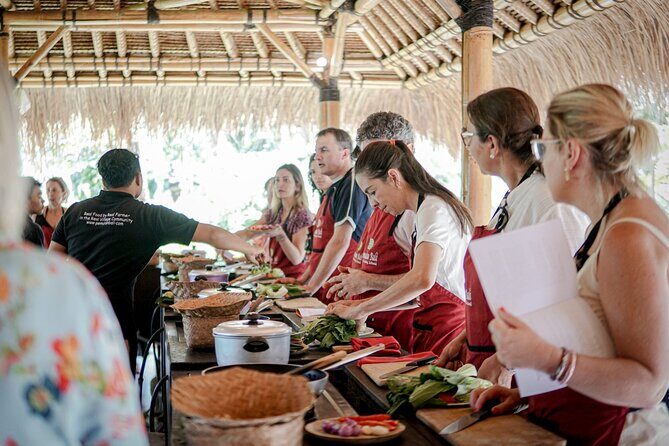
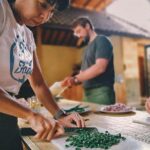
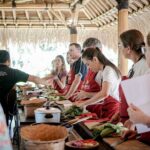
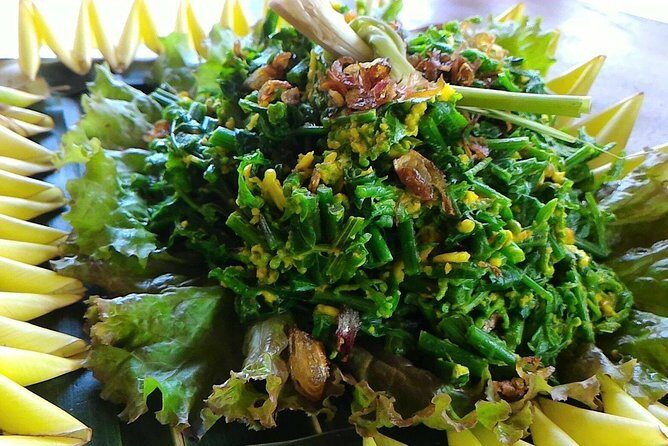
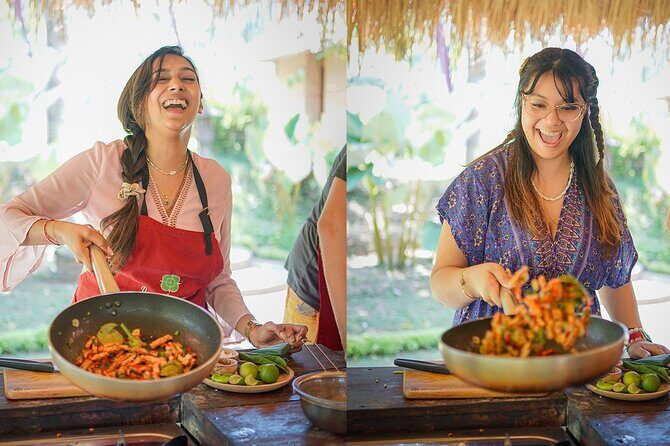
Then you get to the cooking. The class happens in an open-air kitchen surrounded by countryside calm, and you cook multiple authentic Balinese and Indonesian dishes with guidance from the chefs.
The standard description is six different dishes, and many people come away with a mix of appetizers, main dishes, and a community-style dessert. In real life, the exact lineup can vary a bit depending on session level, with some people ending up with five dishes. So your best move is to treat it as a guided tasting menu you cook yourself, not a rigid checklist.
What matters most is the way the instructions are delivered. People tend to remember the cooking direction as much as the food. You’re not just handed a tool and told to follow steps; you’re guided through what you’re doing and why. That’s how you learn technique—how to balance flavors, how to time cooking steps, and how spice work changes as ingredients heat up.
A final plus: the environment makes it easier to relax and focus. Cooking outdoors with a small group turns kitchen tasks into teamwork. If you’re traveling solo, that social angle is a real benefit—someone will usually hand you the next ingredient or ask if you want to taste a sauce while it’s still warm.
If you prefer very quiet experiences, consider that cooking classes can be talky by nature. You’ll likely chat with the people around you, especially during chopping and tasting.
The Meal: Coffee, Tea, Recipes, and Leftovers to Take Home
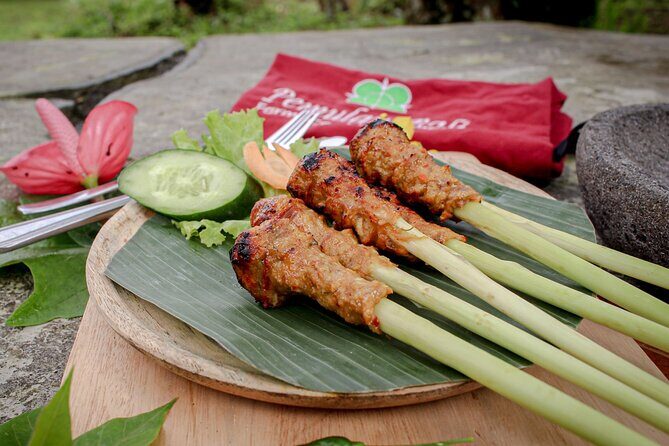
After cooking, you sit down together and eat what you made. This is one of the nicest parts because you’re not guessing how it turned out—you get to taste it immediately, in the same setting where you learned it.
You’ll also have coffee and tea included, which adds a very Balinese touch to the meal experience. The takeaway value here is practical: you leave with recipes, leftovers, and take-home food. That means you can recreate the dishes later without starting from scratch or hunting down ingredients with no plan.
I like classes that respect your time in two ways: they teach you, and they feed you in full. Here you’re not rushed through the meal, because the cooking build-up sets you up to enjoy what’s on your plate.
One thing to consider: if you’re the type who hates carrying containers, you might need to plan for leftovers. The class is structured to produce extra food for take-home use, so you’ll want a bag ready and willing.
Timing That Works in Ubud: Morning, Afternoon, and Evening Sessions
The schedule is clear, with classes offered at 07:30, 12:30, and 16:00. The morning class includes the market visit, while the other start times may focus more on farm and cooking.
Even though the duration is listed as around 5 hours, the full experience can feel longer in real time. Part of that is normal: you’re traveling between points, walking in the farm, cooking, then eating. Another part is simply how long you want to stay with the group and soak up the atmosphere.
If you have a later dinner reservation, the safest approach is to choose the afternoon or evening slot only if you know how flexible your evening plans are. Otherwise, take the morning class and treat the rest of the day as recovery time—cool shower, normal clothes, and a relaxed dinner.
Group size is capped at 20, which is great for attention and pace. You’ll have enough people for energy, but not so many that you feel like a passenger on a moving conveyor belt.
You can also read our reviews of more tours and experiences in Ubud

Getting There: Meeting Point and Pickup From Central Ubud
Your experience starts back at the meeting point, and pickup is offered from central Ubud. The meeting point is listed near Pura Dalem Puri Peliatan (Jl. Sukma Kesuma / Jl. Raya Ubud area, Tebesaya, Petulu, Kecamatan Ubud, Kabupaten Gianyar, Bali).
In practice, this matters because Ubud traffic can change fast. A pickup system helps you avoid guessing where to meet a group while you’re also trying to navigate scooter lanes and narrow streets. It also lets you arrive on time without turning the day into logistics.
If you plan to use public transportation, this activity is near public transport as well. So you’re not locked into a private ride just to reach the starting point.
For your sanity: confirm the pickup and meet details at booking, then leave yourself a little wiggle room before the start time. The class runs in sequence—market, farm, cooking, meal—so you want to be present from the beginning.
Price and Value: Is $39.71 Worth It?
At $39.71 per person for about 5 hours, this class sits in a reasonable mid-range for Ubud cooking experiences. Here’s why it still feels like good value.
You’re getting a full arc: market visit, farm picking, open-air cooking instruction, and a shared meal with coffee and tea. You also get recipes and leftovers to take home, which adds direct value beyond the tasting itself.
You’re not only paying for food. You’re paying for guidance that helps you replicate cooking steps later. Cooking technique is what makes these classes useful on day two, not just day one.
The small-group cap (max 20) also supports value. When people can actually ask questions and get help while cooking, the class becomes more than a meal event. It becomes a real skill-building afternoon.
If you’re on a tight budget, consider how many other activities you’ll do in Ubud. If you pick one cooking class for authenticity and practical learning, this is a strong candidate—especially because the market and farm portions connect ingredients to recipes in a very direct way.
Who This Class Suits Best (and Who Might Want a Different Option)
This is a great fit if you want Balinese cooking without the feeling of a tourist performance. I think it’s especially good for people who enjoy:
- hands-on cooking rather than just tasting
- ingredient learning (spices, herbs, produce)
- relaxed countryside settings near Ubud
- taking recipes home and cooking again later
It’s also a good choice for couples and small groups because the flow naturally creates teamwork at the cutting board and during shared eating.
If you dislike markets or outdoor walking, you might find the farm and market segments a bit active. You can still enjoy the cooking part, but the experience is built around those steps, so skip this only if you strongly prefer indoor, short-format activities.
And if you are very time-crunched, choose the simplest option that still fits your schedule. The class is long enough that it can crowd out other plans.
FAQ
How long is the Balinese Farm Cooking Class by Pemulan Bali?
It lasts about 5 hours.
Where does the class take place?
The experience is in Ubud, Indonesia, and includes a market visit and cooking on a farm in the Ubud area.
What time options are available?
There are morning, afternoon, and evening sessions starting at 07:30, 12:30, and 16:00.
Does the class include a market visit?
The morning class includes a market visit to explore local produce and ingredients.
How many dishes will I cook?
The tour description states you’ll prepare and enjoy six different authentic Balinese dishes.
Is coffee and tea included?
Yes. Coffee and tea are included, along with the meal you cook.
Will I receive recipes or take-home food?
Yes. You’ll get recipes and you can take leftovers with you.
What is the group size?
The class has a maximum of 20 travelers.
What’s the cancellation policy?
Free cancellation is available up to 24 hours in advance for a full refund. The experience requires good weather, and if it’s canceled due to poor weather you’ll be offered a different date or a full refund.
Should You Book This Farm Cooking Class?
If you want a Ubud food day that feels practical and real, I’d book it. The best part is the full chain—market ingredients, farm picking, open-air cooking, then coffee, tea, and a meal you helped create. At $39.71, that mix of instruction plus take-home value makes sense.
Book it especially if you enjoy learning ingredients and want recipes you can actually use later. If your biggest priority is a fast, low-effort activity, you might feel the pacing and walking. But if you’re okay with a full half-day (or close to it), this is the kind of class that sticks with you long after the last bite.