REVIEW · UBUD
Balinese Cooking Class at Organic Farm
Book on Viator →Operated by Mai Organic Farm · Bookable on Viator
Balinese food makes a lot more sense when you see where the ingredients grow first. This cooking class at Mai Organic Farm outside Ubud pairs a farm walk with a hands-on meal: organic farming lessons, a look at Bali’s UNESCO-protected Subak System, and cooking six dishes over a traditional wood-fired setup. I love that the group stays small, so you can actually get involved instead of hovering near the counter. I also love the pacing: you walk, pick herbs and produce, sip drinks made from local fruit and veg, then settle into a communal meal in a gubuk (hut).
One thing to consider: the experience is weather dependent, and it runs about 5 hours. If you’re short on time or your schedule is tight around rain, plan a little breathing room.
In This Review
- Quick hits before you go
- Entering Mai Organic Farm: what this class really is
- Subak System and organic farming: context that changes the flavors
- The ingredient hunt: herbs, fruit, and that walk that fuels lunch
- Practical tip for the walk
- Mai Organic Farm center: the juice break and the reset
- Cooking six Balinese dishes on a wood-fired setup
- How the class feels: hands-on, not performance-based
- Drinks and herbs: Sip juice, infused water, coffee, and lemongrass tea
- Who the guides are and why small-group teaching works
- Timing, pickup, and getting there without stress
- Weather note you should actually plan around
- Value check: is $40 a good deal for this kind of class?
- Best fit: families, food lovers, and people who like real process
- If you should hesitate
- Should you book Mai Organic Farm’s Balinese cooking class?
- FAQ
- How long is the Balinese cooking class?
- Is pickup available from Ubud?
- What will I cook during the class?
- Does the class include drinks?
- How large is the group?
- Where does the tour start and end?
- What happens if it rains?
Quick hits before you go
- Small groups (capped at about 8–10 people) mean real participation, not just watching
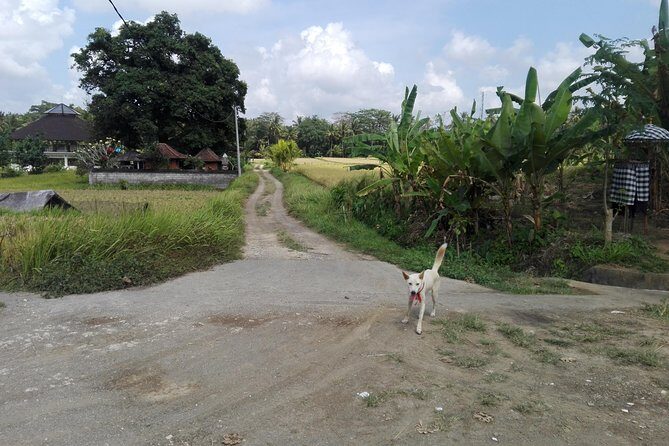
- Farm-to-table ingredient picking from the Mai Organic Farm grounds in Pejeng
- UNESCO Subak context helps you understand rice irrigation and the culture behind the food
- Wood-fired cooking over an outdoor grill/fire stove for the Balinese flavors you expect
- A full meal plus drinks including herbal options, Balinese coffee, and lemongrass tea
Entering Mai Organic Farm: what this class really is
This is not the typical cooking class where you’re whisked into a kitchen and handed ingredients already washed and chopped. Here, the day starts on the farm in Pejeng (near Tampaksiring), where you’ll get oriented before you ever light a stove.
You begin with a welcome drink while you relax in the shade. Then the hosts explain their organic farming approach and the community movement behind Mai Organic Farm. The tone is practical and friendly: you’re learning while you’re moving, not sitting through a lecture. If you care about food origins, this matters. It turns cooking from a demo into something you can repeat at home with more confidence.
The farm setting also makes it easier to ask questions. Even when you choose to be more of a watcher, you’re still surrounded by the plants you’ll use later. That’s where the class earns its value—your meal is connected to the soil, not just a printed menu.
You can also read our reviews of more cooking classes in Ubud
Subak System and organic farming: context that changes the flavors
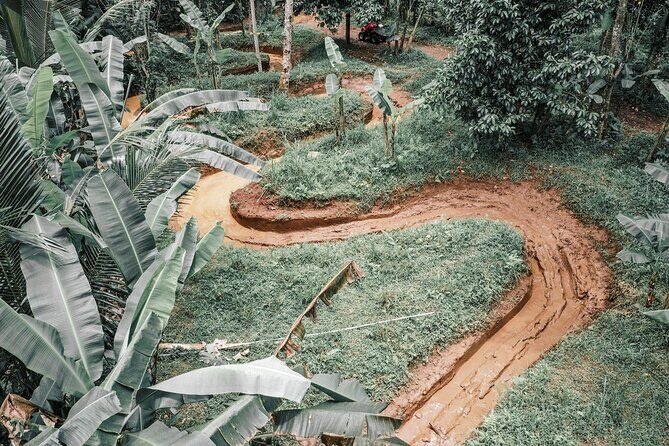
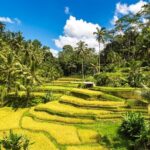
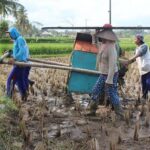
A key part of the experience happens during a walk through the community farm. You’ll learn about organic farming methods and Bali’s Subak System, which is recognized as a UNESCO World Heritage cultural practice. The Subak idea is bigger than agriculture trivia. It connects the way water is managed to the way communities grow food together—and that community approach shows up again in the cooking and eating portion of the day.
I like how the class builds understanding before you cook. When you know that ingredients aren’t random, you pay closer attention to techniques and timing. You also start noticing common Balinese flavor patterns more clearly: how aromatics, herbs, and fresh sauces work as a system rather than a handful of spices thrown together.
The ingredient hunt: herbs, fruit, and that walk that fuels lunch
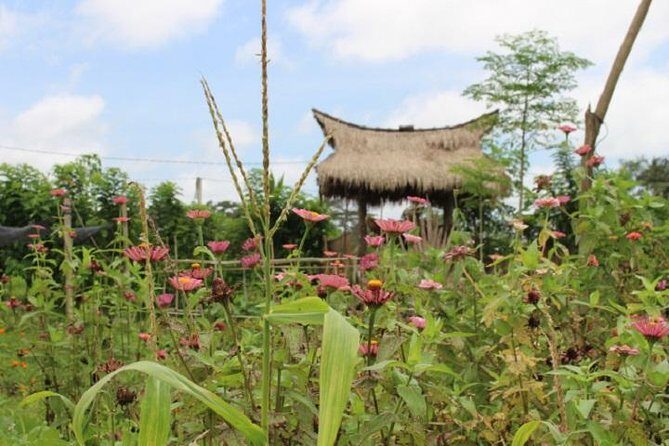
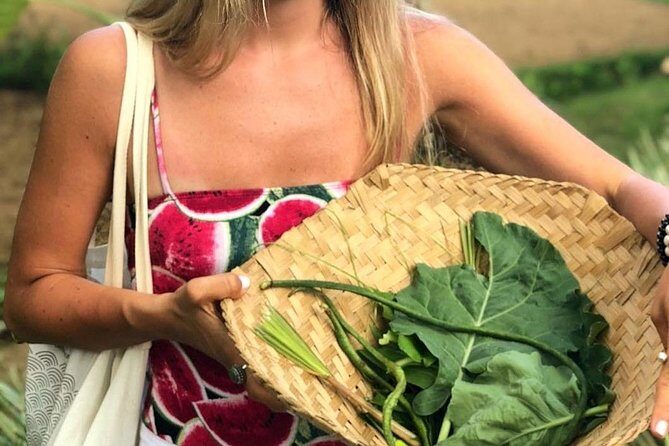
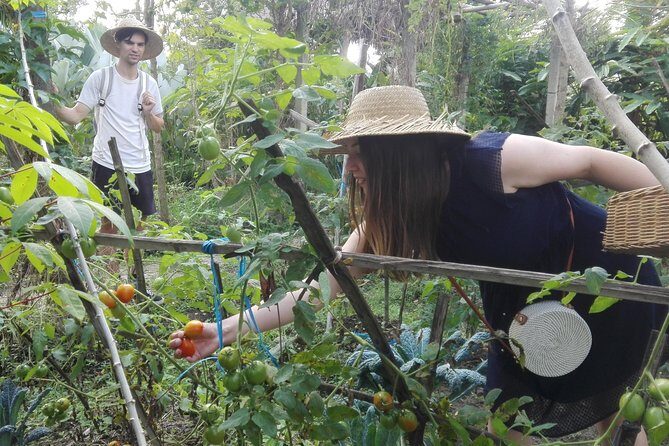
After the initial welcome and explanations, you’ll head out along the community farm and pick ingredients that you’ll use in your dishes. This part is one of the most praised pieces of the experience, and for good reason. You don’t just learn what goes into Balinese cooking—you taste it in your hands first.
You might spot herbs you’ve never used before, smell spices directly from the garden, and see how produce grows in real time. One review specifically mentioned that guests could pick many of the herbs, fruit, and vegetables and then turn them into food. Even if you’re not a “cooking nerd,” it’s satisfying because the ingredients feel fresh and personal.
There’s also a nice flexibility built in. Students can participate as much or as little as they would like. That helps if you’re traveling with kids or anyone who’s more comfortable at a bench than in the garden. In the family-friendly reviews, the ingredient picking was a highlight for children around the ages of 6 to 13, mostly because it’s active and visual.
Practical tip for the walk
Wear something you can move in. You’ll be on farm paths, and you’ll be handling plants. If you’re prone to sunscreen-first habits, do that too—there’s shaded time, but you’re also outdoors gathering produce.
Mai Organic Farm center: the juice break and the reset
Once you reach the center of the community at Mai Organic Farm, you’ll get a refreshing drink made with vegetables and fruit from local farms. The class describes it as a juice option from local produce, and welcome drinks across the experience include items like fresh coconut water mentioned in reviews.
This is more than a palate cleanser. It sets a casual rhythm for the rest of the session: you cool down, you hydrate, and you transition from walking to cooking. It also helps you think about how the ingredients you collected can work in more than one form—fresh, blended, brewed, and cooked.
You can also read our reviews of more tours and experiences in Ubud
Cooking six Balinese dishes on a wood-fired setup
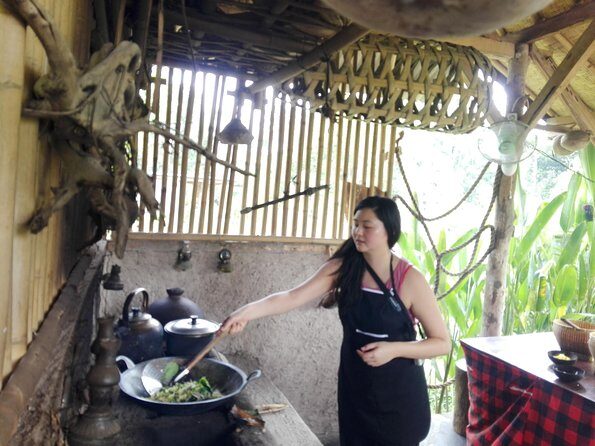
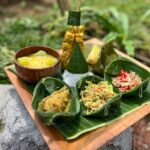
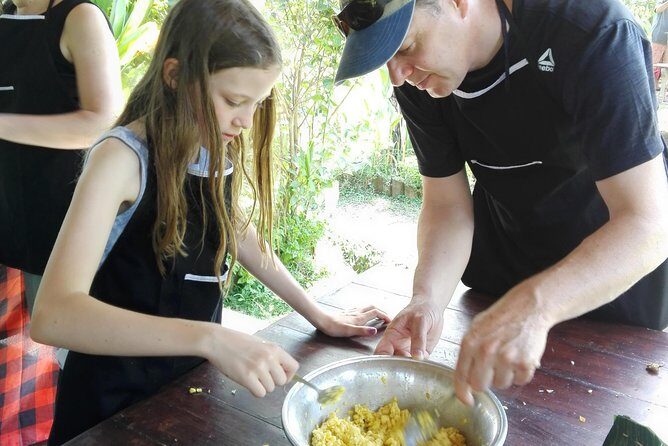
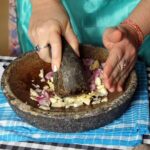
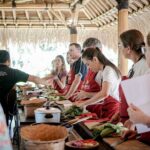
Now comes the main event: you’ll prepare six different Balinese dishes as a group. The menu details include sate lilit kebab plus other classics such as tuna sate and corn fritters. You’ll also work on the broader flavor build—aromatics, herbs, and sauces—because Balinese food usually tastes like layers, not one single ingredient doing all the work.
One of the most credible signals this won’t be a watered-down show is the cooking setup. The experience emphasizes a traditional wood-fired stove (and mentions outdoor grilling/fire-stove style cooking). Cooking over real heat changes the way ingredients react. You’re not just following steps—you’re learning what happens when a sauce hits smoke and flame, and how Balinese dishes get that comforting, savory depth.
How the class feels: hands-on, not performance-based
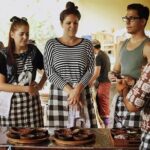
The best part here is the team structure. In small groups, you’re more likely to chop, mix, roll, stir, and plate, depending on your comfort level. Reviews highlight that the hosts and cooks keep things fun and inclusive, and that the experience encourages a team effort. If you learn visually, it helps that you’re cooking alongside people, not waiting for someone to finish a step for you.
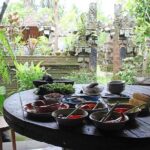
You’ll finish up by eating your meal together in a tranquil gubuk (hut). That shared setting matters. You’re not rushing off to another stop. You’re tasting what you made while the experience is still fresh in your head.
Drinks and herbs: Sip juice, infused water, coffee, and lemongrass tea
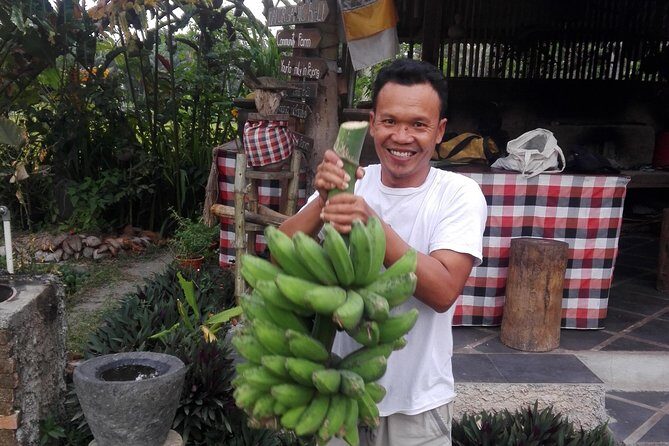
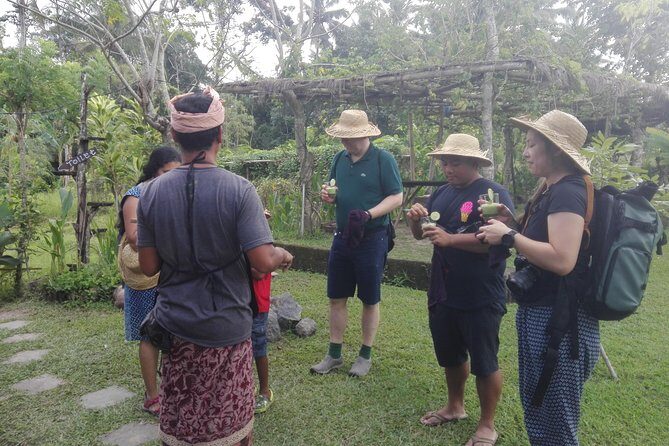
The class also includes a beverage side that makes the whole day feel balanced. The description highlights herbal drinks, infused water, and drinks like Balinese coffee and lemongrass tea. Some classes teach spice as theory. This one ties it to something you can sip while the cooking happens.
This matters for two reasons. First, herbal and citrusy drinks help cut through richness. Balinese dishes often carry deep flavors—juices and teas keep the meal from getting too heavy. Second, if you’re trying to recreate Bali at home, drinks are easier to reproduce than complex sauces. You can experiment with lemongrass tea or herbal blends without needing the same cooking setup.
If you care about drink flavors, pay attention during tasting time. Notice what’s bright, what’s warming, and what’s meant to cool you down. Even one small detail—sweetness level or how strong the lemongrass tastes—can help you replicate the overall vibe later.
Who the guides are and why small-group teaching works
You’ll be guided by the farm and cooking hosts at Mai Organic Farm. In reviews, names like Korong and Kadek come up, and guests mention guides with clear English and lots of engagement. The practical takeaway for you: this isn’t a situation where you’re dropped into a kitchen with a language barrier and a pamphlet.
Small group limits (around eight, capped higher depending on the schedule) support that teaching style. With fewer people, guides can correct technique, answer questions, and still keep the energy friendly. You also get more of that “ask anything” feeling while you’re picking ingredients and cooking.
Timing, pickup, and getting there without stress
The session runs about 5 hours and includes round-trip transfers from central Ubud hotels and rentals. Pickup is offered, which is a big deal in Bali, because traffic and distance can quietly eat your day.
You’ll start at Mai Organic Farm Bali in the Pejeng area and the activity ends back at the meeting point. With a pickup included, you avoid the extra coordination step, and the day stays focused on food and learning rather than logistics.
You’ll also get a mobile ticket, so you don’t need paper copies or last-minute printing. It’s a small thing, but it keeps the day smooth.
Weather note you should actually plan around
This experience requires good weather. If rain hits, you’ll be offered a different date or a full refund. So I’d schedule it early in your trip day planning, not as a last-minute gamble on the final hours you’re in Bali.
Value check: is $40 a good deal for this kind of class?
At $40 per person, the best way to judge value is to compare what’s included: a farm walk with organic farming education, ingredient picking, a cooking session that produces six dishes, plus drinks and a shared meal. For a lot of cooking classes in Bali, you either get a meal with limited instruction or you get instruction without real ingredient sourcing.
Here, you get both: context and hands-on work. You’re paying for labor (guides and cooks), the ingredients, the farm experience component, and the wood-fired cooking setup. Add in small group size and the result is that your meal feels earned, not delivered.
For me, the strongest value signals are these:
- you’re cooking with ingredients you selected on-site
- the kitchen setup is traditional (wood-fired style)
- you’re eating together at the end, so the day feels complete
If you want a “try food, take pictures, leave” tour, this isn’t it. If you want to understand how Balinese flavors are built, it’s a strong spend.
Best fit: families, food lovers, and people who like real process
This class is a great match if you:
- want a hands-on food experience (ingredient picking is a big part of it)
- care about where food comes from and appreciate organic farming context
- like learning via participation rather than lecture
- travel with kids who are curious and enjoy active tasks
In the reviews, families with children specifically mention the ingredient picking and communal cooking as a hit. That suggests it’s not just adult-oriented. Also, if you’re the type who enjoys cooking at home, this class gives you a practical template: aromatics, sauce base logic, and how Balinese dishes fit together.
If you should hesitate
If you dislike outdoor farm walks or you’re sensitive to weather changes, you might feel the impact. Also, if you only want quick cooking steps with minimal waiting, you may find the farm education component takes time. The experience is designed as a full morning block, not a compact workshop.
Should you book Mai Organic Farm’s Balinese cooking class?
If you’re choosing between a standard cooking class and a farm-connected one, I’d lean toward this. You’re paying for the whole arc: learn about organic farming and the Subak System, pick your own ingredients, cook using a traditional wood-fired approach, then eat in a calm gubuk. That combination is rare at this price point.
Book it if you want an authentic Balinese meal with real participation and a clear sense of purpose—Mai Organic Farm supports local farmers from Pejeng and focuses on improving incomes and quality of life for the community.
Skip it only if weather and outdoor walking are deal-breakers for you. Otherwise, it’s one of the more meaningful ways to spend a chunk of your Ubud area time, because you leave with both skills and memories you can taste.
FAQ
How long is the Balinese cooking class?
It lasts about 5 hours.
Is pickup available from Ubud?
Yes. Round-trip transfers are offered from central Ubud hotels and rentals.
What will I cook during the class?
You’ll cook six different Balinese dishes, including sate lilit kebab. The class also mentions dishes such as tuna sate and corn fritters.
Does the class include drinks?
Yes. The experience includes beverages like Sip juice, infused water, herbal drinks, Balinese coffee, and lemongrass tea.
How large is the group?
The experience caps group size at a maximum of 10 travelers, with the overview describing a small group of just eight.
Where does the tour start and end?
It starts at Mai Organic Farm Bali in Pejeng and ends back at the same meeting point.
What happens if it rains?
This experience requires good weather. If it’s canceled due to poor weather, you’ll be offered a different date or a full refund.