REVIEW · UBUD
Ubud Cooking Class Bali with Balinese Chef
Book on Viator →Operated by Bali Cooking Class Ubud · Bookable on Viator
Cooking in Ubud feels like a cheat code. This hands-on Ubud cooking class is taught in English by a Balinese chef, and you cook at your own station with the ingredients and utensils set up for you. I also like the traditional art market add-on, because it helps you connect the spices and food you cook with what you see in daily life around Ubud.
There’s one catch to keep in mind: morning pickup is limited to hotels in Ubud center, and if you’re staying elsewhere, extra transport charges may apply. Also, the class is not refundable if you cancel or change your plans, so lock it in only when your schedule is solid.
In This Review
- Key highlights you’ll actually care about
- Why this Ubud class feels different from a typical cooking tour
- Market stop in Ubud Traditional Art Market: quick context, not a marathon
- Ketuts Bali cooking class: learn by making, not by listening
- What you’ll cook: the 7 dishes and the two sauce starters
- Vegetarian menu (full meal style)
- Non-vegetarian menu (still very hands-on)
- Banana leaf Pepes and Kolak Pisang: two dishes worth paying attention to
- Lunch or dinner: you get to taste your work
- Pickup and timing in Ubud: morning is easier, afternoon is self-managed
- Group size, English instruction, and how much help you actually get
- Price and value: $35.79 for a full, guided meal and real cooking practice
- Weather, minimum numbers, and why you should plan confidently
- Who this Ubud cooking class fits best
- Should you book this Ubud Cooking Class Bali?
- FAQ
- FAQ
- Is there a vegetarian option?
- How long does the class take?
- Do you include hotel pickup in Ubud?
- What language is the class taught in?
- What dishes will I cook?
- What happens if weather is bad?
Key highlights you’ll actually care about
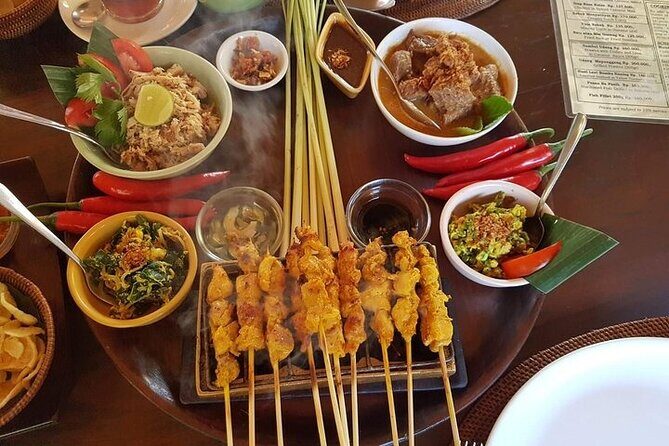
- Your own cooking station: You don’t watch. You cook, plate, and then taste what you made.
- Two sauce foundations: You’ll learn Sauce Kacang (peanut sauce) and bumbu Bali (Balinese spice paste), used across multiple dishes.
- Market time that’s short and useful: A 30-minute traditional art market tour for morning trips helps set the stage fast.
- Vegetarian is real, not a side option: There’s a full vegetarian menu with tempe, tofu, vegetable sate, and mushroom in banana leaf.
- Small-to-medium group feel: The class caps at 24 people, with extra help on hand during prep and cooking.
- You’ll leave with a dessert you can recreate: Kolak Pisang uses braised banana saba in palm sugar gravy.
Why this Ubud class feels different from a typical cooking tour
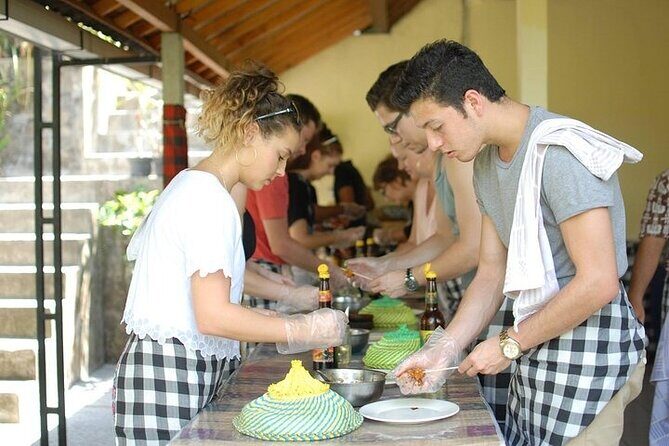
This isn’t one of those “sit and watch” classes where the chef does the hard work and you just hold a spoon. The format is hands-on from start to finish. You’re taught steps as you go, you use your own tools, and you cook the dishes yourself, then eat them as lunch or dinner.
The second thing that makes it click is the way the class builds flavor. You start with two core items that show up again and again: Sauce Kacang and bumbu Bali. Once you understand those, the rest of the menu makes more sense. You’re not just memorizing recipes; you’re learning a method.
The class runs about four hours, and the structure is simple: pickup (for morning in Ubud center), market (morning only), then cooking (about 3.5 hours), then you meet up again for return. It’s a very doable block of time even if you’re not trying to fill every hour of your Ubud day.
You can also read our reviews of more cooking classes in Ubud

Market stop in Ubud Traditional Art Market: quick context, not a marathon
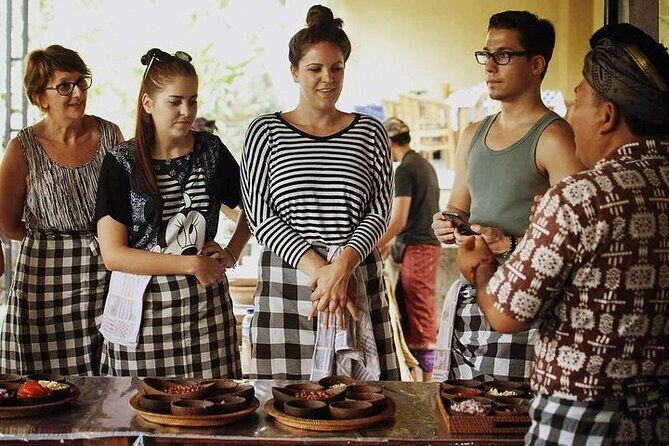
If you book the morning class, you’ll start with a stop at the Ubud Traditional Art Market. You get around 30 minutes there, with an admission ticket included.
In that short window, the point isn’t to shop for hours. It’s to get your bearings and see how food and craft overlap in Ubud life. You’ll also get a better sense of what you’re learning later—especially spices and ingredients that show up in Balinese cooking.
Possible drawback: if you want a deep market crawl with lots of time to browse and barter, 30 minutes is not that. Think of it as a taste of the market atmosphere. If you love markets, you’ll likely want to come back for a longer wander after the class.
Ketuts Bali cooking class: learn by making, not by listening
The cooking portion happens at Ketuts Bali Cooking Class and it’s run in English by a Balinese chef and instructors. You get a welcome drink and mineral water, plus cooking ware and cooking ingredients. Then you’re placed at your own cooking station and work through the menu steps yourself.
The structure is practical. You don’t just mix something once and move on. You’ll make things you can recognize later when you’re in a kitchen at home:
- a spice paste (bumbu Bali)
- a sauce (Sauce Kacang)
- dishes built around those bases, including curries, fried items, and banana-leaf grilled preparations
One theme from the experience feedback is that instruction is step-by-step and support is close. People often note there are plenty of helpers around, and the chef brings humor to keep the class light. That matters more than you might think. If you’re cooking for the first time, a calm, clear pace helps you actually enjoy getting it wrong and fixing it.
What you’ll cook: the 7 dishes and the two sauce starters
You’ll cook seven dishes, with menus depending on whether you choose vegetarian or non-vegetarian. No matter which option you select, you’ll still learn the same two big flavor anchors:
- Sauce Kacang (Peanut sauce)
- Bumbu Bali (Balinese spice paste)
From there the menus split:
Vegetarian menu (full meal style)
- Kare Sayur (Vegetable Curry)
- Tempe, tofu and vegetable sate with peanut sauce
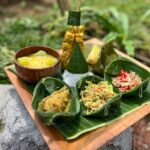
- Pepes Mushroom (grilled mushroom in banana leaf)
- Mie Goreng (fried noodles)
- Kolak Pisang (braised banana saba in palm sugar gravy)
You can also read our reviews of more tours and experiences in Ubud

Non-vegetarian menu (still very hands-on)
- Ayam Bumbu Bali (Balinese fried chicken)
- Sate Ayam (chicken sate with peanut sauce)
- Pepes Ikan (grilled fish in banana leaf)
- Mie Goreng (fried noodles)
- Kolak Pisang (braised banana saba in palm sugar gravy)
A useful way to think about it: the class mixes cooking styles on purpose. You get paste-making, sauce-making, curry/spice work, grilling in banana leaf, plus noodles and a sweet ending. If you only like one type of food, you still end up with a broader skill set than you’d expect.
Banana leaf Pepes and Kolak Pisang: two dishes worth paying attention to
Two items in the menu do a lot of storytelling.
Pepes is the banana-leaf wrapped grilled dish—either mushroom for vegetarian or fish for non-vegetarian. Even if you’ve never cooked with banana leaves before, you’ll learn the idea: it’s not just for flavor. It’s also a cooking vessel that shapes the final taste and aroma.
Then there’s Kolak Pisang, the dessert. It’s braised banana saba in palm sugar gravy, and it’s included on both menus. Desserts in cooking classes often feel like an afterthought. Here, it’s part of the same finished meal you’re making, which gives you a satisfying end to the experience.
If you’re the type who likes to take one recipe home and repeat it, focus on these two. They’re more distinctive than fried noodles, and they’re the kind of dish you’ll remember when you see ingredients in a store later.
Lunch or dinner: you get to taste your work
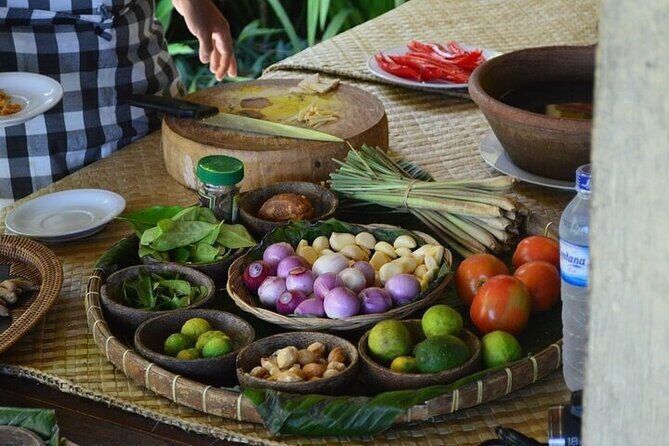
At the end, you’ll eat the dishes you prepared as lunch or dinner. That turns the class into more than a skill-building lesson. You’re also getting immediate feedback on what you made right.
This is especially nice for two reasons:
1) you can compare your plates to what you expect Balinese food to taste like
2) you can spot what you’d adjust next time—heat level, seasoning, sauce thickness, and so on
One more practical plus: with meal included, you don’t have to plan food afterward. In a place like Ubud where meals can add up, that’s a real value point.
Pickup and timing in Ubud: morning is easier, afternoon is self-managed
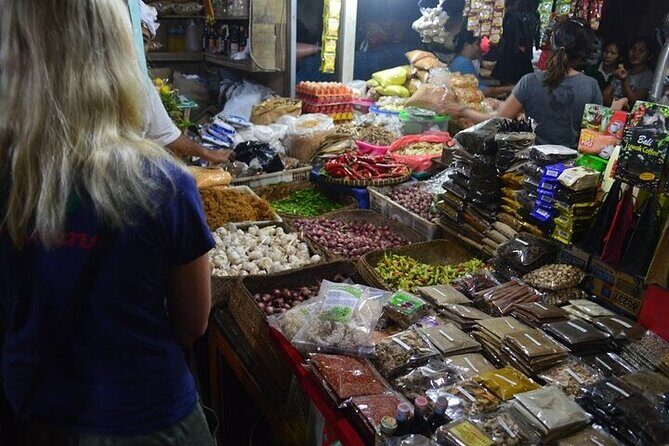
Logistics matter in Ubud. Here’s how this one works based on the schedule options.
For the morning class, you’re picked up from hotels in Ubud center only, then you return later with the included transfer (sharing car). If you’re staying outside Ubud center, pickup for the cooking class may cost extra, up to IDR 600K per car.
For the afternoon class, you meet at 2:30pm in front of Lapangan Desa Ubud, which is listed as the pick up point (return). That means you should plan to get yourself there unless your situation is covered by included transfer rules.
Timing-wise, the total duration is about 4 hours. Morning includes the market portion (30 minutes), while the core cooking time is about 3 hours 30 minutes.
Group size, English instruction, and how much help you actually get
The class caps at 24 travelers, which helps keep it from feeling chaotic. You’re at a cooking station, but there’s also a team on hand to assist with steps as needed. That support is a big deal if you’re unfamiliar with Balinese techniques or ingredient names.
You’ll also be working in English, with a local chef leading the instruction. That matters because the recipes are not just generic “curry” directions. You’re making bumbu Bali and peanut sauce from scratch, and those steps need clear guidance so you don’t end up with an overly thick paste or a sauce that tastes off.
From the tone in the feedback, the chefs also keep things upbeat—fun, light, and sometimes very funny. That doesn’t sound important until you’re the one holding the spoon. A relaxed kitchen makes first-time cooking feel possible.
One small extra detail from experience feedback: some people got very personal attention when the group was smaller, and in at least one case there was an extra return drop-off to a well-known Ubud palace area. Don’t count on that every time, but it’s a good sign that the team watches for convenience.
Price and value: $35.79 for a full, guided meal and real cooking practice
At $35.79 per person, the best value comes from what’s included, not just the headline price. You’re getting:
- hotel transfer for morning in Ubud center only
- English-speaking chef instruction
- traditional art market tour for morning trips
- welcome drink and mineral water
- utensils and cooking ingredients
- cooking of 7 dishes
- lunch or dinner made by you
Cooking classes often cost money for the instruction alone. Here, the included meal turns the session into a full experience: you learn, you make, and you eat without extra planning.
Also, the market stop is a short add-on that doesn’t eat your whole day. It’s part of the value because it gives you context for ingredients and spice concepts.
If you’re deciding between doing a cooking class or paying for a separate market visit plus dinner, this format stacks those goals into one block.
Weather, minimum numbers, and why you should plan confidently
This experience requires good weather. If it’s canceled due to poor weather, you’ll either be offered a different date or receive a full refund.
There’s also a minimum number of travelers requirement. If that minimum isn’t met, you’ll be offered another date/experience or a full refund.
So, choose your date carefully if you’re juggling tight Ubud schedules. It’s still a flexible outcome because you’re protected with refund or alternate options, but you’ll want to keep at least one backup window in your plans.
Who this Ubud cooking class fits best
This works especially well if you:
- want an authentic Ubud food activity without needing advanced cooking skills
- like Indonesian flavors and want to learn the building blocks (peanut sauce and bumbu Bali)
- want a vegetarian option that still feels like a full meal, not a compromise
- enjoy guided experiences where the chef teaches in clear English and gives step-by-step direction
It’s also a smart pick if you’re traveling with someone who wants “something to do” rather than just another temple stop. You end the day with dishes you made and recipes you can try again later.
And if you’re the kind of person who likes to chat with the chef—because you’re genuinely curious about why certain ingredients go together—this style of class tends to reward that curiosity.
Should you book this Ubud Cooking Class Bali?
Book it if you want hands-on Indonesian cooking with a real lunch or dinner outcome, plus a quick traditional market intro. The combination of cooking at your own station, learning Sauce Kacang and bumbu Bali, and finishing with Kolak Pisang makes it feel like a complete food-focused day rather than a short demo.
Skip it only if your schedule is fragile. Morning pickup is Ubud center only, afternoon requires meeting at 2:30pm at Lapangan Desa Ubud, and the experience is not refundable if you cancel. If you know your dates are firm, this is a strong value way to taste Ubud beyond restaurants.
FAQ
FAQ
Is there a vegetarian option?
Yes. The class offers a vegetarian menu with dishes such as Kare Sayur, tempe and tofu vegetable sate with peanut sauce, Pepes Mushroom in banana leaf, Mie Goreng, and Kolak Pisang dessert.
How long does the class take?
The experience is approximately 4 hours.
Do you include hotel pickup in Ubud?
For the morning class, return hotel transfer is included only for hotels in Ubud center (sharing car). Pickup from other areas for the cooking class may cost extra, up to IDR 600K per car. For the afternoon class, you meet at 2:30pm at the front of Lapangan Desa Ubud.
What language is the class taught in?
The cooking class is conducted in English.
What dishes will I cook?
You’ll cook 7 dishes total. The exact dishes depend on whether you choose vegetarian or non-vegetarian, and peanut sauce plus Balinese spice paste are part of both menus.
What happens if weather is bad?
The experience requires good weather. If it’s canceled due to poor weather, you’ll be offered a different date or a full refund.