REVIEW · UBUD
Gianyar Market Visit & Cooking Class in Ubud with Kadek & Putu
Book on Viator →Operated by Traveling Spoon · Bookable on Viator
That first ingredient list hooks you fast. This Gianyar Market + cooking class turns Balinese cooking into something you can actually repeat at home, not just watch. I like the way you get hands-on guidance from Kadek and Putu (from chopping through cooking), and I also like the market stop where you can pick out fruits, vegetables, and herbs used in Balinese meals. One thing to consider: it runs about 4 hours, so you’ll move at a steady pace and you’ll want to come ready to cook, not just snack.
You’ll start with hotel pickup from Ubud, head to the Gianyar market, and learn what different produce is doing on the plate. Then you return to a family compound to cook together and sit down to eat what you made, including classic favorites like piquant chicken satay and dessert-style black sticky rice pudding with coconut cream.
The best part is the full loop: buy or choose ingredients, then cook from scratch, then enjoy a real family-style meal. Expect seasonal menus, but the overall structure stays the same, with options like fried banana with coconut and palm sugar showing up for dessert.
In This Review
- Key highlights worth your time
- Why Gianyar’s Market Changes the Way You Cook Bali
- Meet Kadek and Putu: A Family-Compound Cooking Class
- The Market Tour: Picking Fruits, Veggies, and Herbs You Can Name
- From Chopping Board to Balinese Table: What You’ll Cook
- Eating the Meal (and Why That Part Matters)
- Price and Logistics: Is $80 Good Value?
- Who This Class Fits Best on Your Bali Trip
- Should You Book This Gianyar Market Cooking Class?
- FAQ
- How long is the Gianyar Market visit and cooking class?
- Is pickup and drop-off included?
- Is this tour private?
- What’s included in the price?
- Are vegetarian options available?
- What if I have allergies or dietary restrictions?
- Can I cancel and get a full refund?
Key highlights worth your time
- Gianyar market tour focused on the specific fruits, vegetables, and herbs Balinese cooking uses
- Family-compound cooking with Kadek and Putu, not a classroom setup
- Hands-on cooking where you go from chopping to cooking, dish by dish
- Ingredient breakdowns so you understand what each part contributes
- Seasonal extras like garden-grown produce and fresh fruit juice, if offered
- A full sit-down meal after cooking, plus alcoholic beverages included
Why Gianyar’s Market Changes the Way You Cook Bali
If you’ve ever tried to copy a trip meal at home, you know the problem: you remember the dish, not the ingredients. This experience attacks that at the source. By the time you’re back at the kitchen, you’re not guessing what “Balinese flavor” is supposed to be—you’ve already handled the fruits, vegetables, and herbs used to build it.
The Gianyar market stop matters because Balinese food doesn’t rely on one magic item. It’s a system: produce plus aromatics plus cooking technique. When you see what’s seasonal and what’s commonly used, you start to cook with real options instead of a vague wish list. And because the menu can vary by season, you’re learning how to adapt, not just memorize.
Also, markets are where you get the best sense of what locals actually prioritize. You’ll see the produce that shows up again and again, the herbs that keep turning up in sauces and soups, and the fruit that ends up in drinks and desserts. That makes your final meal feel more grounded, like you made it with a real supply chain, not a souvenir list.
You can also read our reviews of more shopping tours in Ubud

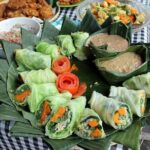
Meet Kadek and Putu: A Family-Compound Cooking Class
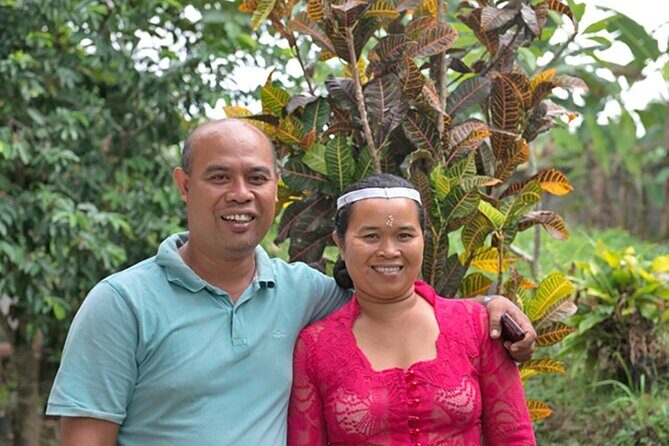
This class is built around Kadek and Putu and their family. The setting is a local home compound, where you cook in a way that feels practical and lived-in. That’s a big deal. Cooking classes in tourist kitchens can turn into a performance. Here, the rhythm feels like learning how a family actually cooks.
You’re not just tasting. You’ll be working—chopping, mixing, cooking—while your hosts guide the process. The reviews and the overall design point to a strong emphasis on starting from ingredients, then moving through each step. That approach helps if you want to recreate dishes later, because you’re learning the structure, not only the final flavor.
There’s also an extra option that can add a lot of context. If you’re interested, Kadek can show you how he grows local fruits and vegetables at a home garden a few doors down from Putu’s place. It’s a simple add-on, but it changes the feeling from market shopping to seeing the full chain from plant to plate.
One practical note: you’ll be dropped in and out of a neighborhood home setup, so wear shoes you don’t mind getting a little dusty or used. Cooking is usually active work, and you’ll be standing and moving.
The Market Tour: Picking Fruits, Veggies, and Herbs You Can Name
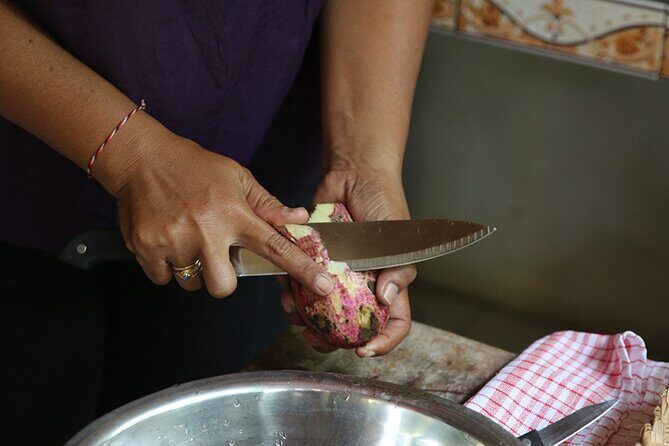
After pickup from your Ubud hotel, you’ll go straight to the Gianyar market. Kadek shows the regional produce used in Balinese cooking, and that’s where you’ll get the best payoff later. When you can name what you bought—rather than just remembering the dish—you can actually rebuild the flavors.
The produce focus is broad but purposeful. You’re looking at local fruit, vegetables, and herbs that show up in soups, satays, rice dishes, stir-fries, and desserts. The more you pay attention here, the more your cooking session makes sense. It’s also a good moment to ask basic questions, like what’s in season or what gets used most often.
You may also get a garden-related “bonus” before you cook. As you tour the garden, Kadek can offer fresh juice squeezed from just-picked seasonal fruits such as mulberry, passion fruit, papaya, mango, or jackfruit. Even if you don’t drink alcohol later, this fruit juice stop gives you a clear taste of what’s currently thriving—and what might show up in the meal.
And yes, the market has lots of stalls and visual noise. That’s normal. The trick is to treat it like a lesson. Look at the ingredients your host points out, taste what you’re offered, and don’t let the crowd overwhelm your attention.
From Chopping Board to Balinese Table: What You’ll Cook
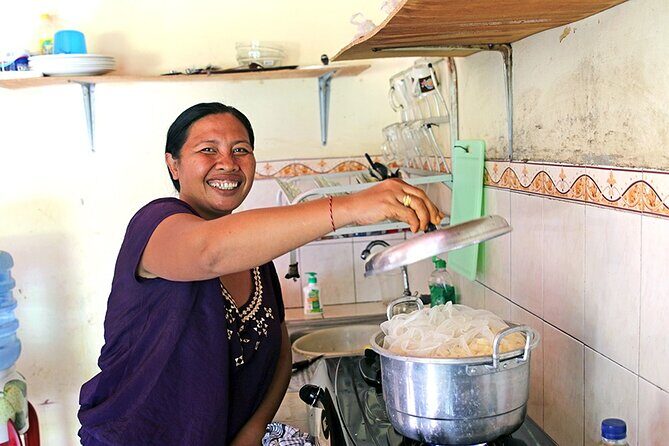
Once you return to the home kitchen, you cook traditional Balinese dishes from scratch. This is not a “watch and wait” class. The experience is designed so you do the work—from chopping and prep through the cooking steps.
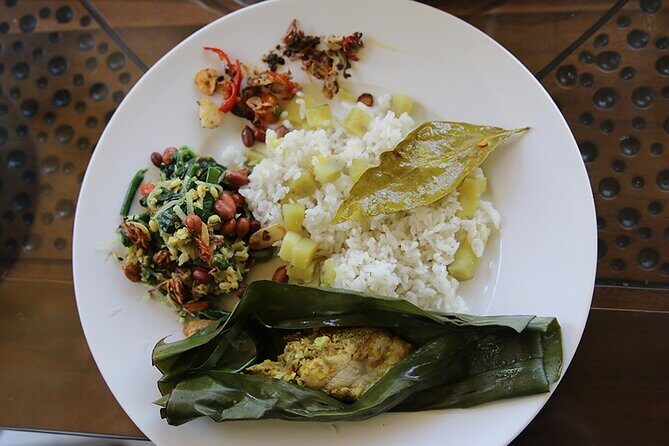
Typical dishes you might make include piquant chicken satay, stir-fried vegetables, and steamed fish with rice. Dessert can be black sticky rice pudding with fresh coconut cream or fried banana with grated fresh coconut and palm sugar. The exact lineup can shift with the season, so think of this as a menu style rather than a strict script.
The most valuable learning style here is the ingredient-by-ingredient approach. Instead of just being told what tastes good, you break down each ingredient and what role it plays. That matters for copycat cooking at home. If you know what’s sweet, what’s aromatic, what adds heat, and how the dish is built, you can adjust for what you can find locally later.
You also get to make multiple dishes, not one. Some classes try to squeeze everything into a single item. Here, you’ll likely cook around five dishes, which gives you variety in techniques and flavors. It’s also part of why the class works as a real experience rather than a short demo.
Vegetarian options are available if you ask when booking, and you can also have dietary preferences accommodated. If you have allergies, dietary restrictions, or preferences, you’ll want to communicate them in advance so your host can plan.
Eating the Meal (and Why That Part Matters)
After cooking, you sit down and enjoy an authentic Balinese meal of what you made. This is where the lesson locks in. When you’ve been actively cooking the dish, tasting it afterward feels like confirmation instead of surprise.
You’ll eat family-style foods that reflect the same ingredients you chose earlier at the market. That connection is part of why this works. You can taste how fresh herbs and produce change the dish compared to dried or generic substitutes at home. It also helps you learn your own preference: you’ll notice what you liked most, and that can guide what to recreate later.
Alcoholic beverages are included, which makes the meal feel like a real host experience, not only a school assignment. If you don’t drink, you can still enjoy the food and use the included beverage time as part of the pacing—no pressure implied, just included.
Dessert is a highlight in many Bali meals, and this class doesn’t skip that step. Fried banana with grated coconut and palm sugar brings a warm sweet finish, and black sticky rice pudding with coconut cream gives you that rich, comforting texture that’s hard to forget. Even if you normally prefer savory food, dessert here tends to earn its spot.
Finally, eating in the home compound setting adds a calm, grounded end to the experience. You’re not rushed out to keep the schedule moving—you’re finishing the loop like a guest.
You can also read our reviews of more tours and experiences in Ubud




Price and Logistics: Is $80 Good Value?
At $80 per person for about 4 hours, the value mostly comes from what’s included, not just the time. You’re paying for a private, hands-on cooking class with market touring, your homecooked meal, pickup and drop-off within Ubud, and included alcoholic beverages.
Think of it like this: you’re getting (1) a guided market experience focused on real ingredients, (2) transportation from your Ubud hotel, and (3) a cooking session plus meal you don’t have to plan or execute on your own. If you’ve ever tried to do the “market + cook at home” plan by yourself, you know how quickly it becomes complicated—shopping, ingredient hunting, and then figuring out steps and technique.
The one practical downside is geographic. Pickup and drop-off are only included for hotels within Ubud. If your hotel is outside Ubud, there’s an additional charge. So if you’re staying in a more remote area, check that before you book.
Also, the experience is private, meaning it’s tailored to your group. That’s great if you want more attention or you’re traveling with picky eaters, but it also means the group is only as flexible as your needs. Communicate dietary restrictions early so the host can adjust your meal.
One more small logistics point: it’s near public transportation, but the tour itself includes pickup within Ubud, so most people won’t need to plan their own rides.
Who This Class Fits Best on Your Bali Trip
I’d book this if you want more than a meal. You’ll get the most out of it if you like cooking, if you enjoy understanding ingredients, or if you’ve been frustrated trying to recreate dishes without the right raw materials.
It’s also a strong pick for culture-minded food lovers. You’re not only learning recipes; you’re learning how local ingredients link to traditional dishes. The market tour gives you the “why,” and the cooking class gives you the “how.”
If you’re traveling as a couple or small group, the private format is ideal. You can ask questions, adjust your pace, and get more direct help at the chopping board. Reviews and the class structure point to real hands-on instruction, including ingredient breakdowns and working through each dish rather than only watching.
Vegetarians can also fit in. A vegetarian option is available, and it’s best to request it at booking. If you have allergies or dietary restrictions, the class asks you to tell the host ahead of time, so they can plan the menu changes. Service animals are allowed, which is a nice practical note for some travelers.
The heat and motion of market cooking classes can be a lot if you’re not feeling well. But if you’re up for an active 4 hours and you want a result you’ll taste and remember, this is a great fit.
Should You Book This Gianyar Market Cooking Class?
Yes, if your goal is practical Bali food skills you can bring home. The combination of a Gianyar market tour plus a home-compound cooking session with Kadek and Putu makes it more than a one-time dinner.
I’d especially recommend it if you care about two things: learning the specific ingredients used in Balinese dishes, and cooking the dishes yourself so you understand the steps. The hands-on style and ingredient breakdown approach are exactly what you want when you’re trying to recreate flavors later.
Skip or rethink it only if you’re looking for a slow, sit-and-watch experience. This isn’t that. You’ll be cooking and moving, and you’ll get the best value if you’re ready to participate.
If you’re staying in Ubud, the included pickup and drop-off are a big part of the deal. If you’re not in Ubud, ask about any extra transportation costs before committing. Otherwise, this is one of the more “do it for real” ways to experience Balinese food.
FAQ
How long is the Gianyar Market visit and cooking class?
The experience lasts about 4 hours.
Is pickup and drop-off included?
Yes, pickup and drop-off are included for hotels in Ubud. If your hotel is outside Ubud, there is an additional charge.
Is this tour private?
Yes. It’s private and personalized, and only your group participates.
What’s included in the price?
You get a private market tour and cooking class with Kadek and Putu, a homecooked Balinese meal, alcoholic beverages, and pickup/drop-off within Ubud.
Are vegetarian options available?
Yes. A vegetarian option is available, but you should advise at booking.
What if I have allergies or dietary restrictions?
You should advise at the time of booking so the host can accommodate your needs.
Can I cancel and get a full refund?
You can cancel for a full refund up to 24 hours before the experience starts. If you cancel less than 24 hours before, it isn’t refunded.