REVIEW · UBUD
Silver Smith Class With Local Balinese
Book on Viator →Operated by Karuna Kania Bali Tours · Bookable on Viator
Silver jewelry feels way more real than it looks.
This private Balinese silver jewelry making class happens in the Ubud countryside, where you choose a design and then learn the key steps to shape your own ring, bracelet, earrings, or necklace. It’s practical, hands-on, and focused on you—not a camera tour.
I especially like the one-on-one instruction. You get direct help while you’re learning techniques like burning, smoothing, and sharpening, so you don’t spend the whole time guessing. I also like the payoff: coffee or tea with fried banana snacks plus a completion certificate, and you get to take your actual silver piece home.
One consideration: plan for a long sit-down session, and transport isn’t included (pickup is offered). If you hate waiting or you’re tight on timing, coordinate your ride before you go.
In This Review
- Key highlights that make this class worth your time
- Silver Smith workshop outside Ubud: what you’re really signing up for
- Picking your design: rings, bracelets, earrings, or necklaces
- The hands-on steps: burning, smoothing, and sharpening
- What you’ll get included: coffee, snack, certificate, and your silver
- Price and value: why $47 can work (and who it’s best for)
- Timing and meeting basics: morning or afternoon, pickup offered
- Comfort and expectations: what to know before you go
- Should you book the Silver Smith Class with Local Balinese?
- FAQ
- Where does the workshop start?
- How long is the silver jewelry making class?
- Does the class offer pickup?
- Is this a private class?
- What ticket format do I get?
- What’s included in the price?
- Is lunch included?
- What will I do during the workshop?
- How does cancellation work?
Key highlights that make this class worth your time
- Private class = full instructor focus for your design and your questions
- Pick your own jewelry (ring, bracelet, earrings, necklace) before you start working
- Burn, smooth, sharpen are the core skills you practice during the workshop
- Coffee or tea with fried bananas keeps the mood relaxed mid-session
- Gemstones and design choices help you shape something that feels personal
- Completion certificate plus the jewelry you make
Silver Smith workshop outside Ubud: what you’re really signing up for
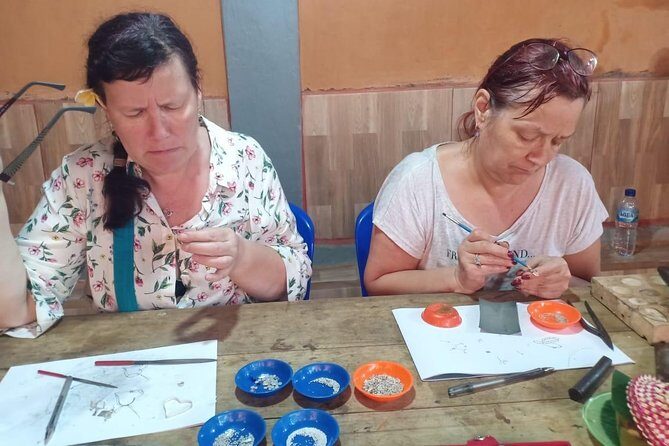
A silver jewelry class can sound like a souvenir factory. This one isn’t. It’s more like a short, structured skills lesson where the goal is simple: learn the process, make a piece, and understand what you’re doing as you do it.
The setting matters. You’re not doing this in a busy storefront. It’s in the countryside just outside Ubud, in a calmer home/workshop environment where you can hear instructions clearly and stay focused. That quiet helps, especially because you’ll be sitting for a while and doing careful work.
The class is private, meaning it’s only your group. That changes the entire vibe. In a shared class, you often wait your turn and watch other people learn. Here, your instructor can stay close while you choose your design and work through the metal steps. If you like learning by doing, you’ll feel more progress.
And yes, you end with something you made. You’re not just watching a craft demonstration. You’ll burn, smooth, and sharpen silver as part of the process, then walk away with your jewelry.
You can also read our reviews of more tours and experiences in Ubud

Picking your design: rings, bracelets, earrings, or necklaces
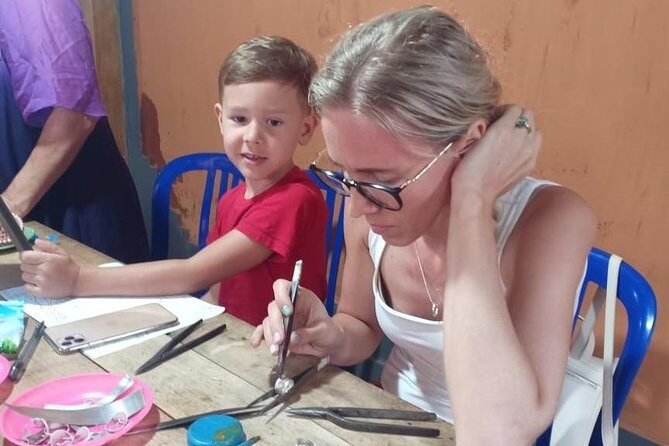
Before any tool work happens, you get guided instruction. The process starts with listening—your teacher explains the steps and what to expect—then you choose what you want to make.
You can pick from:
- Rings
- Bracelets
- Earrings
- Necklaces
This choice matters for two reasons. First, the shape you choose affects how you’ll handle the metal and how you’ll think about finishing. Second, it helps you leave with a piece that actually matches your style, not just a generic token.
You’ll also have options that go beyond the basic jewelry outline. In particular, there are gemstone and design choices available, so you can build something that looks more like your personal “yes, I’d wear that” style rather than only following a fixed template. If you’re the type who wants to feel creative rather than procedural, this part is a big win.
Tip from a practical planning angle: decide on what you want to wear (or gift) before you arrive. It’s easier to choose quickly when you already know the jewelry type that fits your trip life.
The hands-on steps: burning, smoothing, and sharpening
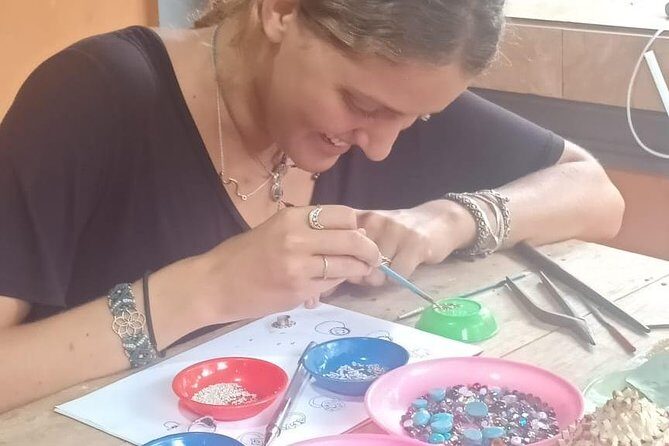
This is the heart of the workshop, and it’s why the class feels satisfying instead of passive. You’ll practice three core actions—burn, smooth, and sharpen—as you shape and refine your silver piece.
Here’s how to think about those steps in plain terms:
- Burn: You’re using heat as part of shaping or preparing the metal for the next step. The goal is to change how the metal responds so you can work it more effectively.
- Smooth: After shaping, you work on surface finish. This is where your piece starts looking clean and wearable instead of rough and work-in-progress.
- Sharpen: This is finishing-focused. You refine edges and details so the piece feels crisp, not blunted.
Your instructor guides you through what you’re doing, but you still do the work. That’s the point. If you’ve ever tried to “make something” on vacation and ended up mostly watching, you’ll appreciate the difference here: you’re actively working with the materials and learning the skill chain.
Also, take your time during the process. The work involves careful handling, and rushing is where mistakes happen. A slower pace is not a bad thing here—it’s how you end up with a better-looking ring or set of earrings.
What you’ll get included: coffee, snack, certificate, and your silver
The workshop includes more than just instruction.
You’ll receive:
- Coffee and/or tea
- A snack, including fried bananas
- A certificate for completing the silver class (from Bali Purma)
- The jewelry you make
That coffee/tea break matters more than you might think. In a hands-on craft session, your attention is your real currency. A warm drink and a small snack help you keep energy steady while you’re doing detailed work.
The certificate is a nice touch if you like keeping proof of skills you learned—not just photos. Even if you never frame it, it’s a tangible reminder that you did the work, not just the activity.
And of course, the biggest value item is the piece itself. This is why a class like this can feel “worth it” even when the price is lower than a full-day tour. You’re paying for a tangible result made by your hands.
Price and value: why $47 can work (and who it’s best for)
At $47 per person, this is priced like a skill workshop rather than a luxury experience. The value comes from the structure: you get a private setting, a dedicated instructor, hands-on time, and you take home the silver jewelry you create.
Here’s where the math feels good:
- Private instruction usually costs more than group classes, even in local markets.
- The workshop lasts about 3 hours, so you’re not paying for a long, mostly-waiting experience.
- You leave with an actual crafted item, not only a memory.
Where value might depend on you:
- If you mainly want sightseeing, this won’t be that kind of day.
- If you strongly dislike sitting for extended periods, the format may test you (it’s described as needing a long sit-down).
Who I think it suits best:
- People who like making things with their hands
- Couples or friends who want a shared “we did something” moment
- Travelers who want a Ubud activity that isn’t only temples, rice terraces, and traffic





Timing and meeting basics: morning or afternoon, pickup offered
You can choose either a morning or afternoon class. That flexibility helps if you’re building a day around other Ubud plans—morning coffee and crafts, or crafts that smooth into late-afternoon downtime.
The start point is in Ubud, Gianyar Regency, Bali. The experience offers pickup, and there’s also a mobile ticket. Transport isn’t included, so rely on pickup if you want the easiest experience, or plan your ride if you’re going independently. The good news: it’s near public transportation and described as easy to access.
Duration is about 3 hours (approx.). Build in travel buffer time. Even when pickup is offered, you’ll want some slack so you’re not sprinting across Ubud after your session ends.
Comfort and expectations: what to know before you go
This isn’t a quick, walk-in craft moment. You’ll sit and work for a while, and the quality of your piece comes from focus. If you’re someone who gets restless easily, plan your day so you’re fresh going in.
Also, think about what you’ll do with your jewelry immediately after. You’ll leave with the silver item you made, but you’ll still be in “craft session mode” while you finish. Wear comfortable clothes and consider how you’ll store your piece safely until you’re done with the rest of your day.
The workshop is described as something most travelers can participate in, and it’s a private class, so you can ask questions and move at a pace that makes sense for your group. Still, the skill work involves concentration, so bring patience. Jewelry making is slower than you expect—on purpose.
Should you book the Silver Smith Class with Local Balinese?
Yes, if you want a hands-on Ubud silver jewelry workshop that ends with a real piece of jewelry and real skill practice. It’s also a strong choice if you care about private instruction, clear guidance, and a low-stress pace built around learning.
Skip it if you’re mainly chasing active sightseeing, you hate sitting for long stretches, or you can’t or don’t want to manage transport. Also, if you’re hoping for a fast “make-and-go” keepsake with no real technique involved, this class is more structured than that.
If you’re the type who enjoys making something and learning the steps behind it, this workshop is one of the more rewarding ways to spend a half-day in Ubud.
FAQ
Where does the workshop start?
The workshop start location is in Ubud, Gianyar Regency, Bali, Indonesia.
How long is the silver jewelry making class?
It runs for about 3 hours (approx.).
Does the class offer pickup?
Pickup is offered, but transport is not included.
Is this a private class?
Yes. It’s a private tour/activity, and only your group participates.
What ticket format do I get?
A mobile ticket is provided.
What’s included in the price?
Coffee and/or tea with snacks (fried bananas), a certificate of completion from Bali Purma, and the jewelry you make.
Is lunch included?
No. Lunch is not included, and food is not included besides the coffee/tea snack.
What will I do during the workshop?
You’ll listen to instructions, choose a design (rings, necklaces, bracelets, or earrings), and then do the hands-on steps: burn, smooth, and sharpen your jewelry.
How does cancellation work?
You can cancel for a full refund up to 24 hours in advance of the experience’s start time, with free cancellation allowed per the policy.