REVIEW · UBUD
authentic Balinese organic cooking class in Ubud
Book on Viator →Operated by Amara Bali Family Tour · Bookable on Viator
Farm-to-bowl cooking in Ubud beats the usual class. What makes this one special is the focus on organic ingredients and the chance to see them come straight from the farm and garden into your meal. I like that it is built around learning what plants actually do for Balinese cooking, not just following a recipe. I also like the small-group feel, with a maximum of 10 people, plus the hands-on teaching style you get once you’re in the kitchen.
There is one thing to consider: this is outdoors and weather matters. The experience requires good weather, and you should expect a hands-on rhythm with mostly manual cooking tools, so go with comfortable clothes and a patient attitude for chopping, mixing, and cooking at a farm pace.
In This Review
- Key Highlights You’ll Care About
- Why This Cooking Class Feels Different in Ubud
- The Easy Start: Pickup in Ubud + Welcome Drink
- Going From Garden to Kitchen (Without the Time Gap)
- Learning Balinese Ingredients and Their Functions
- What you’ll likely notice while learning
- Cooking Your Way Through Several Dishes
- The Lunch Part: Eating What You Made (Plus That View Factor)
- Optional Swings and Natural Waterfall Breaks
- Price and Time: Is $47 Good Value for This Kind of Class?
- Who Should Book This Cooking Class (And Who Might Not)
- Final Take: Should You Book This Organic Cooking Class in Ubud?
- FAQ
- How long is the organic cooking class?
- Is pickup from my accommodation included?
- How many people are in the group?
- Will I cook and eat what I make?
- Are there manual tools or is it more of a demonstration?
- What happens if weather is bad?
Key Highlights You’ll Care About
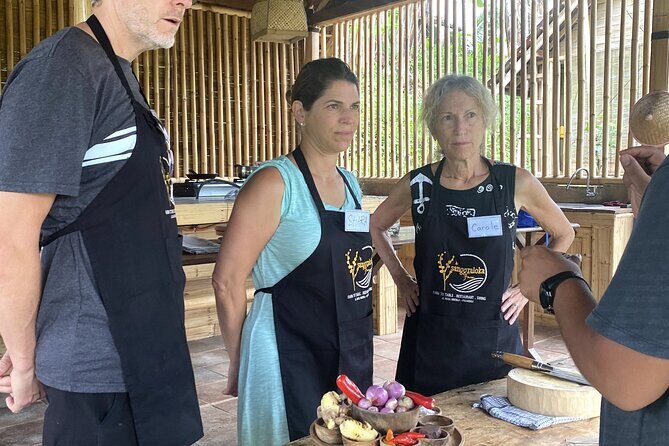
- Organic picking first: you harvest staples during the plantation’s harvesting time, then move them quickly into the kitchen process
- Farm-to-kitchen flow: garden picking is followed by prep and cooking right away, so you cook with ingredients at their freshest
- Mostly manual tools: the cooking feels more traditional and grounded, not like a demo you watch from a chair
- Balinese ingredient education: your chef teaches ingredients and their functions from the start, so you understand what you’re tasting
- Lunch with your own dishes: you finish by eating the meal you helped create
- Optional add-ons: there may be extras like a swing and a natural waterfall, depending on timing and conditions
Why This Cooking Class Feels Different in Ubud
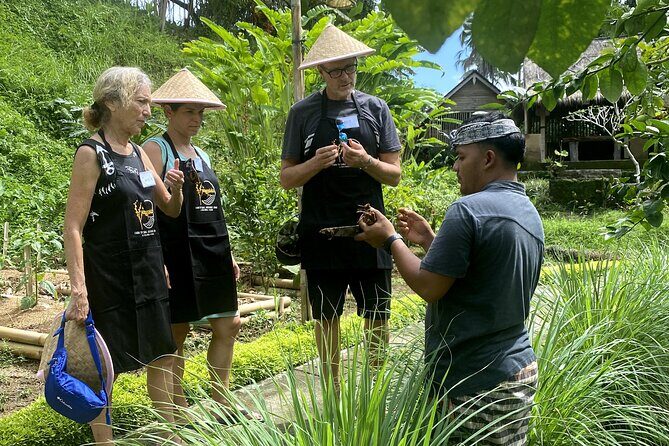
Most cooking classes in Bali teach technique. This one teaches ingredients, especially organic ones grown for use in Balinese dishes. That sounds subtle until you’re actually in it: you spend real time learning what you’re picking, what it’s for, and how it turns into flavor on the plate.
The farm-and-garden setup also changes the tempo. Instead of arriving, receiving a binder of recipes, and starting with prepped ingredients, you begin with the plants themselves. It’s a small shift, but it makes the learning stick. By the time you’re cooking, you can usually explain what an ingredient is doing and why it belongs in your dish.
And since the class is capped at 10 travelers, the teaching stays personal. You’re less likely to feel rushed or ignored when you ask a question, and you get more chances to try tasks with guidance.
You can also read our reviews of more cooking classes in Ubud
The Easy Start: Pickup in Ubud + Welcome Drink
Your day starts with pickup offered from your accommodation. That matters in Ubud, where traffic and short distances can still eat up time. Having a driver handle the route means you can focus on the experience from the first minute.
Once you reach the farm, you get a welcome drink and a short intro from the chef before you start cooking. This is more than a courtesy. It sets expectations for how the class works: you’ll be working with ingredients that are meant to be used fresh, and you’ll be learning as you cook, not only at the end.
A big plus here is that the staff communicate like they know their place. In the experience style from this operation, you’re not treated like a nameless slot on a schedule. It’s more like joining a family operation for a morning, with a clear plan and plenty of friendliness.
Going From Garden to Kitchen (Without the Time Gap)
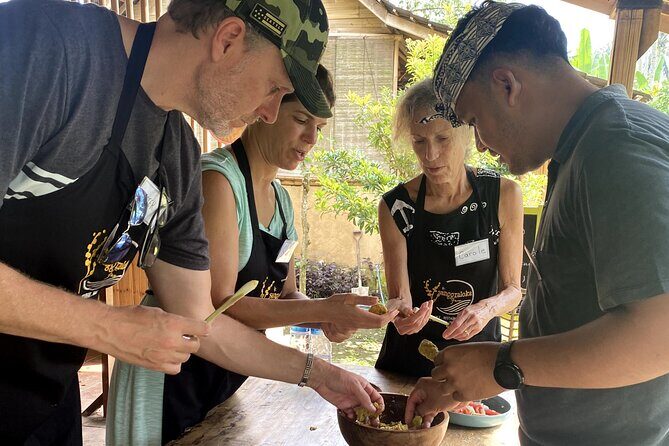
After the initial welcome, you head to the garden area where the cooking happens and where many of the plants are grown. This part is where you really feel the organic focus. The class environment isn’t just a backdrop; it’s a working setup designed to supply the ingredients used in your meal.
During harvesting time, you directly pick the staples from the farm. Then the ingredients get processed right in the kitchen. That flow is one of the most practical advantages of this class:
- You see the ingredients at the stage they’re harvested
- You learn what part you’ll use and how it’s prepared
- You cook with items that haven’t been sitting around long
It also makes the class more than just food. You’re paying attention to growth, timing, and how plants translate into cooking—especially useful if you like to cook at home later and want the logic behind the flavors.
Learning Balinese Ingredients and Their Functions
Here’s where the chef teaching really earns its keep. You start with an introduction to the Balinese food ingredients used in the dishes you’ll make, along with their functions. This is the kind of knowledge that helps you move beyond copying a recipe.
In past sessions, teachers like Ninek and her crew have guided students through what each ingredient contributes—how it affects taste, and how it changes when it’s prepped and cooked. You should expect instruction to be practical and step-by-step, tied directly to the dishes in front of you.
Also, the tools are almost all manual, which nudges you to slow down just enough to notice what you’re doing. Manual chopping and prep can feel more physical than kitchen gadgets, but it’s part of the learning. You feel the process, not just the result.
What you’ll likely notice while learning
- Your ingredient choices stop being random and start making sense
- You understand which flavors come from which plant components
- You get a better sense of how Balinese cooking builds complexity
Even if you already know Balinese food, this ingredient-first approach is a strong way to refresh your understanding.
You can also read our reviews of more tours and experiences in Ubud

Cooking Your Way Through Several Dishes
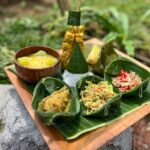
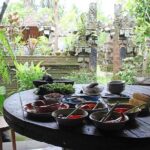
In this class, you don’t just make one plate. You create multiple dishes with the guidance of your chef and crew. In one session, students were guided through six different dishes, which is a great sign for value and variety.
The exact dishes can shift based on what’s fresh and ready, but the structure stays the same: you learn ingredient roles, then you cook with the same ingredients you harvested and processed. That consistency is what makes it satisfying. You’re not eating something you didn’t understand.
You’ll also get to work with a realistic kitchen setup. The manual tools mean you’ll be more involved in prep and cooking tasks. That can be fun if you like to get your hands dirty (and if you’re okay with a little farm-kitchen mess). If you prefer a very hands-off experience, you may want to mentally prepare yourself for active participation.
The Lunch Part: Eating What You Made (Plus That View Factor)
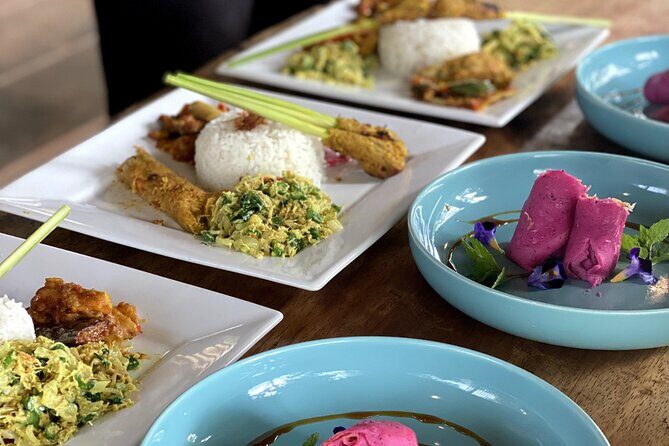
After cooking, you enjoy your original cooking lunch—the meal you helped prepare. This is the payoff moment, because you finally connect the ingredient lessons to real taste.
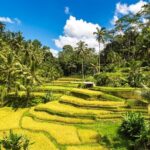
One extra detail that adds to the mood: you eat with a view tied to the local setting, and in some sessions the experience includes eating with rice-terrace scenery nearby. Even when the focus is clearly on cooking, that kind of setting makes the food feel more grounded and special.
Also, since the ingredients are picked and processed during harvesting time, the meal tends to feel like it belongs to that day’s harvest. It’s not a long, pre-stocked buffet. It’s a cooking session that ends as a meal, with less separation between the two.
Optional Swings and Natural Waterfall Breaks
Some versions of this experience include optional add-ons like a swing and a natural waterfall. Whether you do these extras may depend on your timing and conditions, but it’s a nice option if you want a bit of classic Ubud fun mixed into the cooking day.
One practical note: because this is an outdoor, good-weather-required type of schedule, the timing of add-ons can matter. If you’re hoping to do every extra thing, be flexible. The cooking portion is the core, so make sure you’re not so focused on photos or side stops that you rush the meal.
Price and Time: Is $47 Good Value for This Kind of Class?
At $47 per person for around 4 hours, this class is priced like a mid-range cooking experience. The question isn’t whether you’ll get food—you will. The question is what level of learning and uniqueness you’re paying for.
Here’s why I think it’s strong value:
- You start with organic picking instead of pre-made ingredients
- The farm-to-kitchen workflow reduces the usual disconnect between “tour” and “cooking”
- Most cooking tools are manual, which keeps you active rather than watching from the sidelines
- You finish with multiple dishes and then eat what you made
If you’ve done cooking classes that feel like you paid for a meal and a short demo, this one feels closer to a real farm-based skill lesson. That usually justifies the cost better than a pure performance-style class.
Also, the small group cap (up to 10) helps. In a group that size, teaching quality tends to stay higher, and you can ask questions while you cook.
Who Should Book This Cooking Class (And Who Might Not)
This experience fits best if you:
- Want to understand organic ingredients and how they connect to Balinese flavors
- Enjoy hands-on cooking more than watching cooking
- Like Ubud for nature-based culture experiences, not only temples and cafes
- Want a class that feels personal, not factory-like
You might want to think twice if you:
- Prefer a hands-off cooking class with minimal physical participation
- Have very limited tolerance for outdoor time (since the experience requires good weather)
- Are hoping for a quick tasting only—this is a real cooking-and-learning format that takes full attention
If you’re traveling with kids, this could still work, but you’d want to consider the practical pace of a cooking farm morning and how active the tasks are.
Final Take: Should You Book This Organic Cooking Class in Ubud?
Yes—if you want a cooking class that’s tied to real farming and ingredient learning, this is a smart bet. The standout value is the organic picking plus the way the chef teaches ingredient functions so your lunch makes sense, not just tastes good.
Book it when:
- You’re in Ubud for a day or two and want one experience that feels both cultural and practical
- You want a small-group morning with real involvement
- You like cooking enough to care about how ingredients work
Skip it when:
- You dislike outdoor farm settings or don’t want hands-on cooking
If your goal is to leave with a few useful ideas you can recreate later, this one is the kind of class that makes that possible.
FAQ
How long is the organic cooking class?
The class lasts about 4 hours.
Is pickup from my accommodation included?
Yes. Pickup is offered, and you’re returned to your accommodation at the end.
How many people are in the group?
The experience has a maximum of 10 travelers.
Will I cook and eat what I make?
Yes. You cook your own meal and then enjoy your original cooking lunch.
Are there manual tools or is it more of a demonstration?
The cooking uses mostly manual tools, so you’ll be involved in the hands-on prep and cooking.
What happens if weather is bad?
The experience requires good weather. If it’s canceled due to poor weather, you’ll be offered a different date or a full refund.