REVIEW · UBUD
Balinese Cooking Experience
Book on Viator →Operated by The Sankara Resort & Spa by Pramana Experience · Bookable on Viator
Cooking class in Ubud feels like a mini holiday.
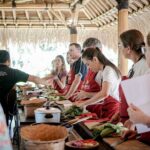
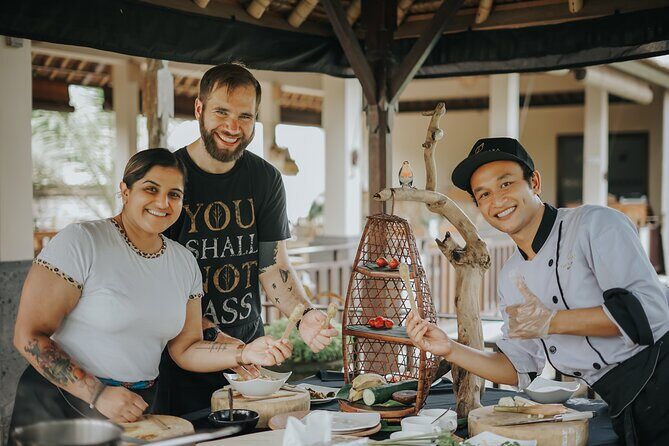
This experience takes place at The Kumbuh Restaurant inside a resort area, where a chef walks you through Balinese cooking and then you eat your results as lunch or dinner on an open lounge deck. I love the way the class doesn’t stop at recipes—it ends with you sitting down to a meal you actually made.
I also like the hands-on pace: you cook, you taste, you adjust, then you finish with dessert. One possible drawback: if you’re trying to book very close to the start time, plan extra carefully—there’s been at least one reported case where same-day seating was unclear and communication didn’t go smoothly.
In This Review
- Quick hits
- Where the Balinese cooking happens: Kumbuh Restaurant in Ubud
- Morning timing vs dinner timing: 11:00 a.m. or 5:00 p.m.
- Morning class (lunch)
- Afternoon class (dinner)
- Pickup, meeting points, and what the day actually feels like
- The class rhythm: coffee, tastings, two cook sessions, dessert
- Before you cook: intro and coffee or tea
- Cooking Session 1 + tasting
- Cooking Session 2 + tasting
- Dessert session + time to enjoy your dish
- Chef guidance and the secret-recipe angle (including Risma)
- The meal part: what you’re actually doing after the cooking
- Price and value: is $52 worth it in Ubud?
- What to bring and how to get the most out of it
- Who this Balinese cooking class is best for
- Should you book this Ubud Balinese cooking experience?
- FAQ
- Where does the Balinese cooking class start in Ubud?
- What time options are available for the class?
- Does the experience include lunch or dinner?
- Is there pickup from my hotel?
- Is this a private tour?
- Do I get a recipe to take home?
- Can I get a refund if I cancel?
Quick hits
- Resort setting at Kumbuh Restaurant in the Ubud area, with a relaxed open-deck meal afterward
- Two cooking sessions plus tastings, then a separate dessert session
- Lunch or dinner options tied to a morning (11:00 a.m.) or afternoon (3:00 p.m.) class
- Chef-led secret dish recipes, plus a take-home recipe gift
- Private format: only your group joins the activity
- Pickup offered for Ubud hotels, with a backup meeting spot at Ubud Tourist Information Centre
Where the Balinese cooking happens: Kumbuh Restaurant in Ubud
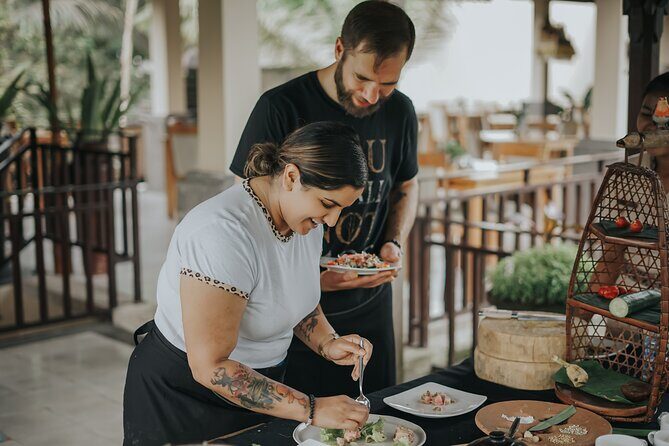
This class is staged right in the resort area, at The Kumbuh Restaurant. That matters more than it sounds. You’re not spending half your time coordinating transport in and out of Ubud traffic—you start and finish in the same general pocket, then shift into cooking mode quickly.
The vibe is practical and friendly: you’re there to learn how Balinese dishes come together, not to watch a demo from far away. Expect a structured flow that moves from ingredients to action, with built-in tasting along the way so you can sense what’s working.
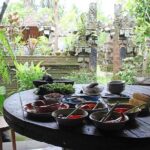
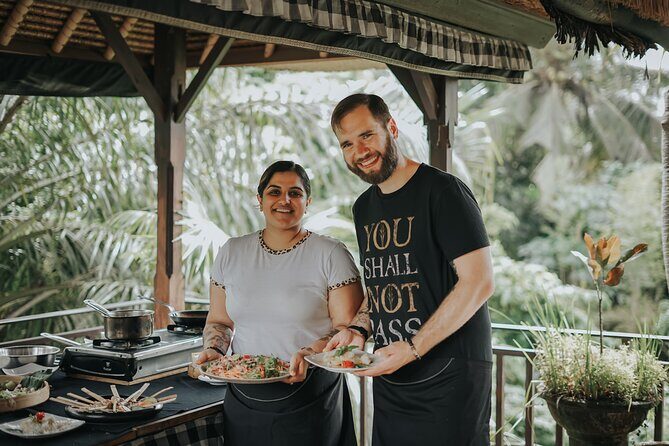
And then, after the cooking, you eat. The meal isn’t in a closed dining room—your lunch or dinner happens on an open lounge deck, which tends to feel more like a resort evening than a cooking-school cafeteria.
You can also read our reviews of more cooking classes in Ubud

Morning timing vs dinner timing: 11:00 a.m. or 5:00 p.m.
You basically choose which part of the day you want to anchor with the class.
Morning class (lunch)
- Pickup at 11:00 a.m. (or meet at Ubud Tourist Information Centre at 11:10 a.m. if you’re outside Ubud)
- Arrive by around 11:15 a.m.
- Cooking runs through about 1:45 p.m., and you’re back in Ubud by 2:00 p.m.
This is a great fit if you like eating early, then using the afternoon for temples, markets, or a spa stop.
Afternoon class (dinner)
- Pickup at 3:00 p.m. (or meet at Ubud Tourist Information Centre at 3:10 p.m. if you’re outside Ubud)
- Arrive around 3:15 p.m.
- Dinner-style class runs until about 5:45 p.m., and you’re back in Ubud by 6:00 p.m.
This one works well if you’d rather treat dinner like the main event and keep your daytime flexible.
One small planning note: the activity is about 1 hour 30 minutes total, but the schedule includes pickup and the time to enjoy what you made. So in real life, you’re treating it like a half-day commitment.
Pickup, meeting points, and what the day actually feels like
Your start point is tied to the Sankara Resort & Spa by Pramana area at Jl. Cempaka, Kumbuh, Mas, Ubud. That’s helpful because it gives you a clear reference point when you’re asking your driver to drop you.
If you’re staying outside Ubud, the schedule offers a backup: meet at Ubud Tourist Information Centre. In practice, that reduces the chance of last-minute confusion.
The tour also includes:
- Pickup offered (for hotel locations in Ubud)
- Mobile ticket
- Private tour/activity format, meaning only your group participates
That private setup is worth noting for comfort. You’re not sharing recipes and cooking station time with a large crowd, and it usually makes the Q&A flow easier when you’re learning hands-on.


The class rhythm: coffee, tastings, two cook sessions, dessert
The structure is clear, and that’s part of what makes it feel doable, even if you’ve never chopped an herb in your life.
Before you cook: intro and coffee or tea
You begin with an introduction and a serving of coffee or tea. This is a small detail, but it helps you shift into the experience mode without rushing.
Cooking Session 1 + tasting
The schedule then moves into the first cooking session and a tasting. The tasting step is important because it lets you understand the flavor direction early—before you’re too deep into the second stage.
Cooking Session 2 + tasting
Next comes Cooking Session 2 and another tasting. This is where you start building confidence. Most people don’t learn well from one long cooking block. The split sessions make the learning curve gentler and more realistic.
Dessert session + time to enjoy your dish
At the end, there’s a dessert session, then time to enjoy what you made. Since the menu is treated as a full meal experience (lunch or dinner depending on your start time), dessert rounds it out and gives you that complete-course feeling.
It also means you’re not sprinting to the finish line right when the food gets good. You get time with the final result.
Chef guidance and the secret-recipe angle (including Risma)
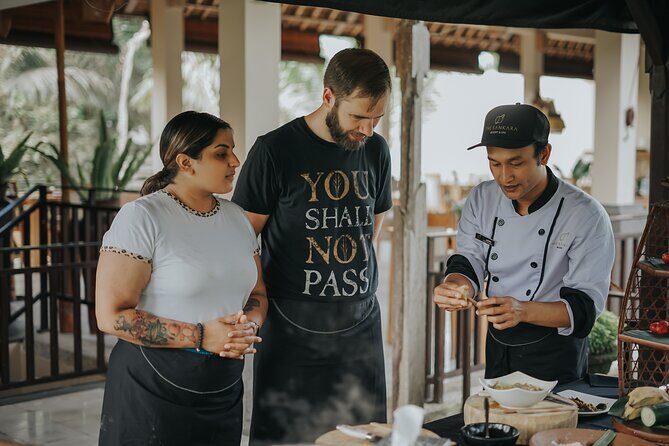
The promise here is that your chef will share secret dish recipes. Even if you’ve done cooking classes elsewhere, the key is how that turns into actual learning: you’re not only getting a list of ingredients—you’re learning why each step matters.
One standout detail from the experience quality is the chef-teacher style. People have praised chefs for being skilled and attentive, and one chef name that came up clearly was Risma. The impression is that he doesn’t just talk. He teaches in a way that makes the cooking feel manageable and even fun.
That matters because Balinese cooking has flavor building blocks that can feel unfamiliar if you’ve only eaten it at restaurants. When someone guides you step-by-step, you start to understand the logic—spice balance, prep technique, and timing—so you can reproduce the result at home.
And yes, there’s a take-home recipe as a gift. That’s one of the best parts for me. A meal is great, but a recipe you can actually try later turns your day in Ubud into something that lasts beyond the dinner table.
The meal part: what you’re actually doing after the cooking
This class is designed so cooking leads directly into eating.
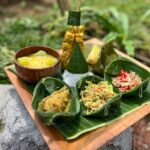
You finish with your memorable lunch or dinner on an open lounge deck. That setup tends to feel relaxed, which is a nice contrast to the mental work of cooking. You get a buffer: you cooked it, you tasted along the way, then you slow down and enjoy the full plate.
Many people are drawn to cooking classes because they want to leave with both knowledge and a good meal. Here, you get both, and you don’t have to spend extra time hunting for dinner plans afterward. You’re essentially building your meal into the tour.
Price and value: is $52 worth it in Ubud?
At $52.00 per person, you’re paying for a private-group cooking format, guided instruction, tastings, and a full lunch/dinner meal experience—plus a take-home recipe.
How I think about value:
- If you usually pay for a Ubud activity plus a separate meal, this can be an efficient way to combine them.
- The two cooking sessions and dessert session mean the chef isn’t just doing a quick demo. You’re scheduled for real participation and multiple tastings.
- The private format usually makes the experience feel more personal than a big group class, which matters when you’re learning technique.
So the real question isn’t just the price tag. It’s whether you want a guided cooking day where you control the outcome with your own hands. If yes, $52 can feel like a fair deal for a full, structured food experience in Ubud.
What to bring and how to get the most out of it
The booking description doesn’t list a gear list, so I’d treat this like a casual cooking session with a meal at the end.
Practical approach:
- Wear comfortable clothes you don’t mind getting a little spice-scented or messy.
- Plan for warm weather. Even if the schedule is short, you’ll be cooking actively.
- Bring a reusable water bottle if you tend to get thirsty quickly.
Diet questions are your responsibility: the information provided doesn’t specify dietary accommodations. If you’re vegetarian, avoiding seafood, or have allergies, you’ll want to ask during confirmation so expectations match the menu you’ll cook.
Also, because you’re in the resort area, it’s easy to pair this with other Ubud plans. You’ll know you’re done by either 2:00 p.m. (morning class) or 6:00 p.m. (afternoon class).
Who this Balinese cooking class is best for
This is a strong choice if:
- You want a hands-on Balinese cooking experience rather than a food tour where you only snack
- You like structure: coffee intro, two cooking blocks with tastings, then dessert
- You’d rather learn from a chef and take a recipe home than just eat and forget
- You prefer a private setup for a more relaxed pace
It might be less ideal if you’re the type who wants total freedom with no schedule. This class is timed tightly, with set start times and a full flow that includes tastings and dessert.
And it’s especially good for couples, friends, or small groups. Private format plus shared meal equals a memorable social day.
Should you book this Ubud Balinese cooking experience?
Book it if you want the simplest kind of win in Ubud: learn Balinese cooking, taste along the way, then enjoy lunch or dinner on the deck, with a take-home recipe to prove it wasn’t just a one-day show.
I’d think twice if you’re trying to plan extremely last-minute. One customer described trouble with same-day accommodation and said there was no communication despite reaching out. To avoid that headache, confirm your slot early and make sure pickup details are clear for your exact hotel.
If you want a reliable food-focused day with a chef, a real cooking rhythm, and an ending you can enjoy in place, this is a solid pick.
FAQ
Where does the Balinese cooking class start in Ubud?
The start point is at The Sankara Resort & Spa by Pramana at Jl. Cempaka, Kumbuh, Mas, Ubud. The activity ends back at the meeting point.
What time options are available for the class?
There are two options: a morning class starting around 11:00 a.m. for lunch, and an afternoon class starting around 3:00 p.m. for dinner.
Does the experience include lunch or dinner?
Yes. The morning arrangement is for lunch, and the afternoon arrangement is for dinner. Your meal is served after the cooking sessions, including dessert time.
Is there pickup from my hotel?
Pickup is offered. If you stay outside Ubud, you can meet at the Ubud Tourist Information Centre instead.
Is this a private tour?
Yes. It’s listed as a private tour/activity, so only your group participates.
Do I get a recipe to take home?
Yes. The experience includes a take-home recipe as a gift.
Can I get a refund if I cancel?
Yes. You can cancel up to 24 hours in advance for a full refund. If you cancel less than 24 hours before the start time, the amount paid will not be refunded.