REVIEW · UBUD
Sidemen Trekking: A Walk from a Different Perspective
Book on Viator →Operated by Sidemen Trekking · Bookable on Viator
Rice terraces, but the local way.
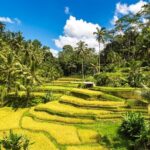
This Sidemen walk takes you from the village’s Pasar Sidemen area into rice-growing paths, moving with the water system and aiming your views toward Mount Agung. I love that it starts in real life, not a bus stop, and you’re outside the usual Bali crowd circuits almost immediately.
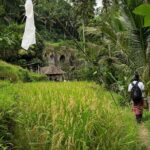
I also like how the route feels like a working landscape. You’ll pass through village streets, a temple used by locals, and the practical irrigation footpaths that farmers rely on every day, plus a hanging wooden bridge built for both motorbikes and people. A good local guide turns those details into stories you can actually picture.
One thing to plan for: the walk is relaxed in time, but the rice paths can be narrow, uneven, and sometimes slippery. Bring solid hiking shoes and take your time on the raised terrace edges.
In This Review
- Key highlights at a glance
- Sidemen rice terraces, with Mount Agung as your backdrop
- Meeting at Pasar Sidemen, and finding Upa Boga
- The trek’s structure: from village streets to irrigation paths
- Rice paddies from the farmer’s angle, not the tourist’s
- Crossing the hanging wooden bridge and passing temple life
- Pace and timing: about 2 hours, with realistic walking conditions
- Price and what $13.75 really buys you
- What to bring so the walk stays comfortable
- Where you end up: Warung Ume Anyar and your post-walk reset
- Who this Sidemen trekking walk suits best
- Should you book Sidemen Trekking?
- FAQ
- How long is the Sidemen trekking tour?
- Where does the tour start?
- Where does the tour end?
- What is included in the price?
- What isn’t included?
- Do I need a moderate fitness level?
- What should I bring?
- How big is the group?
- Can I explore the market before the trek?
Key highlights at a glance
- Start at Pasar Sidemen, meeting at the shop sign Upa Boga
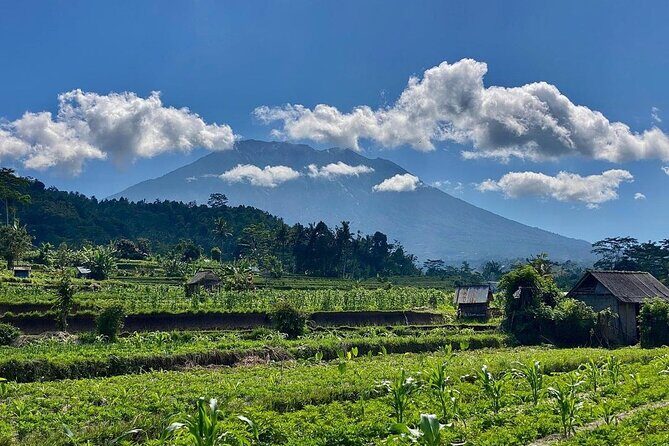
- Mount Agung views while you walk through working rice fields
- Irrigation-first route, including a hanging wooden bridge
- Local village + temple stops for everyday Balinese context
- Small groups (max 10) for an easier pace and more chat with your guide
Sidemen rice terraces, with Mount Agung as your backdrop
Sidemen is the kind of Bali place where the scenery feels earned. Instead of scenic lookouts only, you move through the same zones farmers use: narrow paths, water channels, and terrace edges that change how you see the whole valley. The best part is that your “wow” moments aren’t one big viewpoint at the end. They pop up repeatedly as the route follows the irrigation flow.
Most people come to Bali for beaches and temples in a fast loop. This is different. You’ll spend your time on agriculture and daily routines. Expect a view of Mount Agung in the background often enough that you start to orient yourself to where you are in the valley.
This tour also isn’t about big physical challenges. You’ll get exercise from walking up and down village streets and then spending time on terrace paths, some of which have no obvious step-by-step footing. Think more balance and awareness than stamina.
You can also read our reviews of more walking tours in Ubud
Meeting at Pasar Sidemen, and finding Upa Boga

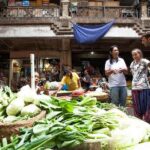
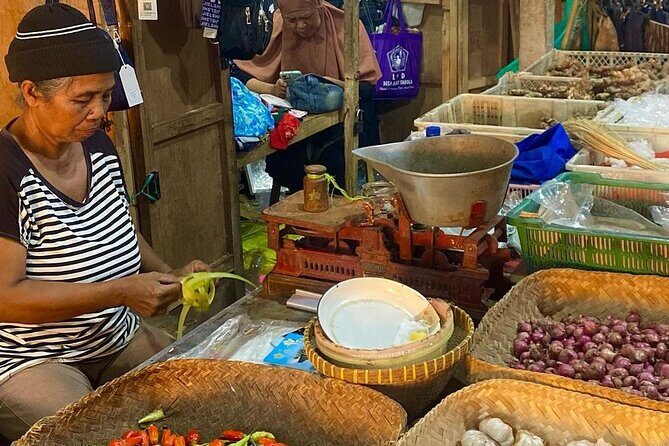
Logistics matter here because the start point is specific. You begin at Pasar Sidemen (Sidemen Traditional Market), and the meeting point is at the shop with the sign Upa Boga. If you show up early, you can also take advantage of the market’s morning hours (open 5:00 AM to 10:00 AM). That’s useful if you want to see the local flow before you lace up and head out.
Getting to the start point depends on where you’re staying. If you’re already in Sidemen, you’ll usually handle transport through your hotel. Using Grab can be hit or miss because some hotels in the area only allow drop-off, not pickup. In other words, plan so you’re not stuck waiting at the market with your trekking shoes on and nothing arriving.
If you’re coming from outside Sidemen, do yourself a favor and confirm your driver’s drop-off location and timing. You start promptly once the group is together.
The trek’s structure: from village streets to irrigation paths
After meeting, you’ll walk out of the market/village area and head toward the rice paddies. The direction you follow includes aiming your way toward Mount Agung, so your photos aren’t only “rice fields,” they’re rice fields framed by the volcano’s silhouette.
The first stretch is village travel: you’ll move up and down local streets and pass through parts of everyday life. Then you shift onto paths farmers use. That transition is the value. Terrace tourism can turn into a slideshow. This walk turns it into a route.
A key detail: some sections don’t have clear steps. You’re walking on natural surfaces beside water channels and terrace edges. That’s why the tour asks for hiking boots/shoes and a calm pace. If you’ve ever slipped on wet stone, you know what I mean. The experience can still be easy, but you need to pay attention.
Rice paddies from the farmer’s angle, not the tourist’s

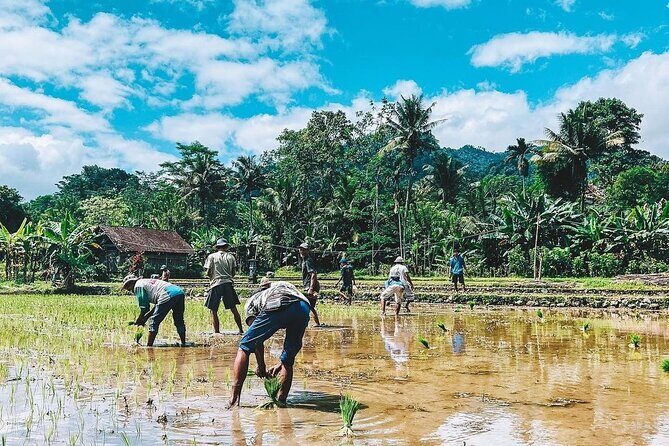
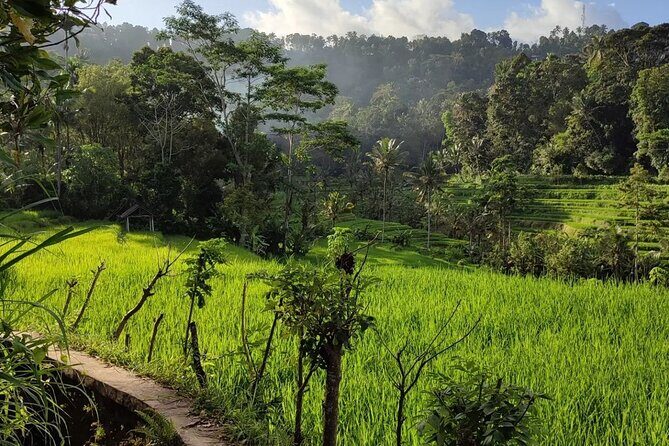
When you enter the rice field section, the views change fast. From a normal lookout, you’re looking “at” the terraces. On this walk, you see how the terraces guide movement, how water shapes the ground, and how the irrigation system connects everything.
You’ll also notice the difference between planted land and pathways. The route often follows irrigation: the water lines that feed the fields, plus the narrow walkways beside them. It’s a clever way to “read” the countryside while you walk through it.
In seasonal timing, the fields can look and act differently. For example, if you’re there around harvest periods like December, you might see crops in a harvested stage and learn how that connects to what gets planted next. Even if your timing is different, your guide will connect what you see to how rice farming cycles work.
And yes, you can get a little muddy. More than one person has pointed out that it’s worth wearing shoes you don’t mind getting dirty. You’re walking on working land.
Crossing the hanging wooden bridge and passing temple life
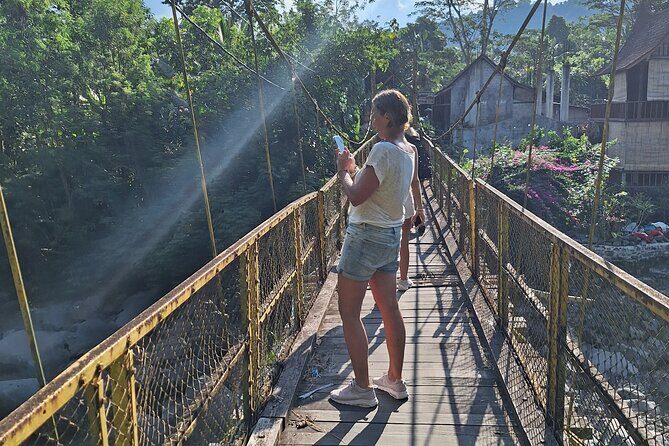
One of the most practical (and memorable) moments is the hanging wooden bridge. It’s described as being fit for motorbikes and humans, which tells you it’s not a fragile decoration. It’s part of local movement between field areas.
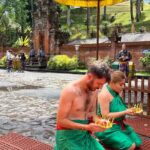
You’ll also pass through a village temple used for local praying. This is where the walk adds culture without turning into a classroom. You see that religion here isn’t a separate activity for visitors. It’s interwoven into daily schedules, the fields, and community spaces.
As you move through these areas, expect stops for explanation and photo moments. But the route keeps you walking. This isn’t a sit-and-watch experience.
You can also read our reviews of more hiking tours in Ubud


Pace and timing: about 2 hours, with realistic walking conditions
Duration is listed at around 2 hours, and the practical guidance also suggests you might plan for 2 to 2.5 hours from start to finish. That matters because the finish point is in Ogang Village at Warung Ume Anyar Restaurant. You’ll want your transport timing to match.
The walking itself is often described as not taxing. Still, the paths can be narrow and sometimes slippery, especially where terrace edges and water channels create wet footing. The balance requirement is real. It’s not just “watch your step” in a vague way. You genuinely need secure shoes and a steady stride.
Good news: the group is capped at 10 travelers. Smaller groups usually mean less waiting, less bunching on narrow paths, and a smoother pace for both you and your guide.
Price and what $13.75 really buys you
At $13.75 per person, this is priced like a small local activity rather than a luxury guided excursion. And that’s part of the value story.
What’s included is simple: bottled water. What you’re paying for is the guide-led routing through paths that are hard to spot alone, the cultural context on farming and village life, and the time-saving factor of not having to figure out which trails actually work.
What’s not included:
- Tips
- Hotel pick-up and drop-off
So your real cost picture depends on how you’re getting to Pasar Sidemen and how you’ll leave from the finish point. If you arrange your own driver to pick you up near the end, you’ll avoid the most common hassle: limited Grab availability and waiting time.
Group discounts may apply as well, which can make the per-person value even stronger if you’re traveling with friends.
If you want to do a lot of Bali on a budget, this is a solid use of time because it gives you rural context plus scenery without a long day.
What to bring so the walk stays comfortable

The tour asks you to bring specific basics, and you’ll be happier if you follow them:
- Sun hat
- Hiking boots/shoes
- Suncream
- Sunglasses
I’d add one practical mindset: treat this as a “working field” walk. Even if it’s not a hike in the mountains sense, the ground can be uneven, wet, and muddy. Shoes that grip and protect your feet will make the experience feel easy instead of stressful.
Also plan sun protection. The rice fields are greener, but the Bali sun doesn’t care about your itinerary.
Where you end up: Warung Ume Anyar and your post-walk reset
The trek ends at Warung Ume Anyar Restaurant in Ogang Village. The finish point is a good place to cool down after walking. You’ve got an easy transition: water, shade, and a meal or drink to recover.
Transport planning matters again here. The recommendation is to arrange your ride in advance so you’re not waiting at the finish. If you have a driver, ask for pickup around 2 to 2.5 hours after the trek starts. Grab exists in the area, but the number of drivers can be limited and some may ask for offline payment or extra fees. A pre-arranged pickup is the simplest way to end your day cleanly.
If you get stuck, there is an optional walk back to the start: about 3 km or 30–40 minutes along the main road.
Who this Sidemen trekking walk suits best
This experience is a great fit if you want rural Bali you can walk through. It’s especially good for:
- People who like agriculture, farming, and how communities work
- Travelers who want a break from beach loops
- Anyone who enjoys small-group guiding and short explanations between photo stops
It’s also a good choice if you’ve already visited temples and want something grounded in everyday life. The temple stop and village street sections help you understand how religion and farming connect without feeling forced.
If you have limited balance, mobility concerns, or you hate narrow, uneven paths, you’ll want to think carefully. The walking isn’t labeled as extreme, but balance on terrace edges and waterways is part of the deal.
Should you book Sidemen Trekking?
Book it if you want an honest Sidemen experience built around rice farming and village life. The small-group size, the rice-field route with irrigation paths, and the repeated views toward Mount Agung make this feel worth the time. At $13.75, it’s also a low-risk way to try a guided countryside walk without committing to a full day.
Hold off if you’re uncomfortable with wet, narrow footing or you expect a wide, easy path the whole time. Wear proper shoes, bring sun protection, and go in with the right mindset: this is a cultural walk through working land, not a polished scenic promenade.
FAQ
How long is the Sidemen trekking tour?
It’s approximately 2 hours, and you should plan around 2 to 2.5 hours from start to finish to match pickup timing.
Where does the tour start?
The meeting point is at Pasar Sidemen (Sidemen Traditional Market) at the shop with the sign Upa Boga.
Where does the tour end?
It ends at Warung Ume Anyar Restaurant in Ogang Village.
What is included in the price?
Bottled water is included.
What isn’t included?
Tips and hotel pick-up/drop-off are not included.
Do I need a moderate fitness level?
Yes. The tour asks for travelers with moderate physical fitness. It’s not described as a strenuous trek, but the paths can require balance.
What should I bring?
You should bring a sun hat, hiking boots/shoes, sunscreen, and sunglasses.
How big is the group?
The tour has a maximum of 10 travelers.
Can I explore the market before the trek?
Yes. Pasar Sidemen is open from 5:00 AM to 10:00 AM, so a morning session can work if you want to browse first.