REVIEW · UBUD
Ubud Guided Walking Tour
Book on Viator →Operated by Ubud Story Walks · Bookable on Viator
Ubud is built for wandering—and this tour gives you a plan. You’ll connect the dots between temples, colonial-era stories, and how Ubud became an art hub, all with a local guide pace that keeps questions welcome. You’ll start at Cantina Rooftop Restaurant and finish at Puri Kantor.
I love how small the group feels (max 8), so the walk turns personal instead of a rushed cattle line. I also like the mix of stops: a sacred temple, a ridge walk, and art spaces, capped with exclusive palace access. In the best moments, guides like Ira, Windari, and Ilia-style storytelling make the history sound like it’s happening next door.
The main thing to consider is physical comfort. This is an outdoor walk around historic sites with uneven temple stairs, steep bits, and patchy sidewalks. If that’s not your kind of footing, you may find parts slow or tiring—even though the tour stays around central Ubud.
In This Review
- Key highlights worth your time
- Ubud’s best shortcut: from Cantina Rooftop to Puri Kantor
- Gunung Lebah Temple: why Hinduism looks the way it does in Bali
- Campuhan Ridge Walk and the bridge with a Dutch colonial thread
- Puri Lukisan Museum: how a collaboration changed Ubud’s art story
- Ubud Palace courtyards: royalty, architecture, and cremation rituals
- Puri Kantor special access: stepping into the prince’s world
- Weather, shoes, and the real pace of a 3-hour walk
- Guides make the difference: story, humor, and lots of questions
- Value check: what $28.36 gets you (and why it can feel worth it)
- Who should book this walk?
- Tips to get the most from your 3 hours
- FAQ
- How long is the Ubud Guided Walking Tour?
- How much does the tour cost?
- What are the main stops on the walking route?
- Are entrance tickets included?
- Where do I meet the guide, and where does the tour end?
- Is pickup or drop-off included from my accommodation?
- What’s the weather policy?
- Is the tour accessible for people who have trouble with stairs or walking on uneven ground?
- How many people are in a group?
- What should I bring to be more comfortable?
Key highlights worth your time

- Gunung Lebah Temple: learning why Hinduism took root in Bali and how the architecture signals community meaning
- Campuhan Ridge Walk: a short stroll to a Dutch colonial-era bridge and the story behind it
- Puri Lukisan Museum: seeing how Balinese artists and Western artists collaborated to shape Ubud’s reputation
- Ubud Palace courtyards: understanding the role of Balinese royalty and traditional cremation rituals
- Puri Kantor special access: stepping inside the palace of Tjokorde Gede Raka Sukawati, linked to the Pitamaha Foundation
Ubud’s best shortcut: from Cantina Rooftop to Puri Kantor

This tour is built for first-time orientation, but it also works if you’ve already spent a day or two in Ubud and want the “how did it become this?” story. You’ll meet at Cantina Rooftop Restaurant in Ubud (Ubud Sayan area). Then you’ll end at Puri Kantor on Jl. Suweta No. 1—so you’re not stuck backtracking to where you started.
One practical plus: the tour uses a mobile ticket, which makes check-in painless. Another plus: you’re never on your own with the planning. The route is designed so you can learn while you walk, instead of just walking from one photo spot to the next.
Timing is also realistic. You’re in motion for about 3 hours, with stop times that don’t stretch too long in the heat. That matters in Ubud, where the weather can go from pleasant to intense quickly.
You can also read our reviews of more walking tours in Ubud


Gunung Lebah Temple: why Hinduism looks the way it does in Bali
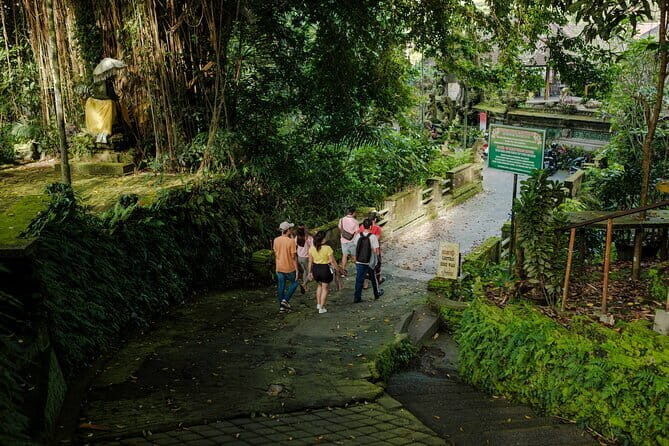
Your first stop is Gunung Lebah Temple, outside Ubud’s oldest temple area. This part is more than postcard scenery. You’ll learn about the arrival of Hinduism in Bali, then connect it to what you see: the temple layout, architectural details, and why temples matter beyond religion.
What I like here is that it sets a foundation. When you understand the logic of a temple—how it relates to the community—you’ll read later stops with less confusion. Otherwise, you can end up staring at buildings that feel mysterious when they’re really quite purposeful.
A heads-up: temple sites mean steps and uneven surfaces. This is part of the deal. The tour is careful, but it can’t flatten old stone.
Campuhan Ridge Walk and the bridge with a Dutch colonial thread
Next comes the Campuhan Ridge Walk, a shorter segment that still delivers perspective. You’ll head toward a modest bridge described as dating back to the Dutch colonial era. From there, the guide ties the scenery to the bigger story: the role of the Dutch East India Company in colonization and what that meant for the region.
I like this stop because it expands the timeline. Ubud isn’t only temples and craft shops. There’s a colonial layer too, and it shaped systems, movement of people, and how the area developed. Even if you only absorb parts of the story, it helps explain why modern Ubud feels like it does—cultural traditions side-by-side with older political influences.
This is also a good “breather” stop. The walk time is about 20 minutes, and you’re not stuck for long under the sun.
Puri Lukisan Museum: how a collaboration changed Ubud’s art story

Then you shift from outdoor learning to a museum stop at Museum Puri Lukisan. This is described as Ubud’s oldest art museum, and your time here is about seeing collaboration up close.
The focus isn’t only on what’s displayed. It’s on the collaboration between 20th-century Balinese artists and Western artists, and how that exchange helped shape Ubud’s reputation as an art center. If you’ve ever wondered why “art” is such a big deal in this town, this stop is the clearest answer on the route.
You’ll spend around 45 minutes here, which is a comfortable length. Long enough to get a sense of the museum’s themes without feeling like you’re stuck indoors all morning.
A small caution: museums move at your pace, but the tour guide keeps the flow. If you’re the type who likes to read every label for long stretches, you might want to slow down later and come back on your own.
Ubud Palace courtyards: royalty, architecture, and cremation rituals
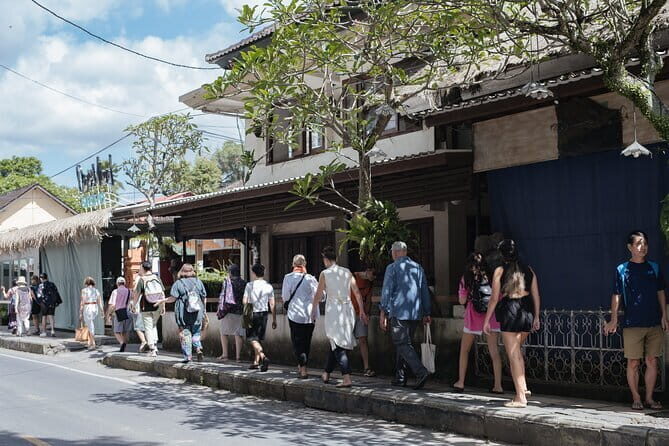
From art, you head to Ubud Palace. This isn’t a full palace tour; you’ll spend time in the outer courtyards, where the guide explains historical and modern roles of Balinese royalty.
What I find valuable here is the explanation of traditional cremation rituals. It’s one of those topics that can feel heavy or abstract if you don’t have context. With a guide, it becomes understandable—why these ceremonies exist, and how they connect to the social and spiritual structure around the palace.
You’ll have about 15 minutes for this segment. That’s not a long time, but it’s enough to learn what to notice: palace architecture, the logic of space, and how tradition shows up in the everyday built environment.
Again, watch your footing. Palace grounds and courtyards can mean uneven areas and steps.
You can also read our reviews of more guided tours in Ubud




Puri Kantor special access: stepping into the prince’s world

The final stop is Puri Kantor, with special access to a Balinese compound. This is where the tour feels most distinctive. Instead of only looking from outside, you get inside access connected to the palace of Tjokorde Gede Raka Sukawati, Prince of Ubud. The guide also connects him to the Pitamaha Foundation, a link that helps explain why Ubud’s cultural scene isn’t just tradition—it has modern support and preservation efforts too.
This part tends to land well because it’s concrete. You see how authority and tradition exist in a living space, not only in buildings viewed from the street.
You’re there about 20 minutes, and it’s a solid landing point for the tour. The walk ends at the palace area (on Jl. Suweta No. 1), which also makes it easier to continue your day in central Ubud without a long commute.
Weather, shoes, and the real pace of a 3-hour walk

The operator runs rain or shine. If conditions get severe—like an intense downpour—they’ll call you before the start. That’s the kind of line you want to see, because it tells you the plan has a safety limit.
What you should plan for is mostly comfort:
- Wear shoes you trust on uneven stone and outdoor paths.
- Bring water. They ask you to bring a reusable bottle for water refills to help cut down plastic waste in Bali’s rivers.
- Expect short stops plus walking between them, not long sit-down breaks.
If you’re traveling with a service animal, the tour allows them. Also, it’s near public transportation, though the tour does not provide pickup or drop-off from your accommodation. So you’ll want to start at the meeting point and plan your own return plans afterward.
This isn’t a slow “stroll and chat” tour. It’s a guided walking route that stays active enough to cover five stops in about three hours.
Guides make the difference: story, humor, and lots of questions

The single strongest theme from real experiences with this kind of tour is the guide. People consistently talk about guides who explain Ubud in a way that feels like you’re learning with a friend, not reciting facts from a script.
Names that come up include Ira, Windari, and Ilia. Across those experiences, the common thread is storytelling that stays entertaining while still answering real questions. You also get a sense that the guides pay attention—like where to stand for better viewing, when to slow down, and how to connect what you see to what came before.
If you want an active experience where you can ask things like why temple elements are arranged a certain way, or how colonial-era decisions affected the landscape, this kind of guide style is a big deal. It turns the walk into understanding, not just sightseeing.
Value check: what $28.36 gets you (and why it can feel worth it)
At $28.36 per person, this is priced like a practical add-on that doesn’t blow up your Bali budget. The key is what’s included:
- Local English-speaking guide
- Entrance for stops—Museum Puri Lukisan includes the ticket price listed as Rp 95,000
- Special access to a Balinese compound at Puri Kantor
- Local discounts
- Indonesian guide availability
The big value isn’t only the museum ticket. It’s the combo: multiple historic stops in a guided format, plus access that you might not get as an independent visitor without knowing the right connections.
And because the group size is capped at 8, you’re not paying for a big impersonal experience. You’re paying for a guided route that feels manageable.
Who should book this walk?
This Ubud guided walk is a great fit if:
- You’re new to Ubud and want fast orientation with context.
- You like mixing culture and art, not only temples or only museums.
- You prefer small groups and guides who answer questions.
It might be less ideal if:
- You struggle with steps, steep stretches, or uneven outdoor surfaces.
- You want a totally relaxed, slow pace with lots of downtime.
- You dislike museums or prefer to spend long uninterrupted time in galleries (this tour keeps museum time to about 45 minutes).
Tips to get the most from your 3 hours
A few small choices will make the whole experience better:
- Start with good walking shoes and light layers. Ubud weather can change fast.
- Bring your reusable bottle even if you think you’ll just grab water elsewhere.
- If you’re curious, ask questions early. Guides tend to build the story as you go.
- Use the palace ending as a springboard. After Puri Kantor, it’s easy to keep exploring the central Ubud area.
Should you book? Here’s my straight answer
Book this tour if you want a smart first Ubud activity that connects the dots—temples, art, palace life, and colonial-era context—without turning your day into a marathon. The small group size, guide-led storytelling, and the special access at Puri Kantor are the standout reasons it’s worth the time.
Skip it if you’re not comfortable with uneven stairs and outdoor footing, or if you prefer self-guided wandering with no structure at all. Otherwise, this is one of the best ways to get meaning out of the places you’ll be seeing anyway.
FAQ
How long is the Ubud Guided Walking Tour?
It runs for about 3 hours.
How much does the tour cost?
The price is $28.36 per person.
What are the main stops on the walking route?
You’ll visit Gunung Lebah Temple, Campuhan Ridge Walk, Museum Puri Lukisan, Ubud Palace, and Puri Kantor.
Are entrance tickets included?
Yes. Admission tickets are included for the listed stops, including the Museum Puri Lukisan entrance ticket (Rp 95,000).
Where do I meet the guide, and where does the tour end?
Meet at Cantina Rooftop Restaurant | Ubud Sayan, Ubud, Gianyar Regency, Bali. The tour ends at Puri Kantor, Jl. Suweta No. 1, Ubud.
Is pickup or drop-off included from my accommodation?
No. The tour does not provide pickup or drop-offs.
What’s the weather policy?
The tour operates rain or shine. If conditions are severe, such as an intense downpour, the operator will call you before the start.
Is the tour accessible for people who have trouble with stairs or walking on uneven ground?
The tour takes place around historic landmarks with uneven temple stairs, steep gradients, and patchy sidewalks. Guests should be physically capable of climbing steps and walking around an urban environment for up to 3 hours.
How many people are in a group?
The tour has a maximum of 8 travelers.
What should I bring to be more comfortable?
Bring a reusable bottle for water refills, and wear footwear suitable for outdoor walking and steps.