REVIEW · NUSA LEMBONGAN
Three Islands Snorkeling (3 Spots) Manta Rays – From Lembongan
Book on Viator →Operated by Telaga Waja River Rafting · Bookable on Viator
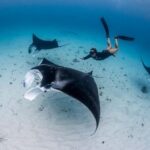
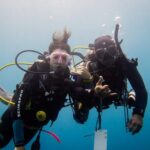
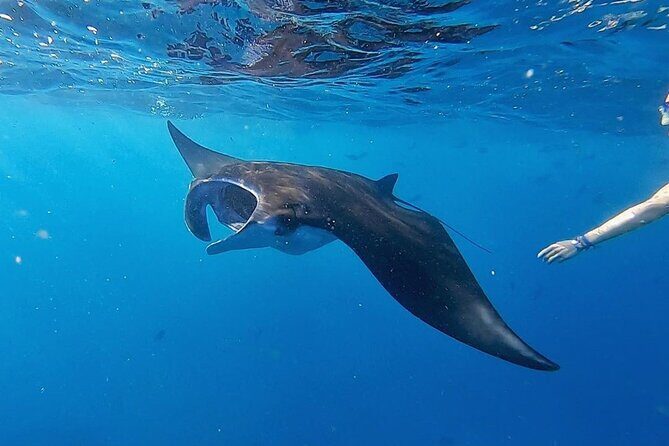
Manta rays are the headline here. This half-day snorkeling trip runs from Nusa Lembongan to multiple reefs off the coast, with a guide steering you toward the best conditions and keeping things safe while you float over coral gardens and sea life. You also get an underwater camera, so your trip isn’t only about what you remember.
I especially like two things: the focused plan around manta rays at Manta Bay, and the included underwater camera to help you capture what you see. That combo matters, because manta encounters depend on nature, but good guidance and the right spot do increase your chances.
One heads-up: this is a shared boat with a capacity of up to 20 travelers, and full groups can feel tight. Also, even at Manta Bay, manta rays are in their natural habitat, so sightings aren’t guaranteed.
In This Review
- Key things to know before you go
- Why Manta Rays Off Lembongan Are the Main Event
- How the 9:30 Pickup Works From Lembongan (and Ceningan)
- Stop-by-Stop: Manta Bay, Crystal Bay, Gamat Bay, Mangrove Point
- Stop 1: Manta Bay (about 45 minutes)
- Stop 2: Crystal Bay (about 30 minutes; optional in bad weather)
- Stop 3: Gamat Bay (about 45 minutes)
- Stop 4: Mangrove Point (about 45 minutes)
- Boat Comfort, Group Size, and How to Make It Work
- Gear, the Underwater Camera, and Snorkeling That Fits Non-Swimmers
- Price and Timing: Why This Half-Day Snorkel Is Good Value
- Should You Book This Manta Ray Snorkeling Tour From Lembongan?
- FAQ
- What’s included in the snorkeling tour?
- How long is the tour?
- What time does the tour start, and where is the meeting point?
- If I’m staying in Nusa Ceningan, do I still get pickup?
- Are manta rays guaranteed at Manta Bay?
- Can non-swimmers join?
Key things to know before you go
- Manta Bay is the main target for giant manta rays, with about 45 minutes in the water.
- Underwater camera is included to help you document the trip beyond phone snapshots.
- Crystal Bay can be skipped or swapped depending on conditions, since it’s optional in bad weather.
- Gamat Bay can bring current and usually feels more like an active reef swim than a lazy float.
- Non-swimmers can join since safety gear and guide instruction are part of the experience.
- Expect a max group size of 20, which can affect comfort on the boat.
Why Manta Rays Off Lembongan Are the Main Event
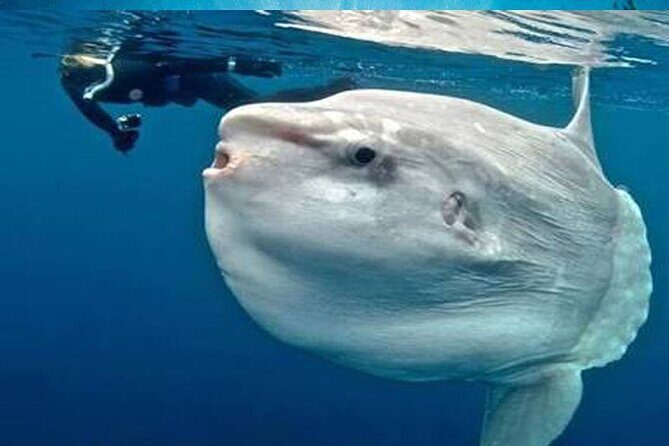
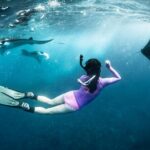
If you’re looking for snorkeling from Nusa Lembongan, this tour is built around one big goal: manta rays. The plan funnels you to Manta Bay (often called Manta Point in the area), where the biggest draw is the chance to see those giant manta rays. The tour doesn’t pretend it’s a vending machine for wildlife. It’s more like: you’ll go where manta rays are known to show up, and you’ll be positioned to have the best shot.
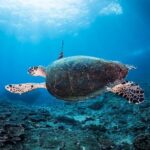
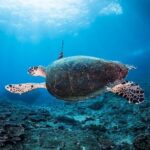
You’ll also have time at other reef sites, so the day doesn’t hinge entirely on one animal. The overall promise includes a wider underwater mix—coral gardens, turtles, and other marine life—so even if manta rays don’t show up, you’re still snorkeling real reef habitat rather than only looking at sand.
You can also read our reviews of more snorkeling tours in Nusa Lembongan
How the 9:30 Pickup Works From Lembongan (and Ceningan)
This is set up as an easy morning half-day. The tour includes free pickup and drop service from Lembongan Island hotels or the harbor, which saves you from figuring out where to meet or how to get to the boat on your own.
The listed start time is 9:30 am, and the meeting point shown is at Lagoon Bliss, Captain Good, Jl. Raya Mangrove Point, Jungutbatu, Nusa Penida. If you’re staying on Nusa Ceningan, pickup isn’t included; you’ll meet at Yellow Bridge at 09.30 am instead. It’s a small detail, but it can be the difference between a stress-free start and a frantic one.
One practical tip: pack anything you want to keep dry in a bag you can close tightly. Even with good organization, you’re transferring to and from a boat and getting in and out at multiple stops.
Stop-by-Stop: Manta Bay, Crystal Bay, Gamat Bay, Mangrove Point
The tour moves between three to four snorkeling areas, with stop times totaling about 3 to 4 hours overall. What makes this itinerary practical is that it’s not locked to one “always the same” reef. Instead, the route shifts based on conditions—important in this part of Indonesia where weather and sea state can change what’s safe and comfortable.
Stop 1: Manta Bay (about 45 minutes)
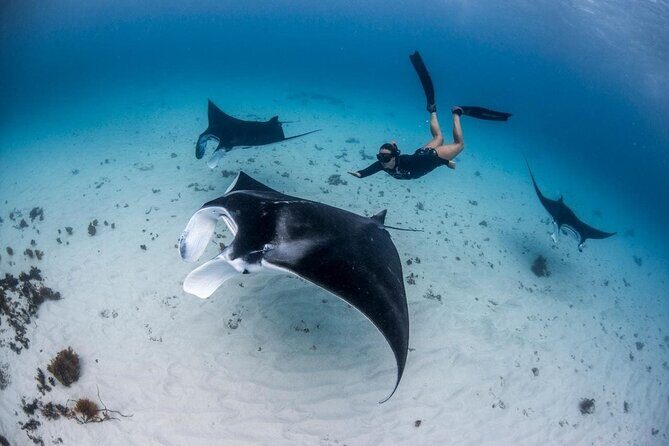
This is the anchor stop. Manta Bay is described as the main topography in the area, and the key thing to look for is the giant manta ray. You don’t control where they travel, but the guide’s job is to take you to the best chance area and keep you oriented while you snorkel.
What to expect: more attention from the crew, because everyone’s watching the same general zone for movement. If manta rays are in the vicinity, this is where the moment usually happens.
Possible drawback: if the sea conditions are rough or visibility changes, manta sightings may be harder. That’s normal wildlife behavior, not a failure on your guide’s part.
Stop 2: Crystal Bay (about 30 minutes; optional in bad weather)
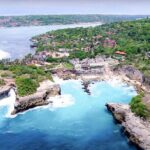
Crystal Bay is listed as an option for rougher conditions. It’s described with clear water and striking scenery: cliffs and steep slopes, plus a reef environment that can be visually dramatic.
What to expect: a shorter stop here—about 30 minutes—so you’ll want to be ready right away once you’re in. If you’re the type who hates rushing, treat this as a quick hit rather than a long session.
Possible drawback: because it’s optional in bad weather, you might not always swim this exact spot.
Stop 3: Gamat Bay (about 45 minutes)
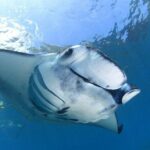
Gamat Bay is known by divers for its reef beauty and current strength, even though the waters of Gamat bay are described as calm. The description also calls out small caves and crevices and a variety of reef fish and invertebrates.
What to expect: more “reef details.” This is the kind of place where you may spot interesting bits of habitat—fish hanging around reef structure and small life tucked into crevices.
Possible drawback: if the current is running stronger than expected, you’ll want to stay relaxed, float well, and follow the guide’s instructions. If you don’t feel comfortable with movement in the water, say so before you enter.
Stop 4: Mangrove Point (about 45 minutes)
Mangrove Point is a shallow reef in the southeast part of the island. It’s described as serene, with coral fishes and coral formations. Because it’s tied to a mangrove-side environment, the vibe is often more “protected” than the open-water feeling you might get elsewhere.
What to expect: calmer snorkeling compared to places with stronger flow, plus a good chance to enjoy the reef without fighting the ocean.
Possible drawback: shallow reefs can be crowded with light and life—so you’ll want to focus on your buoyancy and not flail. It’s not hard, but it takes a little mental adjustment if you’re coming from deeper water.
Boat Comfort, Group Size, and How to Make It Work
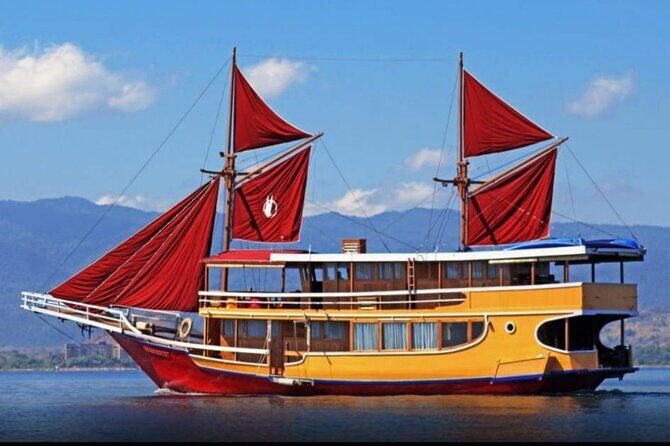
This tour caps at 20 travelers. That’s a lot for a shared snorkeling boat, even if it sounds reasonable on paper. The big payoff is cost and logistics: you get pickups, a guide, gear, and multiple stops without paying for a private boat.
The tradeoff is comfort. When the boat is near full capacity, seating can feel tight and there’s less personal space to shift around while you’re getting your gear sorted. It can also make animal-watching more complicated if everyone is eager and leaning in at once.
Here’s how you make it comfortable:
- Bring a practical change of clothes in a sealed bag. You’ll feel better fast after the last stop.
- Use sunscreen before you start, not at the first stop. You’re out for hours and you’ll move between areas.
- Keep your mask and snorkel in good shape. If you’re fiddling mid-boarding, you slow everyone down.
- Follow the guide’s spacing. If they say spread out or keep position, it’s not just for order. It helps you avoid accidental contact underwater and keeps the group easier to manage.
Gear, the Underwater Camera, and Snorkeling That Fits Non-Swimmers
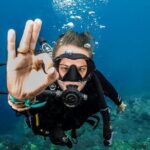
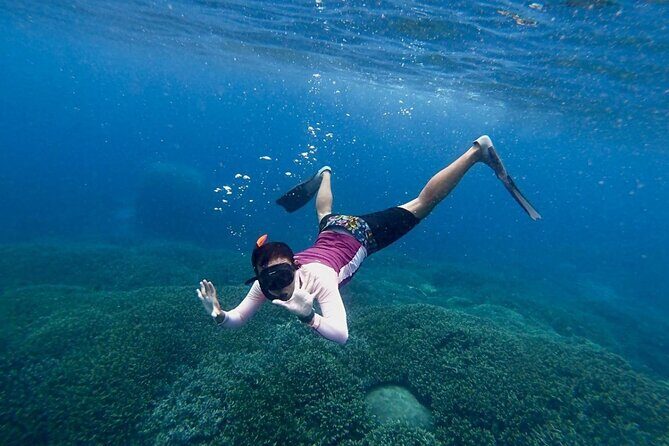
One of the most user-friendly aspects here: non-swimmers can snorkel. Safety equipment and snorkeling guide instruction are part of the experience, and the guide is explicitly there to help you get comfortable in the water. That doesn’t mean it’s zero-effort. You still need to be willing to float, breathe through the snorkel, and listen. But it does mean the tour isn’t only for confident swimmers.
Snorkeling gear is included, which is a big value point. You’re not paying extra to rent fins or a mask, and you won’t arrive worrying whether you grabbed the right size.
Then there’s the underwater camera, which is a standout inclusion. The tour says you’ll capture the experience with an underwater camera, and in practice, this kind of setup usually helps you get better underwater shots than trying to juggle your phone with a mask on. It’s also great for groups, because the photos help you remember the day even if you spent your attention fully on watching the animals.
Practical comfort checklist:
- Comfortable footwear for walking around the harbor area.
- Sunscreen and a camera (they suggest bringing both).
- A backup cash or credit card for self-expenses, just in case.
Price and Timing: Why This Half-Day Snorkel Is Good Value
The price is $24.00 per person, and for that you get the basics most people end up paying for separately: hotel/harbor transfers, snorkeling gear, a guide, a welcome drink, bottled water, multiple snorkeling stops, plus an underwater camera.
I look at value like this: how many separate expenses does this prevent?
- You don’t need to arrange your own boat transport.
- You don’t need to rent gear.
- You’re paying for a planned route so you can focus on being in the water instead of finding the right spots.
Timing also matters. It’s 3 to 4 hours, leaving the rest of your day open for other Lembongan activities. That’s ideal if you’re doing only one day of reef time and want to keep the schedule flexible.
Should You Book This Manta Ray Snorkeling Tour From Lembongan?
Book it if:
- You want a half-day snorkeling plan with multiple stops rather than one location.
- You’re specifically chasing manta rays at Manta Bay, and you’re okay with the idea that sightings depend on nature.
- You want the convenience of gear included and transfers included.
- You’d benefit from a guide’s help, especially if you’re not a strong swimmer.
Skip it or choose a different option if:
- You’re very sensitive to tight group conditions on a shared boat. With up to 20 people onboard, comfort isn’t guaranteed.
- You need the certainty of guaranteed manta rays. Even at Manta Bay, sightings aren’t promised.
One more angle: weather can matter. The itinerary mentions that Crystal Bay is optional in bad weather, and the experience requires good conditions. If the weather turns, the plan can shift. The good news is you’re not stuck with only one stop no matter what. And if conditions aren’t right, you’ll typically have the option of a different date or a full refund.
If your main goal is a guided, gear-included reef day from Lembongan with a genuine manta ray target, this is a solid fit.
FAQ
What’s included in the snorkeling tour?
The tour includes free pickup and drop from Lembongan hotels or the harbor, a welcome drink and bottled water, snorkeling equipment, a snorkeling boat and guide, and an underwater camera.
How long is the tour?
The tour runs about 3 to 4 hours.
What time does the tour start, and where is the meeting point?
The start time is 9:30 am. The meeting point listed is Lagoon Bliss, Captain Good, Jl. Raya Mangrove Point, Jungutbatu, Kec. Nusa Penida, Kabupaten Klungkung, Bali 80771, Indonesia.
If I’m staying in Nusa Ceningan, do I still get pickup?
Pickup at Nusa Ceningan is not included. If you stay in Ceningan, you meet Yellow Bridge at 9:30 am.
Are manta rays guaranteed at Manta Bay?
No. Manta rays are in their natural habitat, so sightings aren’t guaranteed. The tour notes that snorkeling at Manta Bay has a high chance, but outcomes depend on environmental factors.
Can non-swimmers join?
Yes. Non-swimmers can snorkel with safety equipment, and the snorkeling guides provide instruction.